Photo: Pho Tomass / Pexels
Earth's Largest Underground Thermal Lake Found in Albania
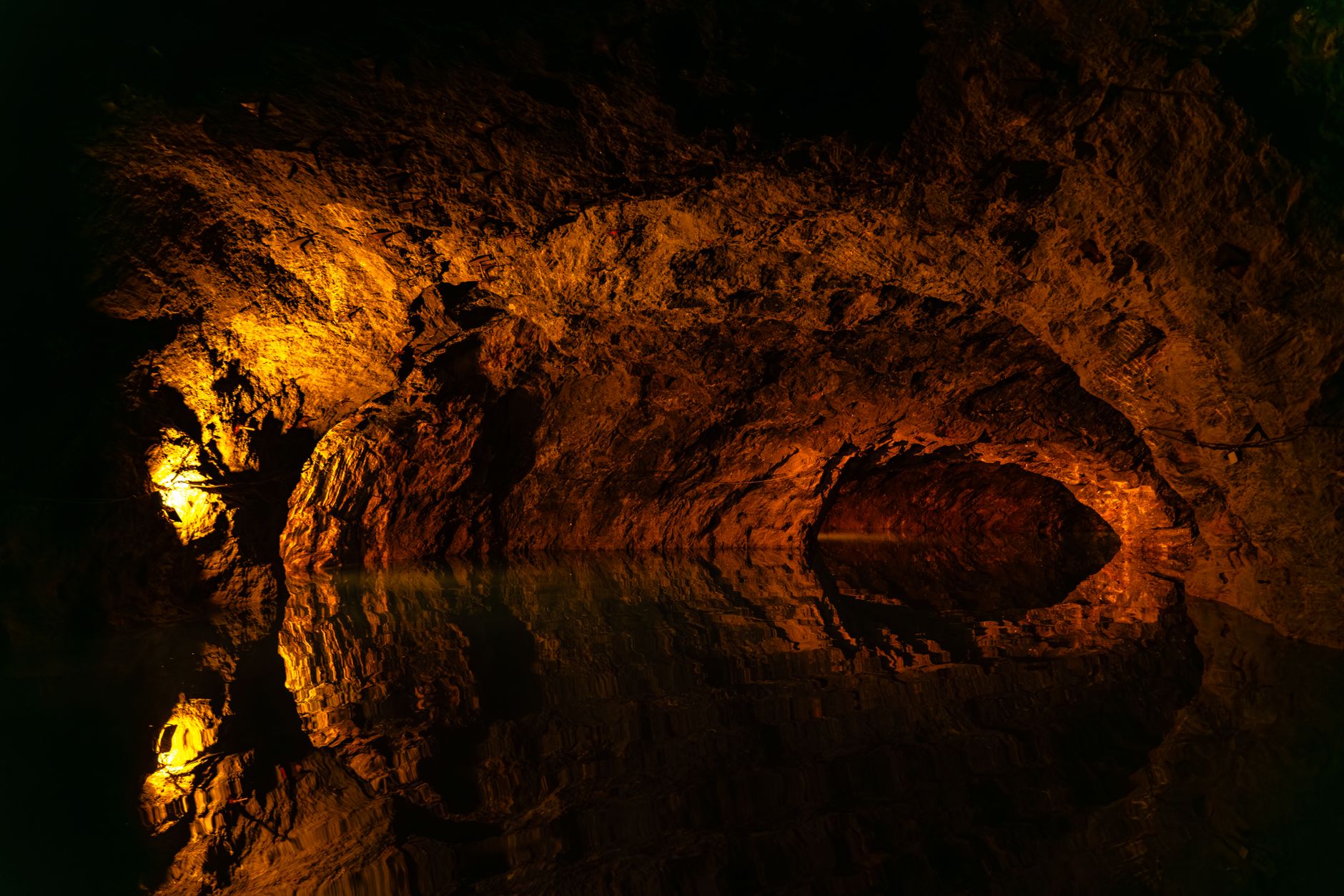
A column of steam rising out of a mountainside in southern Albania turned out to be the breath of something extraordinary: a vast lake of warm water, sitting in total darkness, that no human eye had ever seen. Czech cavers traced that vapour down a 100-metre vertical shaft and into a hidden chamber, where their headlamps fell on a still, mineral-blue pool the length of a football pitch. They named it Lake Neuron, and after mapping it with a laser scanner, they say it is the largest known underground thermal lake on Earth.
This is not a frozen subglacial pocket or a flooded show-cave with a boardwalk. It is a living geothermal system, buried deep beneath an arid valley, slowly dissolving the rock around it. The story of how it was found, and what it tells us about the planet's hidden plumbing, is the kind of thing that makes you want to forward it to someone.
A lake the size of three swimming pools, in the dark
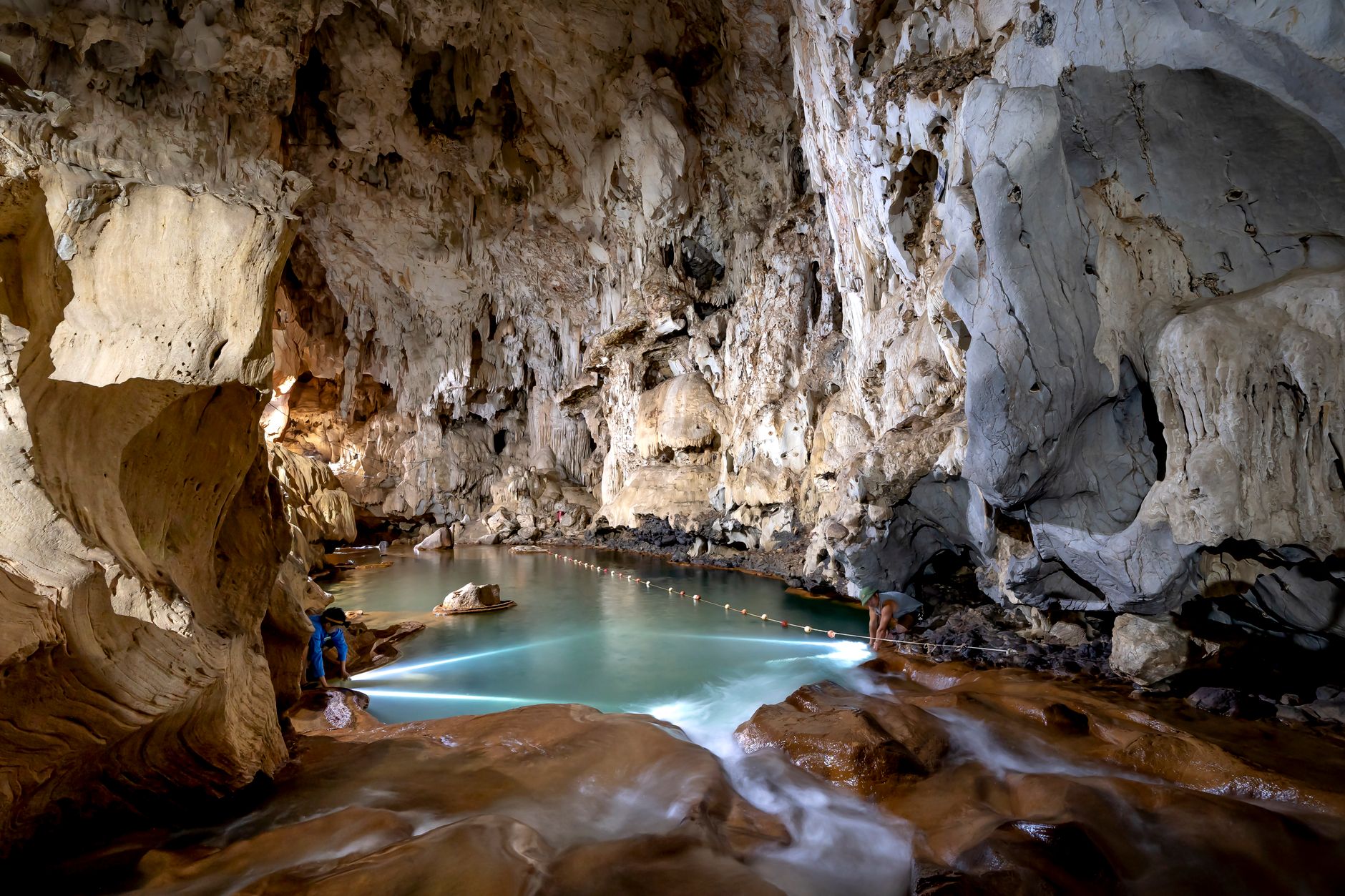
Lake Neuron is roughly 138 metres long and 42 metres wide, with a perimeter of about 345 metres. Its volume comes to around 8,335 cubic metres of water — enough to fill more than three Olympic swimming pools. For an underground lake fed and heated from within the Earth, that is genuinely enormous.
What makes it a thermal lake is that the water is warm, kept that way by geothermal heat seeping up through the crust rather than by the sun it never sees. Measurements put the water at a noticeably mild temperature, around 26°C (about 79°F) — bath-warm, in a place where sunlight has never reached. That combination of size and warmth is why researchers describe it as the biggest of its kind ever recorded.
How Czech cavers tracked down a steam plume
The discovery belongs to a team of Czech speleologists led by Marek Audy, who had been working the thermal-spring country around the town of Leskovik, near the Albania–Greece border. While exploring the Vromoneri Valley, they noticed a huge plume of vapour drifting off a ridge. Steam venting from solid mountain is a giveaway that something warm and hollow lies beneath.
The plume led them to an abyss roughly 100 metres deep, a sheer shaft they later named Atmos. Descending into it in 2021, they pushed through a system of caverns and thermal springs until they reached the lake, which sits about 127 metres (417 feet) below the surface. The water had been there, untouched and unseen, for who knows how long.
Why a laser scanner changed everything
Finding the lake was one thing; proving how big it was took technology. On the first trip the team simply didn't have the instruments to measure such a large, awkwardly shaped body of water in pitch blackness. So they came back with a GeoSlam 3D laser scanner, a handheld device that sweeps a space and stitches millions of points into a precise digital model.
With that scan, the cavers could finally pin down the lake's length, width and volume rather than guessing. The results, reported in 2025, are what allowed them to claim a world record with confidence. It is a small reminder that in modern exploration, the discovery and the measurement are two separate victories.
The chemistry quietly eating the cave
Lake Neuron isn't just sitting there looking pretty. The water carries hydrogen sulfide, the gas behind that rotten-egg smell. When that hydrogen sulfide meets air, it oxidises into sulfuric acid — and that acid goes to work on the surrounding limestone.
Over long stretches of time, the acid converts hard limestone into soft gypsum, sculpting the cave from the inside out. This is a different recipe from the textbook caves most of us picture, which are carved mainly by mildly acidic rainwater dripping from above. Caves shaped from below by sulfuric acid are rarer, and they tend to host unusual chemistry and life. It also means the abyss is not a place to wander into casually; the same gas that builds the cave makes the air hazardous.
Largest of its kind, but read the fine print
It's worth being precise about the claim, because superlatives travel fast. Lake Neuron is described as the largest known underground thermal lake — the qualifier matters. There are other famous underground lakes that aren't geothermally heated, such as the giant pool inside Dragon's Breath Cave in Namibia, long cited as one of the world's largest non-glacial underground lakes. Different category, different record.
There's also the simple word known. Vast cave systems remain unmapped across the planet, and warm, gas-rich caverns are exactly the sort of place humans rarely reach. Lake Neuron holds the title until someone, somewhere, drops into a deeper hole and finds something bigger. That's the honest thrill of this kind of science: the record is real, and it is also provisional.
Why a hidden lake matters beyond the wow
A warm, acidic, sunless lake is a natural laboratory. Ecosystems that survive without light, feeding off chemistry instead of photosynthesis, interest biologists hunting for the limits of where life can hang on. Those same extreme, chemical-driven environments are often invoked when scientists think about life beyond Earth, on icy moons with hidden oceans of their own.
For geologists, the lake is a window into how groundwater, heat and gas carve the rock we walk over without a second thought. And for the rest of us, it's a humbling fact to sit with. A body of warm water big enough to swallow several swimming pools existed beneath a quiet Albanian valley the whole time, betrayed only by a wisp of steam. The map of our own planet still has blanks in it — some of them right under our feet.
The next chapters will likely come from more descents, more scans, and careful sampling of whatever lives in that water. Until then, Lake Neuron stands as proof that the age of discovery is not over. It just moved underground.