Photo: Российский центр гибкой электроники / Pexels
Made in India Chips Go Commercial: Inside the 2026 Rollout
For years, the phrase "Made in India chips" lived mostly in press releases, foundation-stone ceremonies and ambitious target dates that kept slipping. In 2026, that changed. India now has commercial semiconductor lines actually running, packing real silicon into real products that ship to real customers. The country has not suddenly become Taiwan, and nobody serious is claiming it has. But the gap between announcement and assembly line has finally closed, and that shift is more consequential than any single ribbon-cutting suggests.
This is the story of how a decade of policy, billions in subsidies and a handful of stubborn bets turned into working factories — and why the next twelve months matter even more than the headlines of the last six.

All Ten Plants Are Finally Producing
The clearest signal came late in 2025, when the Ministry of Electronics and Information Technology confirmed that every unit approved under the first India Semiconductor Mission was up and manufacturing. MeitY Secretary S Krishnan put it plainly: all ten approved units would produce commercial chips, and production had already begun. With the modernisation of HCL's legacy facility in its final stages, the first chapter of the mission — often called ISM 1.0 — is effectively complete.
That number, ten, is worth pausing on. India's semiconductor push was repeatedly written off as a vanity project, a place where memorandums of understanding went to die. Getting ten distinct projects from paperwork to production lines, spread across multiple states and company structures, is a genuinely different outcome from where sceptics expected the country to land. It does not mean India is fabricating cutting-edge processors. Most of these units focus on assembly, testing and packaging, plus mature-node fabrication. But the ecosystem now exists in physical form rather than on slide decks.
Micron's Sanand Plant Ships the First Real Product
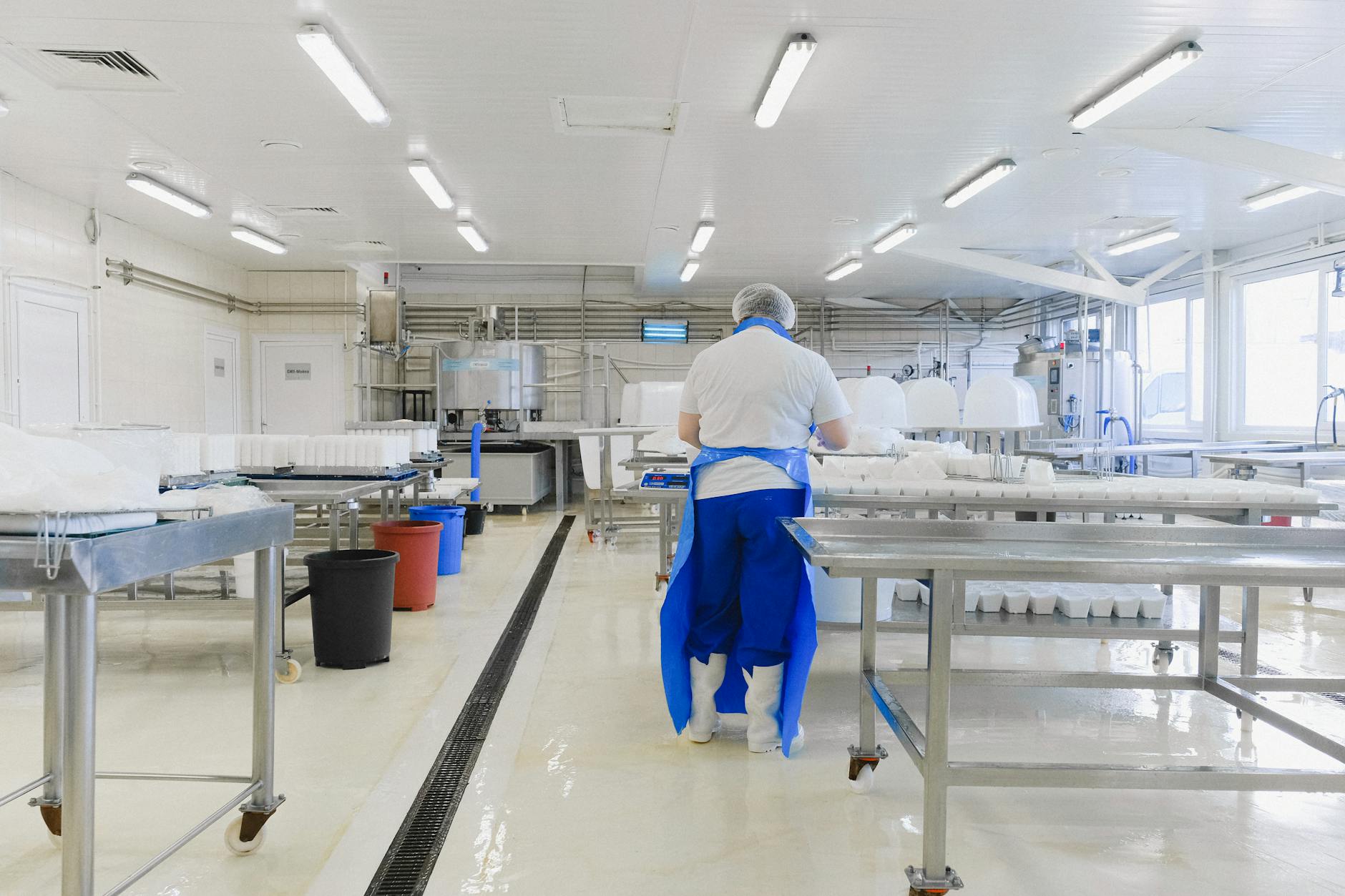
The most tangible proof arrived in Gujarat. In late February 2026, US memory giant Micron opened India's first semiconductor assembly and test facility in Sanand, a project representing a combined investment of roughly $2.75 billion. The first phase alone carries more than 500,000 square feet of cleanroom space, and once fully ramped it is positioned to be among the world's largest single-floor assembly and test cleanrooms.
What happens inside Sanand is the unglamorous but essential back end of chipmaking. The plant takes advanced memory wafers from Micron's global network and converts them into finished memory and storage products — the modules that end up inside laptops, servers and phones. To mark the opening, Micron handed over its first batch of India-made memory modules to Dell, destined for laptops built in India for Indian buyers. That detail closes a loop the government has chased for years: a chip-related component assembled in India and immediately consumed by Indian manufacturing.
Micron expects Sanand to test and assemble tens of millions of chips through 2026, scaling toward hundreds of millions in 2027. It is not designing or fabricating the silicon here, and that distinction matters for anyone tempted to overstate the achievement. But packaging and testing are where a huge share of semiconductor value and employment actually sit, and India now owns a slice of it outright.
Why Made in India Chips Matter Beyond the Hype
It is easy to be cynical about subsidy-fuelled factories, so it helps to be precise about what is genuinely at stake. Semiconductors are the most strategically sensitive industrial product on earth. The pandemic-era chip shortage idled car plants and exposed how a few choke points in Taiwan, South Korea and a handful of Dutch and American firms could throttle the entire global economy. Every large nation drew the same conclusion: depending on someone else's fabs is a national-security risk, not just a supply-chain inconvenience.
India imports the overwhelming majority of its electronics components, and chips are the costliest, most import-heavy layer of that bill. Even modest domestic capacity in packaging and mature-node production reduces exposure to export controls, geopolitical shocks and shipping disruptions. It also seeds something less visible but more durable: a workforce that knows how to run cleanrooms, calibrate tools and manage yield. Those skills compound. The first generation of engineers trained on Indian lines becomes the talent pool that makes the second, more ambitious generation of plants possible.
There is an economic angle too. Electronics is already among India's fastest-growing export categories, and a credible domestic chip story makes the country far more attractive to companies hunting for an alternative to concentrated East Asian supply chains. The point is not to beat Taiwan at three-nanometre logic. It is to become an indispensable second node in a world that has decided single points of failure are unacceptable.
The Tata Dholera Fab Is the Real Test
If Micron's plant is the proof of concept, the Tata project in Dholera, Gujarat is the high-wire act. Tata Electronics, in partnership with Taiwan's Powerchip Semiconductor Manufacturing Corporation, is building India's first commercial wafer fabrication plant — an actual fab that grows chips from blank silicon, not just one that packages imported wafers.
The numbers are large. The 300mm facility carries a planned investment around $11 billion, roughly ₹91,000 crore, and targets a monthly capacity of about 50,000 wafers. Production is set to begin on 28-nanometre technology, with a roadmap toward 22nm and a licensed process library covering older nodes used heavily in cars, power electronics and industrial gear. First silicon — the first working wafers off the line — is targeted for late 2026.
That node choice has drawn predictable sneers from those who note the world's leading edge is already pushing toward 2nm. They are missing the market. Mature 28nm-and-above chips are the workhorses of the real economy: they run microcontrollers, sensors, power-management circuits and the dozens of unglamorous parts in every vehicle and appliance. Demand for them is enormous and durable, and far less brutal to enter than the cutting edge. If Dholera hits its yield and timeline targets, India will have a fab producing chips the global market actually needs in volume — a vastly stronger position than chasing a node it has no realistic path to win.
The Pipeline Behind the Headlines
Dholera and Sanand are the marquee names, but the supporting cast is where the ecosystem story lives. CG Power and Kaynes are building assembly and test capacity, also in the Sanand cluster, while Tata Electronics is bringing a separate packaging unit in Assam on stream. A new joint venture between Taiwan's Foxconn and India's HCL Group — christened India Chip Private Ltd — is planned for Jewar in Uttar Pradesh, near the new airport, with capacity measured in tens of thousands of wafers a month.
Clustering matters more than any individual plant. Chipmaking depends on a dense web of nearby suppliers — gases, chemicals, precision tooling, testing services — and on engineers who can move between firms. By concentrating projects in Gujarat and a few other hubs, India is trying to manufacture not just chips but the gravitational pull that keeps an industry rooted once it arrives.
What Comes Next: ISM 2.0
With the first mission essentially delivered, the government has signalled that a second phase is coming, with a handful of additional projects expected to win approval. The open questions are the hard ones. Can Dholera move from first silicon to high-yield commercial output without the painful delays that plague every new fab on earth? Will the next round of incentives draw genuinely advanced packaging and more sophisticated nodes, or simply more of the same mature-tier work? And can India build the water, power and skilled-labour backbone that fabs devour relentlessly?
None of that is guaranteed. Semiconductors humble newcomers, and yield problems can swallow timelines and budgets whole. But the framing has fundamentally shifted. The debate is no longer whether India can make chips at all — that has been settled by working lines and shipped product. It is about how far up the value chain the country can climb, and how fast. For a nation that spent a decade being told it had missed the bus, simply being on the road is a remarkable place to start 2026.
Source: thefederal.com