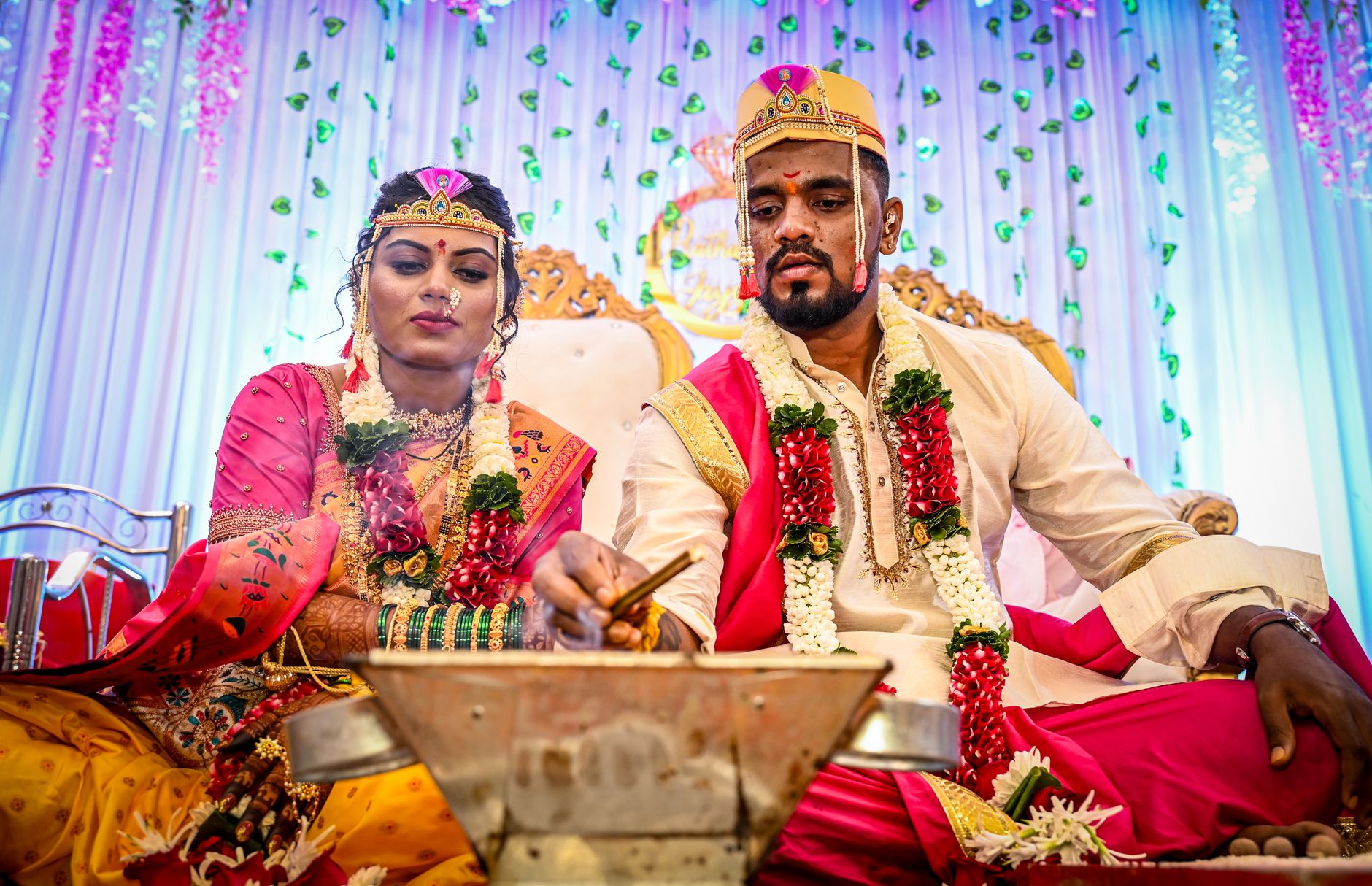
Photo: Sagar Ambator / Pexels
Manglik Myths Decoded: What Mangal Dosha Really Means for Marriage
Few words can stall an Indian marriage proposal faster than one: Manglik. A horoscope is exchanged, an astrologer frowns, and suddenly a perfectly compatible couple is told the stars have a problem. The fear attached to Mangal Dosha has broken engagements, delayed weddings and pushed families into elaborate rituals — often over a belief that is far more fragile than it sounds. So what is actually true, and what is inherited panic dressed up as tradition?
This is not an argument for or against astrology. It's a look at how one specific belief became oversized, which Manglik myths simply don't hold up, and what genuinely decides whether two people stay happily married.
What Mangal Dosha actually is
In Vedic astrology, a person is called Manglik when Mars (Mangal) sits in certain houses of their birth chart — most commonly the 1st, 4th, 7th, 8th or 12th house, with some traditions adding the 2nd. Mars is treated as a hot, aggressive, high-energy planet, and these particular houses are linked to marriage, temperament and domestic life.
The logic, as practitioners explain it, is that this placement can amplify anger, impatience or friction in a marriage. Note the word can. Even within astrology, the dosha is described as a tendency that varies with the strength of Mars, the influence of other planets and the overall chart — not a fixed verdict stamped on a person.
That nuance is exactly what gets lost by the time the news reaches a worried family. A conditional, debatable factor becomes a hard label: she is Manglik, full stop, as if it were a medical diagnosis.
The myth that does the most damage
The single most harmful belief is that marrying a Manglik can cause the death of the spouse. It's the version whispered loudest and questioned least, and it carries real consequences — alliances rejected, women in particular stigmatised, and otherwise willing families spooked into walking away.
There is no scientific or statistical evidence for any of this. No study shows Manglik individuals widowed at higher rates, and no credible data links a Mars placement to early death of a partner. Even many modern astrologers now distance themselves from this extreme reading, calling it folklore that hardened over generations.
The quieter cost is psychological. Tell someone early enough and often enough that their marriage is cursed, and ordinary marital arguments — which every couple has — start getting blamed on the chart instead of being worked through. The label can become a self-fulfilling excuse.
Myths that need busting
Several smaller assumptions travel alongside the big one. Held up to scrutiny, most wobble:
- "A Manglik must marry only another Manglik." The popular belief is that two Mangliks cancel each other out. It's a comforting symmetry, but astrologers themselves say the dosha can be offset by many other chart factors — a non-Manglik partner is not automatically disqualified.
- "The dosha is permanent and unfixable." In practice, it's described as something that weakens with age, with the strength of Mars, or with neutralising planetary positions. The narrative of an unchangeable curse is the strict version, not the common one.
- "Only women are checked for it." Both men and women can be Manglik, yet the social burden of the label has historically fallen far more heavily on brides.
- "Being Manglik is rare and ominous." Given how many houses qualify, a very large share of people technically carry it. Something this widespread is, by definition, not a freak misfortune.
- "One Manglik reading settles it." Different astrologers, using different house rules, regularly reach different conclusions about the very same chart.
The takeaway isn't that the tradition is worthless to those who follow it — it's that the absolutism around it rarely survives a closer look.
Tree weddings, pots and the rituals of reassurance
Where fear exists, remedies follow. The best-known is Kumbh Vivah — a symbolic marriage performed before the real one. A Manglik person is ceremonially "married" to a peepal or banana tree, or to an earthen pot holding an idol of a deity, so that the dosha's supposed ill effect is absorbed by the symbolic spouse first. Other prescribed remedies include Tuesday fasts, worship of Hanuman, chanting the Mangal mantra, or wearing red coral.
The ritual is woven into popular culture partly through celebrity rumour. For years it was speculated that Aishwarya Rai underwent such a ceremony before marrying Abhishek Bachchan in 2007 — a story she has, according to media reports, firmly denied and dismissed as baseless. The episode is a neat illustration of how the myth spreads: the gossip outran the fact, and the denial got far less airtime than the rumour.
It's worth being honest about what these rituals do. For believers, they provide genuine emotional relief and family peace of mind — which has real value. What they do not do is offer any measurable change to a marriage's odds. They soothe the fear; they don't alter the relationship.
What actually decides compatibility
Strip away the planet and the questions that predict a lasting marriage are stubbornly ordinary. Across counsellors, sociologists and even reflective astrologers, the same factors keep surfacing:
- Communication — whether two people can disagree without it curdling into contempt.
- Shared values and goals — alignment on children, careers, religion, where to live and how to spend money.
- Financial honesty — money conflict is a leading real-world cause of marital stress, far more measurable than any dosha.
- Family dynamics — how each partner's relatives are managed, especially in joint-family setups.
- Mutual respect and emotional maturity — the willingness to keep choosing the relationship on bad days.
None of these show up in a Mars placement. A couple can be "astrologically perfect" and miserable, or flagged as Manglik and thrive for fifty years. The chart, at best, is a conversation starter; it is a poor substitute for actually getting to know the person across the table.
How to use the belief without being ruled by it
For families who value tradition, the sane middle path is not to abolish the kundli but to right-size it. Treat a Manglik flag as one input among many, not a veto. Get a second opinion if a reading threatens to end a promising match, since astrologers genuinely disagree. And never let a planetary label override what the two people themselves feel about each other.
The deeper point is about agency. A marriage is built — slowly, deliberately, through choices made every day — not delivered pre-cursed or pre-blessed at birth. Mangal Dosha has survived this long because it offers a tidy explanation for the messy uncertainty of love and commitment. But the couples who last are rarely the ones who matched best on paper. They're the ones who kept showing up for each other long after the wedding charts were folded away.
Believe in the ritual if it brings your family peace. Just don't outsource a lifelong decision to a planet — the harder, more reliable work is the conversation no horoscope can have for you.