Photo: Amar Preciado / Pexels
Is Your Phone Using NavIC? How to Check India's Own GPS
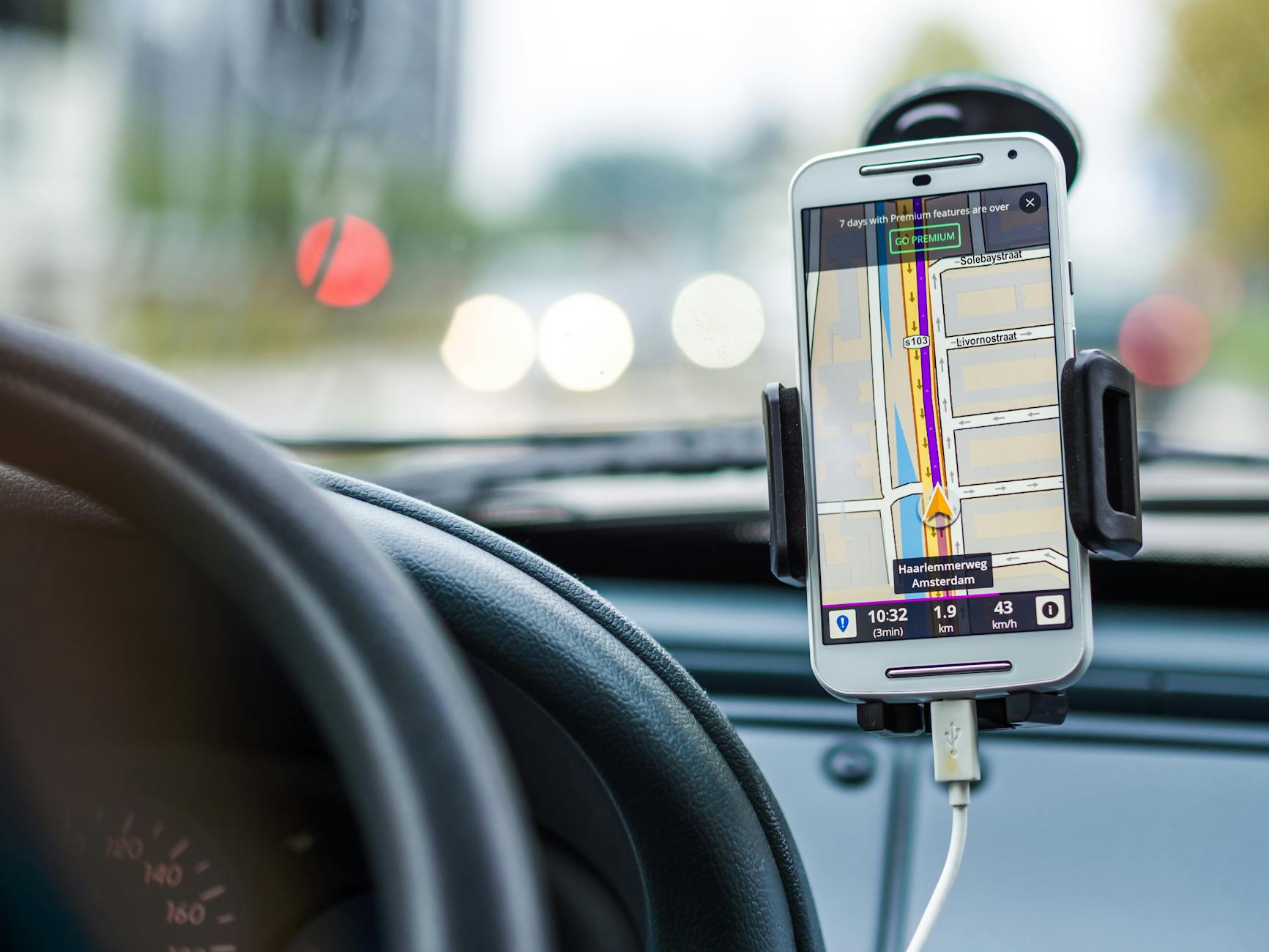
Most people in India have never heard of the second navigation system already running quietly inside their phone. We say "GPS" out of habit, but that name belongs to the American constellation. Sitting alongside it, with satellites parked high over the subcontinent, is NavIC — India's home-built positioning system from ISRO. The interesting question is not whether it exists. It's whether your specific phone is actually using it, and how you can tell in two minutes.
This guide walks through exactly how to check, what the recent L1 signal upgrade changes for ordinary users, and one honest problem with the system that rarely gets mentioned in the cheerful press releases.
What NavIC actually is
NavIC stands for Navigation with Indian Constellation, and its older official name is IRNSS (Indian Regional Navigation Satellite System). Unlike GPS, Europe's Galileo or Russia's GLONASS, it is not a global system. It is regional by design, meant to give accurate position fixes over India and a buffer of roughly 1,500 km beyond the country's borders.
That regional focus is the point. The satellites sit in geostationary and geosynchronous orbits, meaning they stay more or less overhead rather than racing across the sky. For users in India, a signal coming from almost directly above is easier to lock onto in crowded streets, hill terrain and built-up areas where low-angle satellites get blocked by buildings.
India built it for a hard-nosed reason: strategic independence. A foreign-run system can, in theory, be degraded or switched off for a region during a conflict. A navigation backbone that India controls end to end removes that risk for the military, for shipping, for aviation and increasingly for everyday consumer devices.
Why the L1 signal is the real unlock
For years, NavIC had a quiet design problem for ordinary phones. Its civilian signals were broadcast in the L5 and S bands, which most mass-market phone chips were not built to receive. The result was a fine system that the typical handset simply could not hear.
The fix is the L1 band — the same frequency neighbourhood GPS uses. ISRO's newer NVS-series satellites carry L1, and the first of them, NVS-01 (2023), flew with an indigenous rubidium atomic clock and L1 transmission. Because L1 is what cheap, low-power, single-frequency chips already listen to, this is what finally lets NavIC reach the bulk of phones, smartwatches, fitness bands and asset trackers without exotic hardware.
Chipmakers followed. Qualcomm began rolling NavIC L1 support into commercial chipset platforms from late 2024, and other vendors have moved in the same direction. So a 2025 or 2026 phone with a recent chipset has a genuine shot at using NavIC the way it uses GPS today.
How to check if your phone is using NavIC
You don't need to take a spec sheet's word for it. You can watch the satellites your phone is talking to, live. Here's the cleanest way:
- Install a free GNSS test app. On Android, apps like GPSTest or any "satellite info" tool show every constellation your phone is tracking. (iPhones lock this view down, so this trick is mostly an Android one.)
- Step outside under open sky. Concrete roofs and balconies block signals; a park or terrace gives a clean view.
- Wait for a fix, then read the list. Each satellite is tagged by system — GPS, GLONASS, Galileo, BeiDou and IRNSS / NavIC. If you see IRNSS or NavIC rows with signal strength bars, your phone is hearing India's satellites.
- Check whether they're "used in fix." Tracking a satellite and actually using it for the position calculation are different. Good apps mark which satellites are contributing to your current location.
If no IRNSS satellites show up at all, the likely reasons are: an older chipset that doesn't support NavIC, firmware that doesn't expose it to apps, or simply too few NavIC satellites healthy enough to track from where you're standing. That last reason matters more than it should, which brings us to the part nobody advertises.
The catch nobody mentions
Here is the uncomfortable truth behind the success story. A satellite navigation system is only as good as the number of healthy satellites in the sky, and NavIC's constellation has thinned out.
The system needs a working fleet to deliver reliable fixes, yet a large share of its satellites have aged past their service life or failed. By recent counts, only around four to five of roughly eleven launched NavIC satellites are fully operational. That is a fragile margin for a system meant to anchor navigation across a region.
It got worse in January 2025. NVS-02, a replenishment satellite carrying L1, L5 and S-band payloads, launched successfully but a thruster problem left it stranded in a transfer orbit, unable to reach its intended geostationary slot and unable to provide navigation services. A satellite that was supposed to shore up the fleet instead became a reminder of how thin the cushion is.
This is why your brand-new phone can support NavIC on paper and still show few or no IRNSS satellites in a test app. The chip is ready; the sky is under-stocked. ISRO has more NVS launches planned to rebuild the constellation, and that rebuild — not the phone-side support — is the real bottleneck for everyday users.
The smartphone mandate, and what it means for buyers
The government did not leave NavIC adoption to chance. Through the IT ministry, India pushed handset makers to bake in NavIC support, with 5G phones expected to carry it from the start of 2025 and the broader market following through the year. Samsung, Apple and others added it across recent model lines, so a lot of phones bought from roughly 2023 onward already include it.
For buyers, a few practical points:
- You usually don't pay extra or do anything. NavIC sits inside the same location chip that handles GPS. When it's present and a satellite is overhead, your phone uses it automatically alongside the others.
- More systems means better fixes. Modern phones blend GPS, GLONASS, Galileo, BeiDou and NavIC at once. Adding NavIC satellites overhead can tighten accuracy and speed in dense or hilly areas, even if you never notice which system did the work.
- Don't buy a phone for NavIC alone. Given the constellation's current state, treat NavIC as a welcome bonus on top of global systems, not as a feature that will transform your maps today.
What to watch next
The story to follow isn't on the shop floor — it's on the launch pad. Each successful NVS satellite that reaches its correct orbit with a working L1 payload makes NavIC more useful to the phone already in your pocket. A fully rebuilt fleet would turn it from a strategic asset with patchy consumer reach into something your daily navigation quietly leans on.
Until then, the most satisfying thing you can do is open a satellite-test app on a clear evening and look for those IRNSS rows. When they appear and start feeding your location, you're watching India's own machines in the sky do their job — built, launched and run from home.