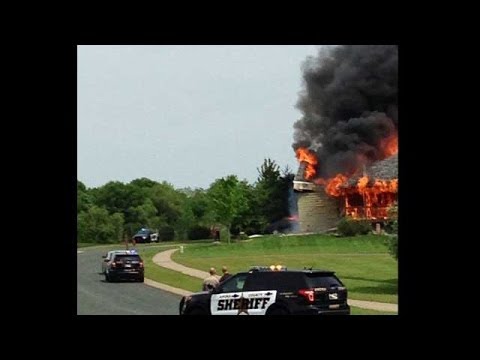
Oak Grove House Fire Video: What's Behind the Viral Clip
A short, dramatic clip labelled as an Oak Grove, Minnesota house fire is climbing fast on YouTube, the kind of raw footage that pulls in views long before any newsroom confirms a single fact. Flames pushing through a roofline, neighbours filming from across the street, the distant whine of sirens. It is gripping. It is also, right now, mostly unverified, and that gap between what a video shows and what we actually know is the part worth slowing down for.
Oak Grove is a small, semi-rural city in Anoka County, north of the Twin Cities. House fires there are not unusual in a region of older timber-framed homes and brutal winters that lean heavily on furnaces and space heaters. What is unusual is one of them reaching a global audience within hours. That reach says as much about how we consume disaster online as it does about the fire itself.
What the Oak Grove clip actually shows
The footage that is spreading appears to capture a residential structure fire already well advanced, with heavy flame and smoke visible from the exterior. Bystander phone video and what looks like drone or elevated footage have been stitched into several re-uploads, which is typical of how these clips travel.
Here is what is not established in any of the versions circulating:
- The cause of the fire
- Whether anyone was injured or killed
- Who owned or lived in the property
- The precise address and time
When a clip leads with smoke and a place-name but no named official source, the honest description is simple: a fire happened, it was filmed, and the rest is still open. Any post claiming a specific death toll or a definitive cause should be treated as unconfirmed until a fire department or local authority puts its name to it. That caution is not pedantry. In the first hours of any incident, the loudest numbers online are frequently the wrong ones.
Why a house fire goes viral
There is nothing mysterious about the appeal. Fire is primal, visually loud, and over quickly enough to fit a thirty-second vertical video. The human face filming it adds stakes. The algorithm does the rest, rewarding a bright thumbnail and a high completion rate the same way whether the subject is a celebrity or a burning garage.
What changes the equation is speed of capture. A generation ago, footage like this reached you through a local TV crew, hours later, framed by a reporter. Now a neighbour's phone is live before the second engine arrives. The video becomes the news, and the verification arrives afterwards, if it arrives at all.
That inversion is why a fire in a town most viewers cannot place on a map ends up in feeds across the world. The location is almost incidental. The footage is the product.
The fire-chaser economy on YouTube
Behind a lot of this sits a quiet ecosystem most people never notice until one of its clips lands in their feed. Fire chasers and scanner-monitoring channels listen to public emergency radio, race to active scenes, and film for an audience that has come to expect it. Some are hobbyists. A growing number are monetised creators who treat incidents as content.
In the United States, much of this is legal because emergency radio traffic is public and filming from a public street is protected. The result is a steady supply of raw incident video that often outpaces official communication. It can be genuinely useful, alerting a community fast, and it can also be exploitative, turning someone's worst day into a thumbnail.
There is a real tension here. The same footage that helps a neighbour understand why the road is closed can also strip dignity from a family standing in the cold watching their home burn. A clip racing across YouTube rarely pauses on that distinction.
How fast a home really burns
Strip away the virality and the Oak Grove clip carries one lesson that translates anywhere, including Indian homes: modern fires are faster than most people assume.
Decades ago, a typical room might take much longer to reach flashover, the point at which everything combustible ignites almost at once. Today, with synthetic furnishings, foam, plastics and open layouts, fire safety researchers describe that window shrinking dramatically. Once a room is fully involved, the realistic time to get out is often counted in two to three minutes, not ten.
That single fact reframes how to watch any fire video. The instinct to grab belongings, to find a hose, to film a little longer, is the instinct that gets people killed. The decisions that save lives are made before the fire, not during it.
What this means for Indian homes
A Minnesota timber house and a concrete Indian apartment burn differently, but the human failures are remarkably similar. In Indian cities the recurring culprits are electrical short circuits, overloaded boards, ageing wiring, LPG cylinder leaks, and stairwells blocked by parked scooters or stored junk. The structure may not collapse the way a wood frame does, but smoke fills a closed flat just as quickly, and toxic fumes, not flames, are what usually kill.
A few habits matter more than any gadget:
- Fit at least one smoke alarm and actually test it; a dead battery is the most common reason it fails.
- Know two ways out of every room and keep them clear, including the main exit and any balcony or window.
- Agree a meeting point outside so no one runs back inside to look for someone already safe.
- Shut the LPG regulator when not cooking and never store cylinders near heat.
- Treat extension boards and high-load appliances with respect; do not daisy-chain them.
None of this is dramatic. That is the point. The reason fire videos feel shocking is that the boring precautions were missing or untested.
What happens next, and how to read it
If the Oak Grove fire follows the usual pattern, official details will trickle out: a brief from the local fire authority, perhaps a cause listed as accidental or under investigation, and confirmation of whether everyone got out. Re-uploads will keep multiplying in the meantime, some honest, some farming the moment with invented headlines.
The sensible way to engage with any clip like this is the same regardless of country:
- Pause before sharing. A view costs nothing; a false casualty claim costs a family their privacy.
- Look for a named source. A fire department statement beats a re-upload with a sensational title every time.
- Separate the spectacle from the lesson. The footage is dramatic; the takeaway is mundane and worth keeping.
A house fire in a town of a few thousand people was never meant to be a global event. The internet made it one. Whether that ends up informing people or simply entertaining them depends largely on what viewers do after the video ends. The most useful response to a burning house on your screen is to walk through your own home tonight, find the exits, and press the test button on the alarm you have been ignoring.