Photo: Boris Hamer / Pexels
Our Oldest Enemy: A 5,500-Year-Old Plague Outbreak in Siberia
Around 5,500 years ago, on the shores of a vast Siberian lake, a sickness moved through small bands of hunter-gatherers and buried their children. Brothers and sisters were laid in the same graves within days of one another. For more than five millennia, nobody knew what had killed them. Now scientists do, and the answer is the oldest plague outbreak ever documented.
A study published in Nature on 17 June 2026 reports that Yersinia pestis — the bacterium responsible for the Black Death — was tearing through communities near Lake Baikal thousands of years before farming villages, fleas, or written history. It is the same microbe that would later wipe out a third of medieval Europe, caught at the very beginning of its long war with our species.

A graveyard that finally gave up its secret
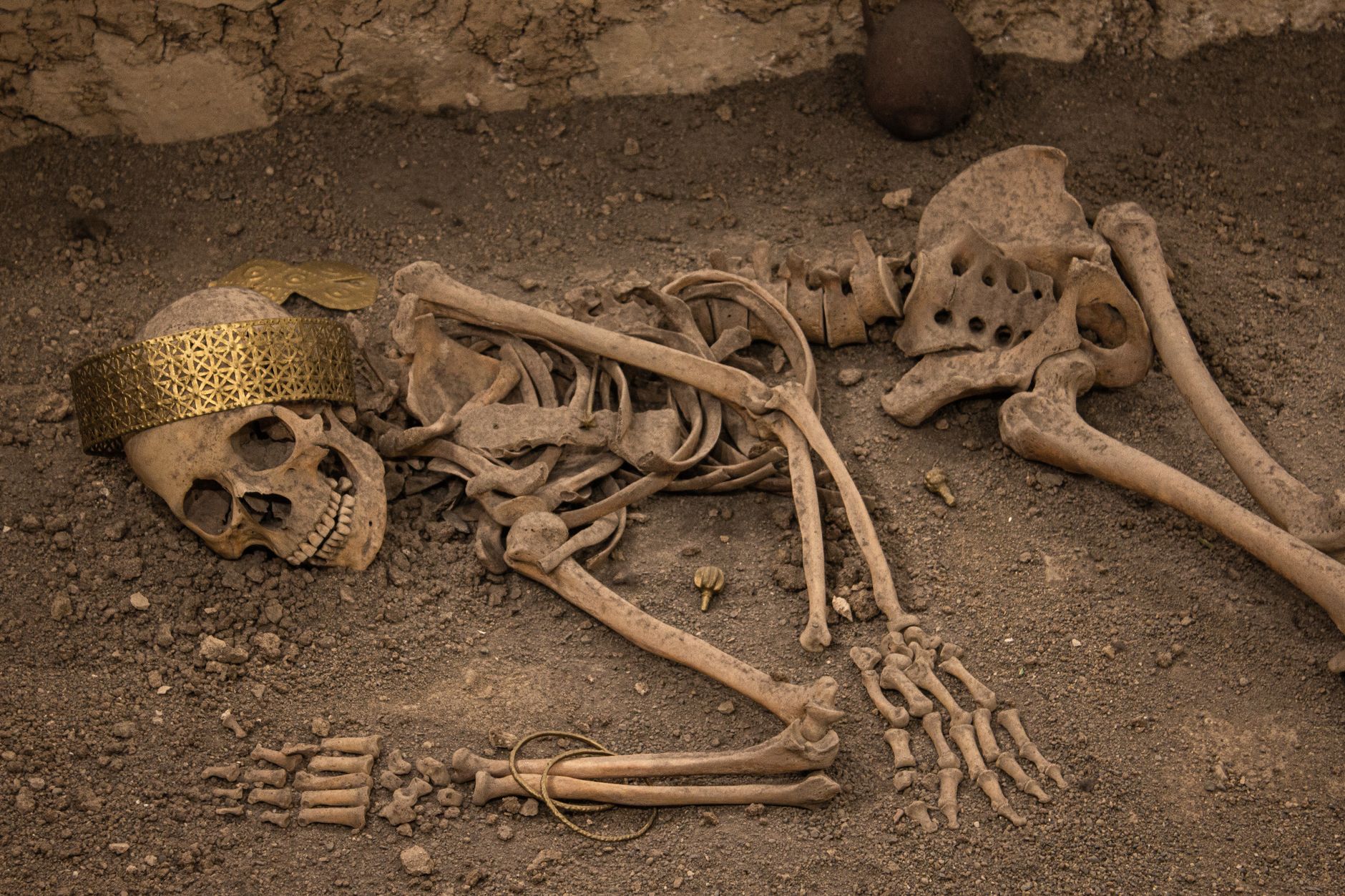
An international team led by Dr Ruairidh Macleod of Cambridge and Oxford, with geneticist Professor Eske Willerslev, extracted ancient DNA from the teeth of people buried at four hunter-gatherer cemeteries in East Siberia. Teeth are sealed time capsules; the soft pulp inside can preserve fragments of whatever was circulating in a person's blood when they died.
The results were startling. Of 46 individuals examined, 18 carried traces of Yersinia pestis — roughly 40 percent. That infection rate is higher than what researchers have found in some medieval plague pits, the mass graves dug in a hurry when the Black Death overwhelmed European towns. This was not a stray case. It was an outbreak, and a severe one.
Why "outbreak" is the word that matters
Plague DNA this old had been spotted before, but only in lonely, scattered burials. A man known as RV 2039, found in present-day Latvia, carried an ancient strain around 5,000 years ago, and a single victim turned up at a Neolithic site in Sweden. Those were individuals — one person, one grave, no clear sign the disease was spreading.
Lake Baikal is different. Radiocarbon dating of the bones revealed that the deaths clustered into two distinct waves, with the first striking about 5,500 years ago. Closely related people died at nearly the same moment. That pattern — many linked victims, in short bursts — is the signature of a disease passing from person to person. For the first time, scientists can show that early plague did not just infect the occasional unlucky human. It caused lethal epidemics.
The dead were heartbreakingly young
One detail sets this discovery apart from almost every plague grave that came later. The victims skewed strikingly young. Many were children and teenagers, roughly 8 to 11 years old, and in several cases young siblings were buried together.
That is not how plague usually behaves. The answer appears to be written in the bacterium's genes. These ancient strains carried a superantigen — a toxin-producing genetic factor that throws the immune system into a violent overreaction. It is absent from the historical plague lineages we know, and it may explain why the disease fell so hard on the young. The bacterium that killed these children was, in some ways, more savage than the one that caused the Black Death.
How a Stone Age plague spread without fleas
The popular image of plague is a flea hopping off a rat. That mechanism, it turns out, had not been invented yet. The flea trick depends on a gene called ymt, which lets the bacterium survive inside a flea's gut and turns the insect into a living syringe. Earlier research on Bronze Age genomes showed that Y. pestis only acquired this ability around 3,800 years ago.
The Lake Baikal strains predate that leap. So how did they spread? The evidence points two ways:
- From animals to people. These hunter-gatherers lived alongside marmots, large burrowing rodents that still carry plague across Central Asia today. The infection likely jumped when people handled the animals or ate undercooked marmot meat.
- From person to person through the air. Once inside a human, the bacterium could settle in the lungs and spread by coughing — a form known as pneumonic plague. That airborne route is what let it race through families and small camps.
In other words, this was plague before it learned its most efficient trick, and it was still deadly enough to empty graves of children.
Rewriting where the plague began
For years, a tidy story held that diseases like plague needed the crowding of early farming towns to catch fire — dense populations, stored grain, rats, dirt. The Lake Baikal findings complicate that. These were mobile hunter-gatherers, not city dwellers, and the outbreak hit them centuries before settled agriculture took hold in the region.
The strains themselves sit at an evolutionary crossroads. They had split from a milder ancestor only a couple of centuries earlier, yet already carried genes that made them deadly and virulent. The researchers suspect the lineage originated somewhere in Central Asia before reaching the Baikal communities. It is a snapshot of a pathogen mid-transformation, already capable of mass killing but not yet the flea-borne machine of the Middle Ages.
Why a 5,500-year-old germ still matters
It is tempting to file this under ancient history. That would be a mistake. Plague has never actually left us — cases still occur every year in parts of Africa, Asia and the Americas, including the western United States, where rodents and their fleas keep it quietly alive. Antibiotics treat it now, but the bacterium is the same family the people of Lake Baikal faced unarmed.
Studies like this are not just about the past. By tracing how Yersinia pestis picked up its weapons one gene at a time — first virulence, then airborne spread, then the flea — scientists learn how a manageable infection becomes a civilisation-shaking one. That is precisely the kind of evolutionary playbook researchers want to read in advance for the next pathogen, whatever it turns out to be.
The story that emerges from those Siberian graves is older than the pyramids, older than writing, older than the wheel in many places. And it is intimate: a disease that found a family of children by a cold lake and took them within days. Five and a half thousand years on, their teeth finally told us what happened — and reminded us that our oldest enemy has been with us far longer than we ever imagined.