Photo: Joni Tuohimaa / Pexels
The Science of Petrichor: Why India's First Rain Smells Divine
There is a smell most Indians know by heart long before they know its name: the warm, mineral, slightly sweet scent that rises the moment the first monsoon drops hit cracked summer earth. We call it mitti ki khushbu. Science calls it petrichor — and behind that one word sits a surprisingly rich story of bacteria, high-speed cameras, evolution, and a small town in Uttar Pradesh that has learned to bottle the rain.
With the monsoon advancing up the country through June, it is the perfect moment to understand what you are actually breathing in when the sky finally breaks. The short answer: you are smelling microbes, ancient plant oils, and a faint whiff of lightning, all flung into the air by the physics of a falling raindrop.

What 'petrichor' actually means
The word petrichor was coined in 1964 by two Australian researchers, Isabel Bear and Richard Thomas, writing in the journal Nature. They built it from two Greek roots — petra, meaning stone, and ichor, the ethereal fluid that was said to flow in the veins of the gods. Quite literally, then, petrichor is "the blood of the stone."
Bear and Thomas were studying a yellowish oil that collects on rocks and soil during dry spells. They found it was a blend of compounds, many of them oils secreted by plants during droughts, which soak into clay and rock surfaces. When rain arrives, all of that stored chemistry is suddenly set loose at once — which is exactly why the scent is strongest after a long dry stretch, and why it fades during a steady week of rain.
Geosmin: the bacteria you can smell
The single most important molecule in that bouquet is geosmin — the Greek for, fittingly, "earth smell." It is not made by the soil itself but by the microbes living in it, chiefly a group of bacteria called Streptomyces, part of the actinobacteria family. These are the same organisms that have given us a huge share of our antibiotics.
During dry weather, Streptomyces go dormant and produce tough spores, and geosmin is bundled up in that process. When water returns and disturbs the soil, the compound is liberated into the air. So the "smell of rain" is, more honestly, the smell of soil bacteria announcing that conditions are good again.
What makes geosmin remarkable is how little of it we need to detect. The human nose can pick it up at concentrations of only a few parts per trillion — roughly a teaspoon's worth dissolved in hundreds of Olympic swimming pools. For comparison, that is about a million times more sensitive than our threshold for many ordinary smells. We are, in a strict chemical sense, geosmin specialists.
How a raindrop throws the scent into the air
For decades nobody quite knew how the smell got airborne so efficiently. The answer came in 2015, when engineers at MIT filmed raindrops landing on porous surfaces with high-speed cameras. Their footage revealed a tiny, beautiful mechanism.
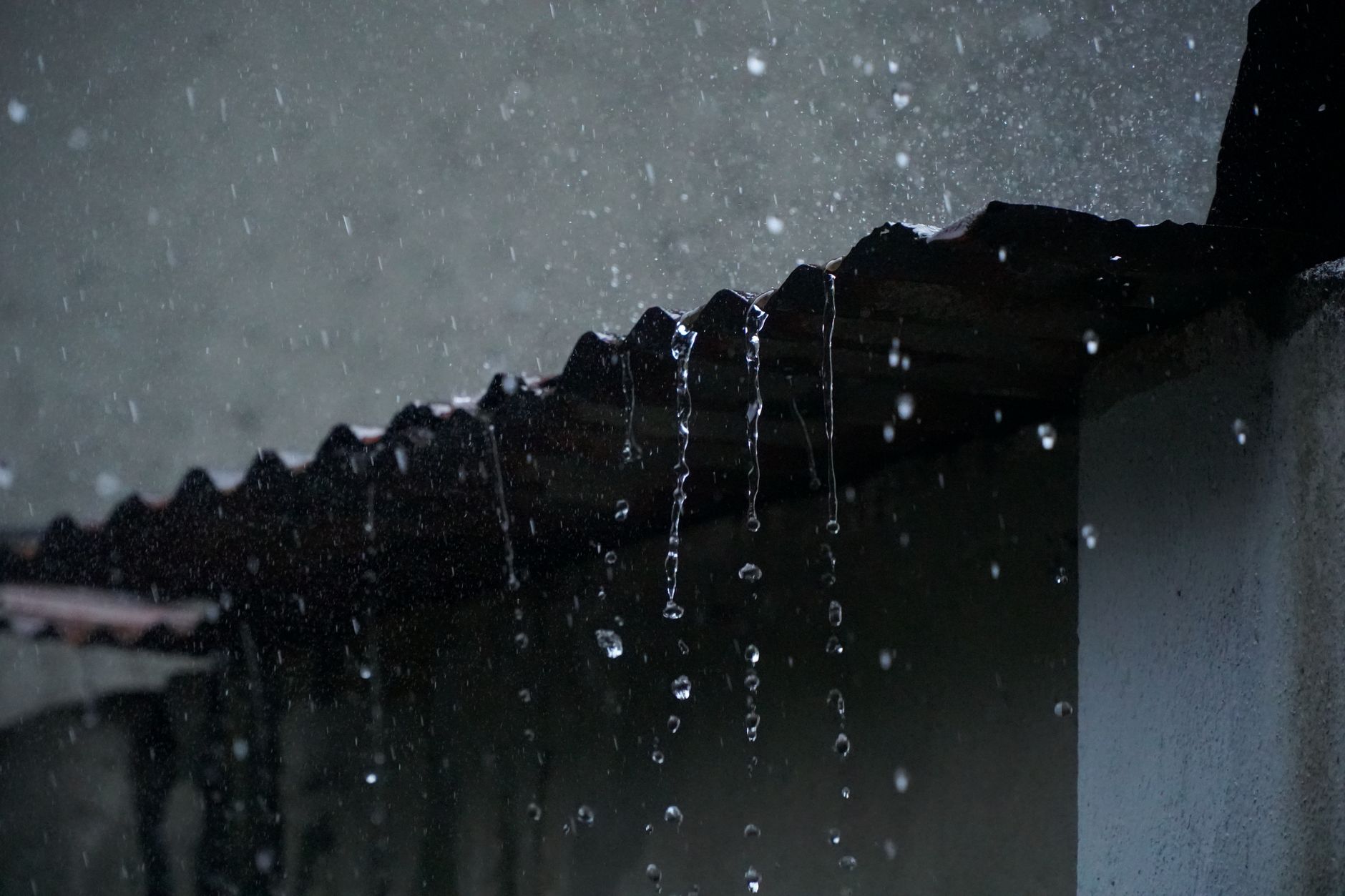
When a drop strikes the ground, it traps minuscule air bubbles underneath itself. Those bubbles shoot upward through the droplet and burst at the surface, flinging out a fine spray of aerosols — microscopic particles that carry the trapped scent compounds with them. A breeze then spreads that perfumed mist around. The researchers found the effect was strongest with light-to-moderate rain on porous ground, which is exactly the gentle pattering of a first shower, not a violent downpour.
That single insight explains a lot. It is why a soft pre-monsoon drizzle on dusty soil smells far more intense than a thunderstorm hammering concrete, and why the scent seems to arrive on the wind rather than rise straight up from your feet.
Ozone, plant oils and the full bouquet
Geosmin is the star, but petrichor is really an ensemble. The complete smell of a monsoon evening usually blends at least three sources:
- Geosmin and related compounds from soil bacteria — the deep, earthy base note.
- Plant-derived oils stored on rocks and soil during the dry months, released on first contact with water — the sweeter, resinous layer.
- Ozone, that sharp, clean, almost metallic tang you notice before a thunderstorm. Lightning splits oxygen molecules in the air, which recombine into ozone, and downdrafts carry it to ground level.
There is even a fourth, less romantic note: a compound called 2-methylisoborneol, also made by similar microbes, which adds a muddy, mineral edge. The brain stitches all of this together into the one unmistakable signal we read instantly as "rain is here."
Why evolution gave us this superpower
Why should a primate be tuned to detect bacterial by-products at parts-per-trillion levels? The leading idea is straightforward survival. For ancestors moving across dry landscapes, the smell of geosmin was a reliable beacon for water and fertile, moist soil — both matters of life and death. A nose that lit up at the faintest trace of it would steer its owner toward greenery and away from barren ground.
There may be a deeper ecological bargain too. Recent research suggests geosmin acts as a chemical signal in nature: it attracts tiny soil-dwelling creatures called springtails, which feed on Streptomyces and then carry its spores elsewhere on their bodies, helping the bacteria spread. In other words, the smell we find so pleasant may have evolved as the bacteria's own advertising. Our delight is a side effect of a microbial deal struck long before humans existed.
Kannauj: the town that bottles the rain
India, characteristically, did not just smell petrichor — it learned to capture it. In Kannauj, Uttar Pradesh, a perfume town with a craft tradition stretching back centuries, artisans produce a fragrance called mitti attar, literally "earth perfume."
The method is gloriously analogue. Workers take clay from dried lakebeds, shape it into small discs or vessels, and bake them in kilns. These baked-earth pieces are loaded into copper stills, covered with water, and heated over fire. The fragrant vapour travels through bamboo pipes into receivers where it condenses over a base of sandalwood oil, which traps and holds the scent. The result is a genuine, wearable petrichor — earthy, warm and unmistakably like the first rain on hot ground, sold by the gram.
It is a quietly astonishing piece of indigenous chemistry: long before any Nature paper named the phenomenon, Kannauj's perfumers had reverse-engineered the smell of the monsoon and turned it into an export.
What to notice the next time it rains
So the next time the season's first shower sends that scent rolling across your street, you will know it is not poetry but chemistry — and a remarkably crowded one at that. You are smelling:
- Geosmin, the calling card of soil bacteria waking from dormancy.
- Plant oils released from sun-baked earth and stone.
- A trace of ozone carried down from the storm clouds above.
All of it aerosolised and delivered to your nose by the humble physics of a bursting bubble under a raindrop. The fact that we find it beautiful, rather than merely informative, is one of those small accidents of evolution worth savouring — ideally from a verandah, with a cup of chai, as the first monsoon of the year finally arrives.