Photo: Alfo Medeiros / Pexels
Plas-Stick: Indian Teens' Tamarind Powder Pulls Microplastics From Water
Three teenagers from India have turned a kitchen leftover into one of the year's most talked-about environmental ideas. Their invention, Plas-Stick, is a biodegradable powder made from waste tamarind seeds that grabs microplastics floating in water, clumps them into visible specks, and lets you scoop them out with a simple handheld magnet. No electricity. No filtration plant. No expensive cartridges. Just a spoonful of powder and a magnet. On May 14, 2026, that idea earned 16-year-olds Avyana Mehta, Vivaan Chhawchharia and Ariana Agarwal the Asia regional title at The Earth Prize 2026 — and a global conversation about a pollutant most of us swallow without ever seeing it.

Why Microplastics Are the Invisible Problem Worth Solving
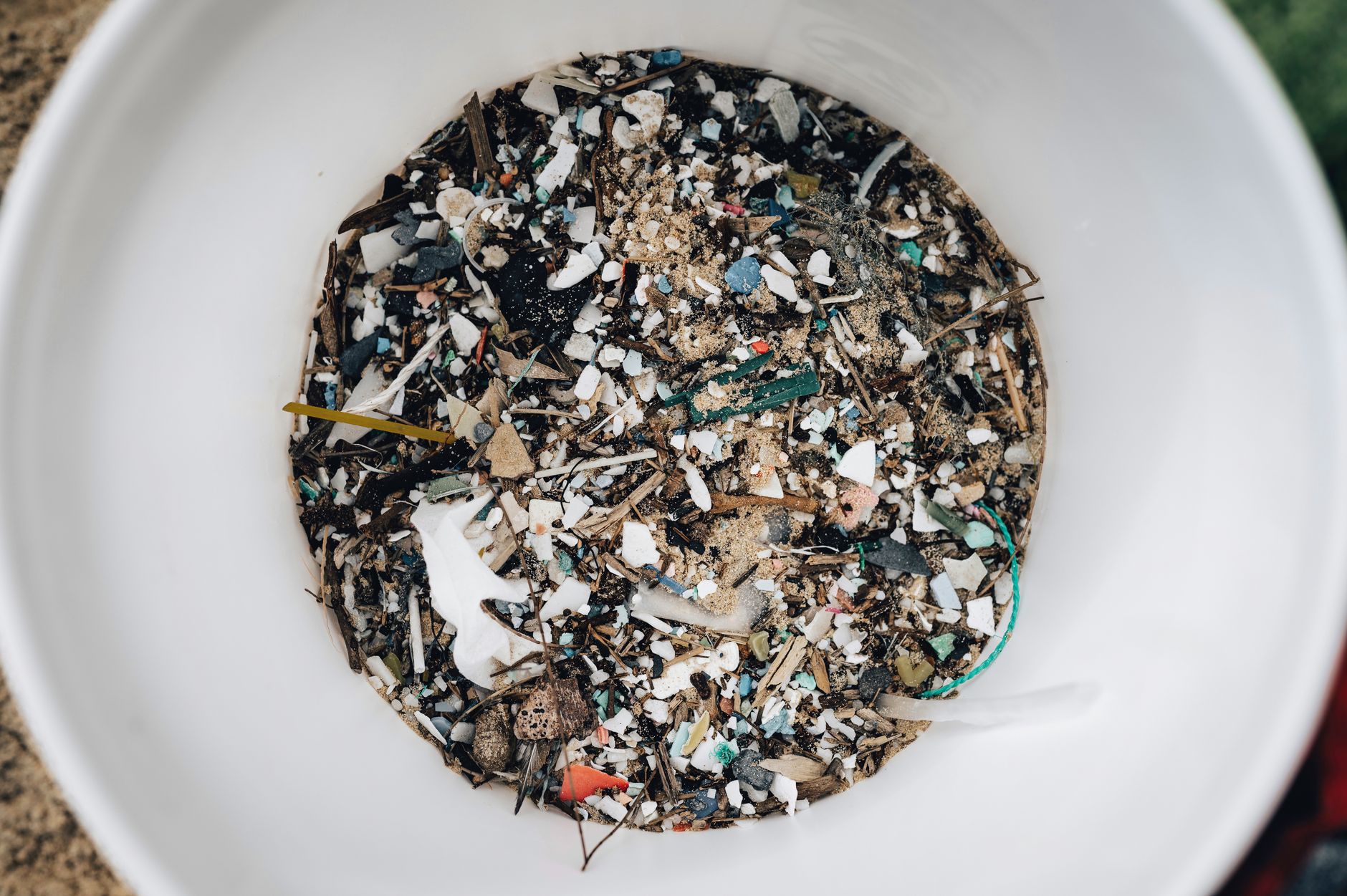
Microplastics are the tiny plastic fragments — smaller than five millimetres, often invisible to the naked eye — that shed from packaging, synthetic clothing, tyres and the slow breakdown of larger plastic waste. They are now found almost everywhere scientists have thought to look: in rainwater, in soil, in the deepest ocean trenches, and increasingly in the human body. Research has detected plastic particles in blood, lungs, the placenta and other organs, and studies have linked exposure to inflammation, hormonal disruption and damage to organs such as the kidneys and the gut wall.
Drinking water is one of the most direct routes into our bodies. A widely cited 2024 study found that a single litre of bottled water can contain on the order of hundreds of thousands of plastic fragments, the overwhelming majority of them nanoplastics small enough to slip across biological barriers. People who rely on bottled water may ingest tens of thousands of extra particles a year compared with those drinking from the tap. In India, where bottled and stored water is a daily reality for millions, the exposure question is not abstract — it is a public-health issue hiding in plain sight.
That is exactly the gap the Plas-Stick team set out to address: a pollutant that is everywhere, dangerous in ways researchers are still mapping, and almost impossible to remove without costly technology.

How Plas-Stick Actually Works
The science behind Plas-Stick is elegant precisely because it is so low-tech. Tamarind seeds — usually thrown away as agricultural and kitchen waste — contain natural polysaccharides with strong binding properties. The students processed these seeds into a fine powder engineered to attract microplastic particles. When the powder is stirred into a body of water, it latches onto the scattered, near-invisible plastic fragments and pulls them together into larger clumps.
The clever final step is magnetism. By incorporating a magnetic component, the team made those clumps easy to collect: once the microplastics have aggregated, a handheld magnet draws the lumps to the surface, where they can be lifted out and discarded. The whole process needs no power supply, no plumbing and no trained technician — a deliberate design choice for households and villages that store drinking water in shared pots and tanks rather than running it through advanced filters.
In other words, Plas-Stick reframes microplastic removal from an engineering challenge into something closer to a household chore. That accessibility is the point.
From a Rural Visit to a Global Prize
The idea did not arrive in a lab. According to the team, it grew out of their studies in environmental science combined with a visit to a rural community, where they noticed how often drinking water sits in communal containers with no access to sophisticated purification. If filtration units and reverse-osmosis systems were out of reach, the students reasoned, the solution had to be something cheap, local and self-explanatory.
Tamarind stood out for a very Indian reason: it is abundant, its seeds are routinely discarded, and turning a waste product into a clean-up tool gave the project a neat circular logic. To sharpen the chemistry and test their prototype, the trio worked with researchers at IIT Guwahati, lending academic rigour to a school-level idea. Beyond the bench work, they have run awareness programmes that the organisers say have reached more than 8,000 students and teachers, and have piloted the approach in schools.
That combination — a real-world problem, a scientifically grounded fix and on-the-ground outreach — is the kind of profile The Earth Prize is built to reward.
Inside The Earth Prize 2026
The Earth Prize is run by The Earth Foundation, a non-profit based in Geneva, Switzerland, and bills itself as one of the world's largest environmental competitions for teenagers aged 13 to 19. It functions as both a contest and an incubator, pairing young inventors with mentorship and a funding pool worth a total of $100,000 across its winners.
For 2026, the organisers named regional champions from around the world, with each regional winner — including Team Plas-Stick for Asia — receiving an award of $12,500 to develop their projects further. The competition's global winner is decided by public vote, with voting opening in the days after the regional announcements, putting the final spotlight in the hands of an online audience. Winning the Asia title therefore does two things at once: it puts real money behind a promising prototype, and it hands a group of school students a platform far larger than any science fair.
For the team, the validation matters as much as the cash. As one of the students put it, the win recognises a problem that is largely "invisible" yet affects communities every day — and gives them the means to move beyond pilot schools toward the places that need clean water most.
Why This Story Matters Beyond the Headline
It would be easy to file this under feel-good teenage achievement and move on. That would miss the bigger signal. Plas-Stick is part of a wave of frugal, India-rooted innovation that attacks expensive problems with cheap, locally available materials — the same instinct that has produced low-cost diagnostics, jugaad engineering and waste-to-resource ventures across the country. A microplastic remover built from discarded tamarind seeds is, in many ways, a textbook example of that mindset applied to a twenty-first-century pollutant.
There is also a policy dimension. India generates enormous volumes of plastic waste, and microplastic contamination of rivers, lakes and stored drinking water is a growing concern that formal infrastructure has barely begun to tackle. Decentralised, household-scale tools could complement large municipal systems, especially in rural and peri-urban areas where centralised water treatment is patchy or absent. A solution that any family can use with a pot of water and a magnet fits that reality far better than a treatment plant.
What Comes Next for Plas-Stick
The team's stated plan is to scale through decentralised production hubs — small, local manufacturing units that could turn regional tamarind waste into powder close to where it is needed, keeping costs and transport emissions low. The ambition is to expand into rural communities across India and, eventually, beyond.
The honest caveats are worth stating. A school-and-pilot success is not the same as a peer-reviewed, independently validated water treatment at scale. Questions that will determine Plas-Stick's real impact include how efficiently it captures the smallest and most worrying nanoplastics, how it performs across different water sources and contamination levels, what happens to the collected plastic clumps after removal, and whether production can stay cheap as volumes grow. These are exactly the kinds of problems the prize money and mentorship are meant to help answer.
What is not in doubt is the value of the framing. Three sixteen-year-olds looked at a pollutant the world is still struggling to measure, refused to accept that the fix had to be costly and complicated, and built something a villager could use without instructions. Whether or not Plas-Stick becomes a mass-market product, that way of thinking — turning waste into a tool, and complexity into simplicity — is precisely what the fight against microplastics needs more of.
Source: theearthprize.pr.co