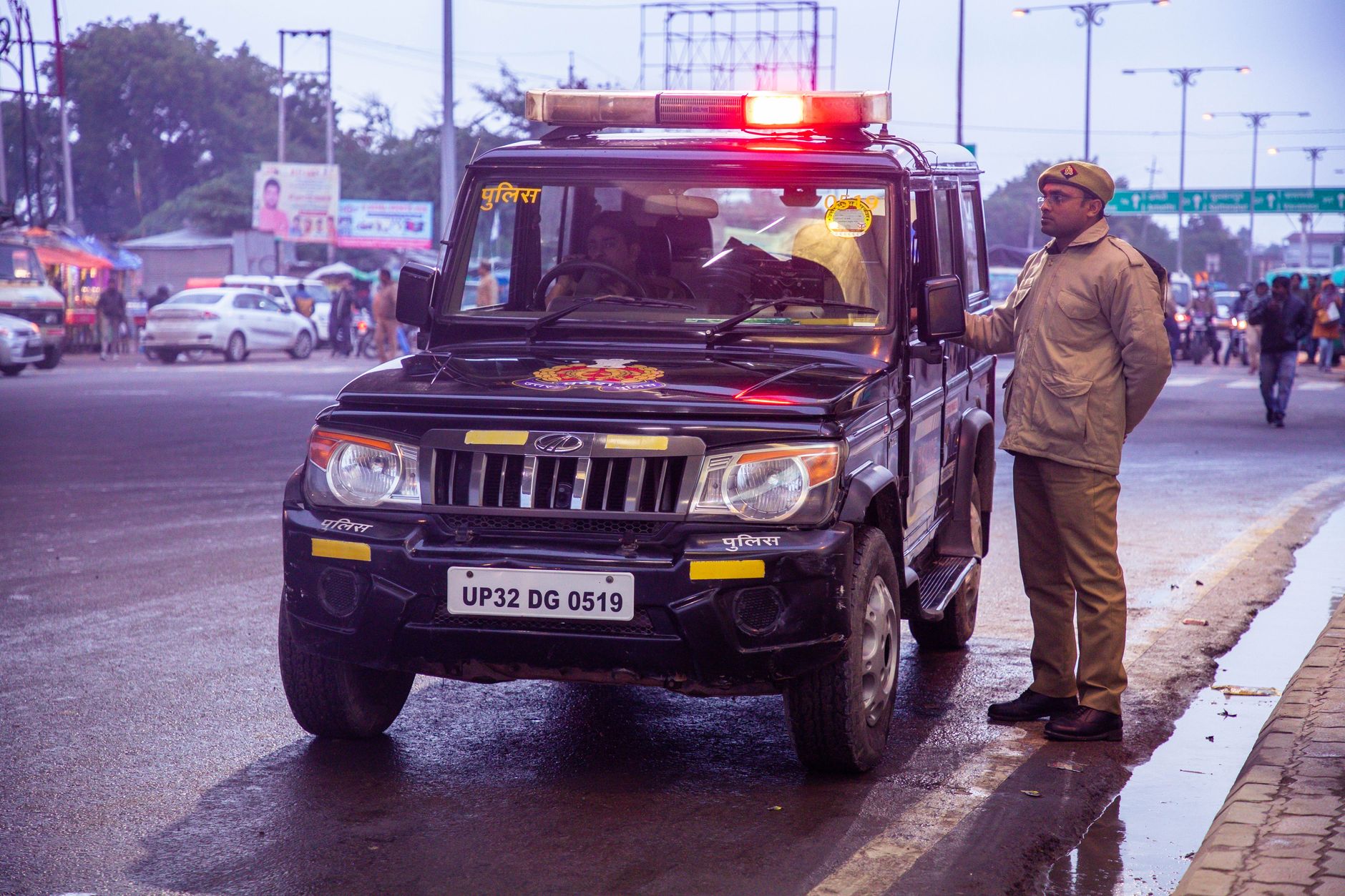
Photo: 112 Uttar Pradesh / Pexels
137 Police Per Lakh: India's Citizen Safety Reform Test
Walk into almost any police station in India after dark and the same picture repeats: too few officers, too many files, and a public that arrives already braced for friction. The numbers behind that scene are stark. India is often cited as having around 137 police personnel per lakh of population, well short of the 222 per lakh figure the United Nations is often cited as recommending. Police reform is not an abstract policy debate, then. It is the difference between a complaint being recorded the same evening or three visits later, between a patrol van arriving in minutes or after the moment has passed.
This piece is an analysis, written without taking sides. The aim is not to assign blame to any government, party or officer, but to lay out honestly what ordinary citizens are up against, give due credit to what has genuinely improved, and set down the specific changes that policing experts, jurists and former officers keep recommending.

The everyday problems are structural, not personal
Most frustration with the police is read as rudeness or apathy. Look closer and it is usually a system stretched past its limits. A single constable may be juggling VIP duty, court summons, a riot deployment and a fresh assault complaint in the same week. Sanctioned posts go unfilled for years, and the staff who exist are concentrated in security and traffic rather than investigation and patrol.
The consequences show up in outcomes. In 2022 the National Crime Records Bureau logged about 4.45 lakh crimes against women, with cruelty by a husband or his relatives the single largest category at nearly 32%. Reporting one is only the start. The conviction rate in rape cases stood at 27.8% that year, and case backlogs are severe — roughly 89% of POCSO cases filed in 2022 were still awaiting trial. Investigation suffers when one officer carries dozens of files, forensic support is thin, and witnesses drift away over years of adjournments.
There is also a representation gap that directly affects citizen safety. Women made up only about 12% of the police in 2022, up from around 6% a decade earlier but still far below the 33% target many states have adopted. With most of those women in junior ranks, a woman walking into a station to report harassment often cannot find a female officer to speak to.
Credit where it is due: what is actually working
It would be dishonest to call this a story of decline. Several reforms of the last decade have measurably changed the citizen's experience, and they deserve fair acknowledgement.
- The 112 emergency number now works across every state and union territory. The Emergency Response Support System folds the old 100, 101, 108 and 181 lines into one, so a person in distress dials a single number for police, fire, ambulance or women-and-child help.
- The Nirbhaya Fund has moved from announcement to spending. Of about ₹7,712 crore allocated up to 2024-25, roughly 76% has been utilised on One Stop Centres, fast-track courts, cyber-forensic labs, women help desks and city safety infrastructure.
- Safe City projects in eight large cities have added CCTV networks, brighter street lighting, panic buttons and mapped crime hotspots for targeted patrolling.
- New criminal procedure rules give legal backing to the Zero FIR, which must be registered at any station regardless of jurisdiction, and to e-FIR, which lets people report online without first reaching a police station.
The procedure code that came into force in mid-2024 also pushes investigation toward evidence. Forensic examination is now meant to be compulsory for serious offences carrying more than seven years' punishment, and statements from survivors of sexual offences are to be recorded by a woman officer, preferably at the survivor's home, with videography. Tools such as a mobile app for documenting crime scenes are being rolled out to make that practical. These are real upgrades. The open question is execution at scale across 16,000-plus stations.
The reform on paper that never fully arrived
Any honest account has to mention the Prakash Singh judgment of 2006, in which the Supreme Court issued seven directives to professionalise policing. They were designed to reduce the everyday problems above by insulating the force from arbitrary pressure: fixed minimum tenures for senior officers so investigations are not derailed by sudden transfers, a Police Establishment Board to handle postings on merit, an independent recruitment board, separation of investigation from law-and-order duties, and State Police Complaints Authorities where an aggrieved citizen can be heard.
Nearly two decades on, assessments by independent monitors find that no state has implemented all seven directives in full, and several comply only in diluted form. This is not a partisan failing; states across the political spectrum have dragged their feet, because the directives reduce discretionary control over the force. Naming that gap is the starting point for fixing it.
What experts say would actually move the needle
The encouraging part is that the fixes are well understood and largely agreed upon across police think tanks, commissions and serving and retired officers. They are practical, not utopian.
- Fill the vacancies, and fix the mix. Sanctioned posts sit empty for years. Recruiting to strength, and shifting officers from VIP and ceremonial duty toward investigation and patrol, would cut response times more than any new gadget.
- Put far more women in uniform, beyond the desk. Moving toward the 33% goal — and into senior ranks, not just help desks — improves both reporting and the quality of investigation in crimes against women.
- Separate investigation from law-and-order work. An officer who is pulled off a probe for crowd control cannot build a case that survives in court. Dedicated investigation cadres, a core Prakash Singh recommendation, raise conviction quality.
- Make forensics fast and routine. Conviction rates rise when scientific evidence is collected early and processed quickly. That means more state forensic labs, mobile units and trained staff so the new legal mandates are not bottlenecked.
- Stand up genuinely independent complaints authorities. A citizen wronged by police needs a credible, accessible body to approach. Functioning State Police Complaints Authorities build the trust that makes people report crime in the first place.
- Fund the courts, not just the police. Fast Track Special Courts only help if judges, public prosecutors and support staff are in place. Clearing pendency requires investment downstream of the FIR as much as at the station.
Why this matters, and what to watch next
Safety is the most basic service a state owes its citizens, and it is felt most by those with the least power to arrange private alternatives. A working police station and a court that delivers a verdict in months rather than decades do more for a daily-wage worker or a woman commuting at night than almost any other public good.
The direction of travel is not all bleak. The 112 system, the spending of the Nirbhaya Fund and the new emphasis on forensic and digital evidence are real foundations. The test now is whether states convert announcements into staffed, accountable institutions — and whether the long-pending structural reforms finally get implemented rather than litigated. The blueprint already exists. What remains is the political will, across every party and every state, to treat citizen and women's safety as a delivery problem to be solved, not a slogan to be repeated.