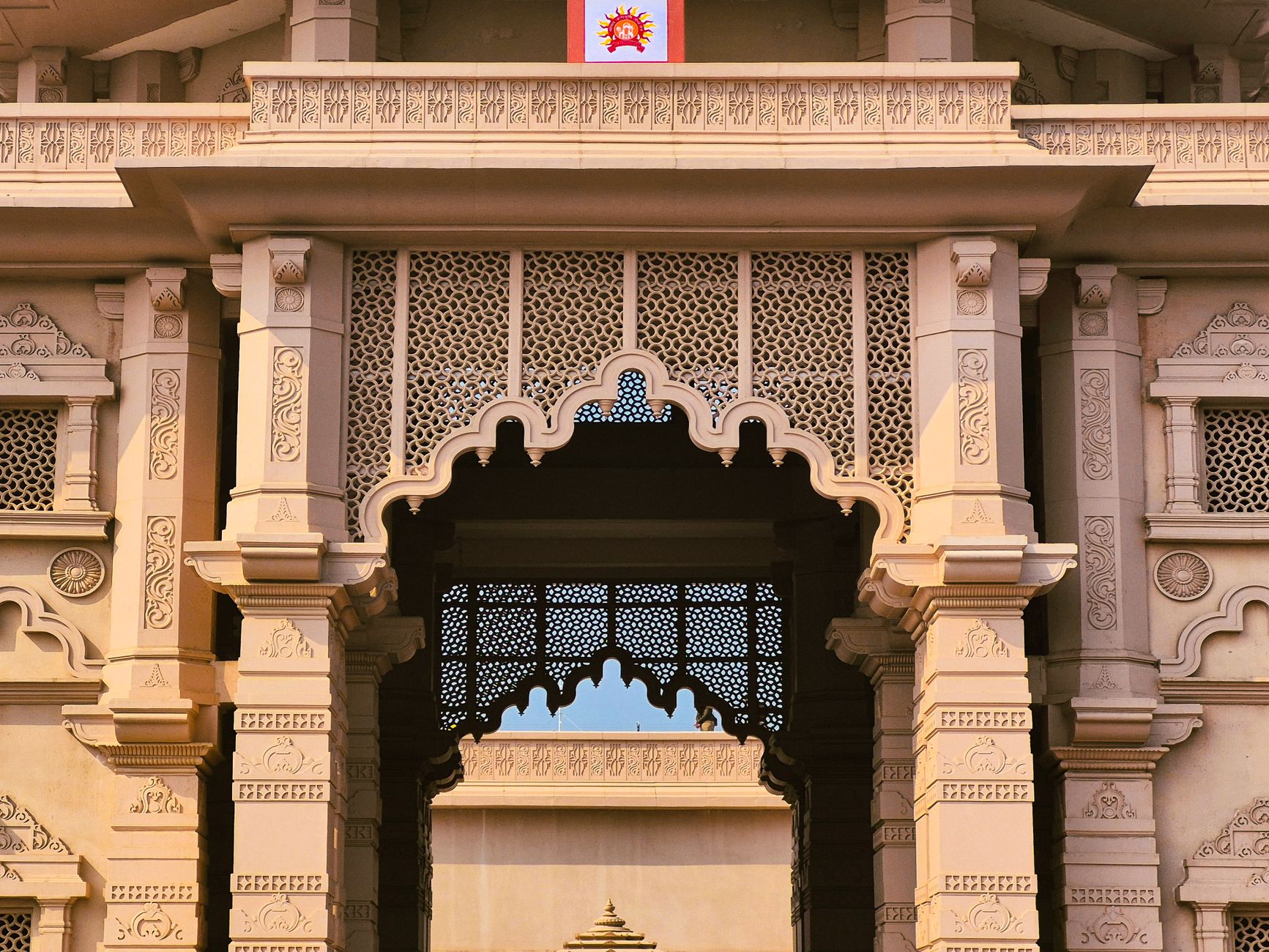
Photo: Ansh Yati / Pexels
Ram Temple Donation Row: Why No CBI or ED Yet?
Arvind Kejriwal put a single uncomfortable question at the centre of the Ram Temple donation row this week: if so much money and so many valuables are supposedly missing, why has no agency filed a case? Speaking on the controversy swirling around offerings at the Ayodhya temple, the former Delhi Chief Minister alleged that cash worth roughly ₹200 crore and boxes of diamonds and jewellery had gone missing, then sharpened the point into a political grenade. Very big names are involved, he claimed, and if a real probe goes ahead, the government itself could fall.
It is a heavy charge, and an unproven one. The figures Kejriwal cited have not been confirmed by any investigating body, and the Shri Ram Janmabhoomi Teerth Kshetra Trust has flatly denied that any donation money has been stolen. But his framing has caught fire precisely because it shifts the conversation from "how much is missing" to "who isn't acting."
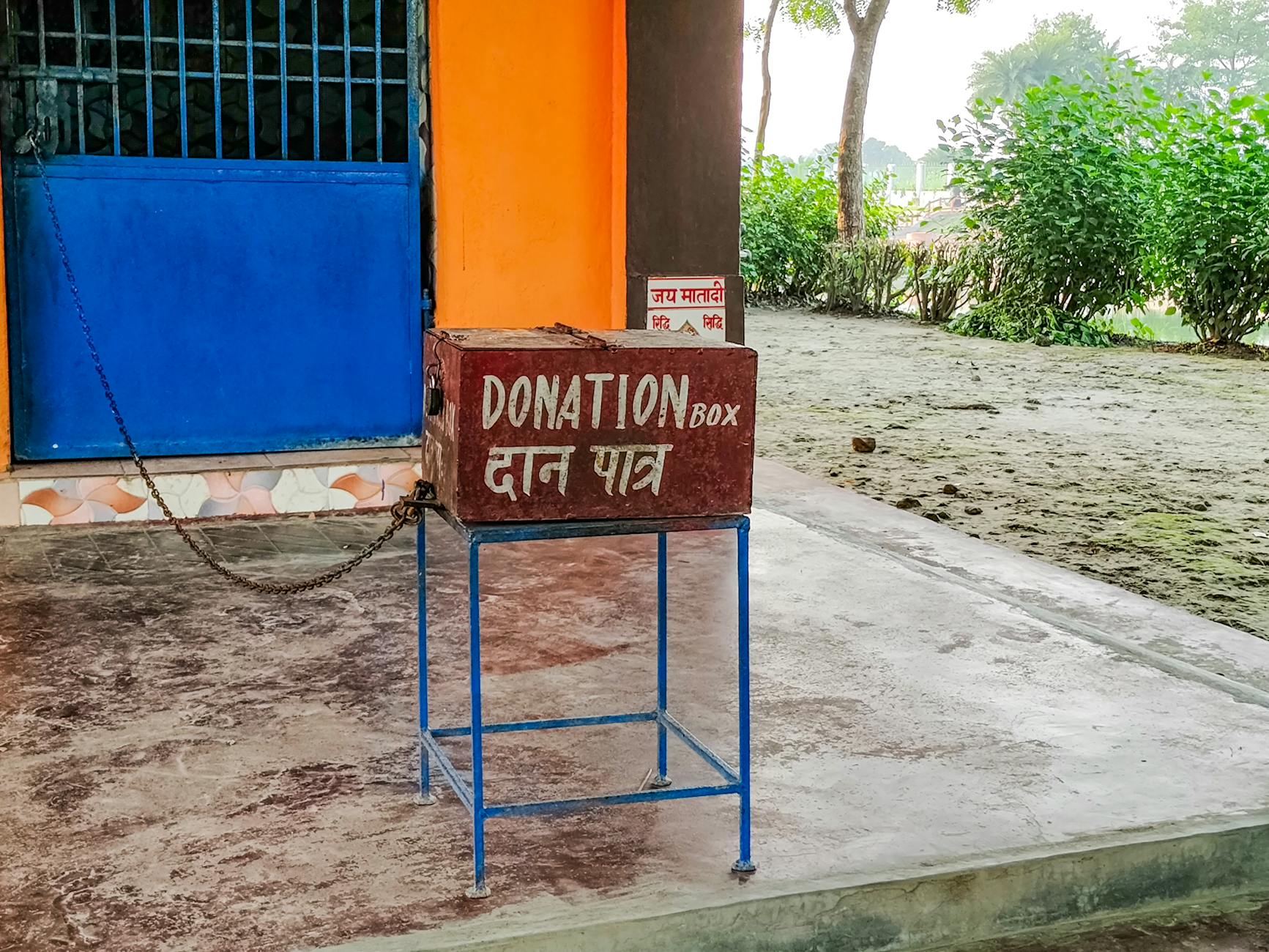
What Kejriwal actually said
Kejriwal's argument rested less on numbers and more on silence. By his account, neither the Uttar Pradesh police, nor the Enforcement Directorate (ED), nor the Central Bureau of Investigation (CBI) has registered an FIR despite allegations of large-scale pilferage. For an issue involving a temple funded by donations from millions of ordinary devotees, he argued, that absence of action is itself the story.
His phrase about the government falling was deliberately provocative, and it should be read as political rhetoric rather than a verified prediction. The underlying claim, though, is straightforward and testable: when allegations of this size surface, central agencies usually move quickly. Here, the most visible response has come from the state, not the centre, and not from the agencies Kejriwal named.

The numbers, and what stands up
Kejriwal is not the only opposition voice on this. Samajwadi Party chief Akhilesh Yadav earlier alleged that crores in donations were unaccounted for, and Congress leaders have floated a figure of around ₹1,400 crore in claimed irregularities going back to before construction was complete. These numbers vary wildly from speaker to speaker, which is a useful warning sign: most are political estimates, not audited findings.
What does have a paper trail is narrower and, in some ways, more telling. Internal audits — reportedly by statutory auditor V. Shankar Aiyar & Co. and a separate review involving TCS — flagged weaknesses in how cash was handled. Investigators have pointed to discrepancies in the documentation of gold, silver and precious-stone offerings, including reports that around ten chest-boxes of metal offerings were moved without matching accounting entries. That is a documentation and control problem. Whether it amounts to theft, negligence, or sloppy record-keeping is exactly what the inquiry is meant to settle.
So why hasn't the CBI or ED stepped in?
This is the part worth slowing down on, because the answer is more procedural than conspiratorial. A few realities shape it:
- The CBI needs a trigger. It generally takes up a case on a reference from a state government, a central authority, or a court order. Uttar Pradesh has chosen its own SIT instead of asking the CBI in, so there is no automatic central entry point yet.
- The ED needs a predicate offence. The Directorate investigates money laundering, but it usually needs an existing FIR for a scheduled crime — theft, cheating, criminal breach of trust — to anchor its case. No registered FIR means no obvious hook for the ED.
- A registered temple trust is not a government body. That complicates jurisdiction and the question of which agency "owns" any wrongdoing.
- The state has pre-empted the field. By setting up its own investigation, UP has signalled it intends to handle this in-house, at least for now.
None of this proves there is nothing to find. But it explains why the agencies Kejriwal named have stayed on the sidelines without that meaning a cover-up. Critics like him read the gap as protection; the government reads it as due process already underway.
What the SIT has done so far
The Uttar Pradesh government constituted a three-member Special Investigation Team on June 13, 2026, reportedly led by Lucknow divisional commissioner Vijay Vishwas Pant, and handed it a tight 15-day window to report. Chief Minister Yogi Adityanath, breaking his silence on the matter, asked people to give the process those 15 days, casting the inquiry as proof of seriousness rather than something to fear.
The SIT has not treated this as a formality. It has questioned Champat Rai, the Trust's general secretary and a central figure in the temple movement, and has reportedly told several Trust and temple functionaries not to leave Ayodhya while the probe runs. Around eight to ten employees connected to cash handling have been examined. Investigators have zeroed in on the weakest links in the donation chain: the opening of collection boxes, the counting of cash, and the deposit of bundled notes at banks, with questions raised about CCTV coverage and whether standard procedures were followed.
The Trust's defence
The Trust's position is that there is no scam to uncover. Senior functionaries have said all donations and transactions are recorded through a transparent, audited system, and that no case of misappropriation or theft has been established. Trust member Mahant Dinendra Das has publicly maintained that the books are clean.
Nripendra Mishra, who chairs the temple construction committee, has defended Champat Rai personally, framing the issue as a lapse in monitoring rather than intent and pointing to decades of service to the temple cause. That distinction — failure of oversight versus deliberate diversion — is the hinge the whole controversy turns on. One is a governance embarrassment that better systems can fix. The other is a crime. Notably, Champat Rai was kept off the guest list at a recent official function attended by the Chief Minister, a small but widely-read signal that the establishment is keeping its distance while the inquiry runs.
Why this is bigger than one allegation
Strip away the politics and a real question remains: how does a temple that received an extraordinary flood of public donations account for every rupee, gram of gold and loose gemstone dropped into a collection box by an anonymous devotee? Counting unmarked cash and unrecorded jewellery is genuinely hard, and weak controls invite exactly the kind of suspicion now playing out. That is true whether or not a single coin was actually stolen.
That is also why Kejriwal's intervention lands. He has tied a governance story to an emotional one — faith, money, and the sense that ordinary people's offerings deserve airtight accounting. For the ruling side, the danger is not just the audit; it is the optics of appearing slow on a temple it has championed.
What to watch next
A few things will tell you which way this is heading:
- The SIT report. Its findings, due within the set deadline, will either substantiate the discrepancies or shrink them to procedural lapses.
- Any FIR. If the state registers a criminal case, the door opens for the CBI or ED — the very agencies Kejriwal says are missing.
- The Supreme Court angle. A representation has been filed seeking an FIR and a court-monitored CBI probe; if the court entertains it, the centre of gravity could shift away from the state SIT entirely.
- Tighter controls. Expect new SOPs around box-opening, counting, CCTV and deposits, regardless of what the probe concludes.
For now, the honest summary is narrow. There are documented gaps in how some offerings were recorded. There is an active state investigation. And there are sweeping allegations, including Kejriwal's, that remain unverified and firmly denied. The most useful question he raised is also the simplest: when the report lands, will it be allowed to name names — or quietly file the matter away?