Photo: Sagar Ambator / Pexels
Rashmika–Vijay Wedding & the 36-Point Astrology of Love
When Rashmika Mandanna and Vijay Deverakonda finally married on 26 February 2026, the South Indian film industry's most-watched celebrity wedding in years did something curious to the national conversation: it sent millions of people back to their grandmothers' favourite question. Were the stars right? Behind every glossy wedding photo in India sits a quieter, centuries-old ritual — the matching of two birth charts — and the couple fans nicknamed "VIROSH" gave that ancient practice a fresh, mainstream spotlight.
This piece does two things. It lays out exactly what happened at one of the year's defining weddings, and then it decodes the astrology that Indian families still lean on to decide whether two people are "meant" to be — the 36-point compatibility test that almost no one outside the country understands.

The VIROSH wedding that defined the season
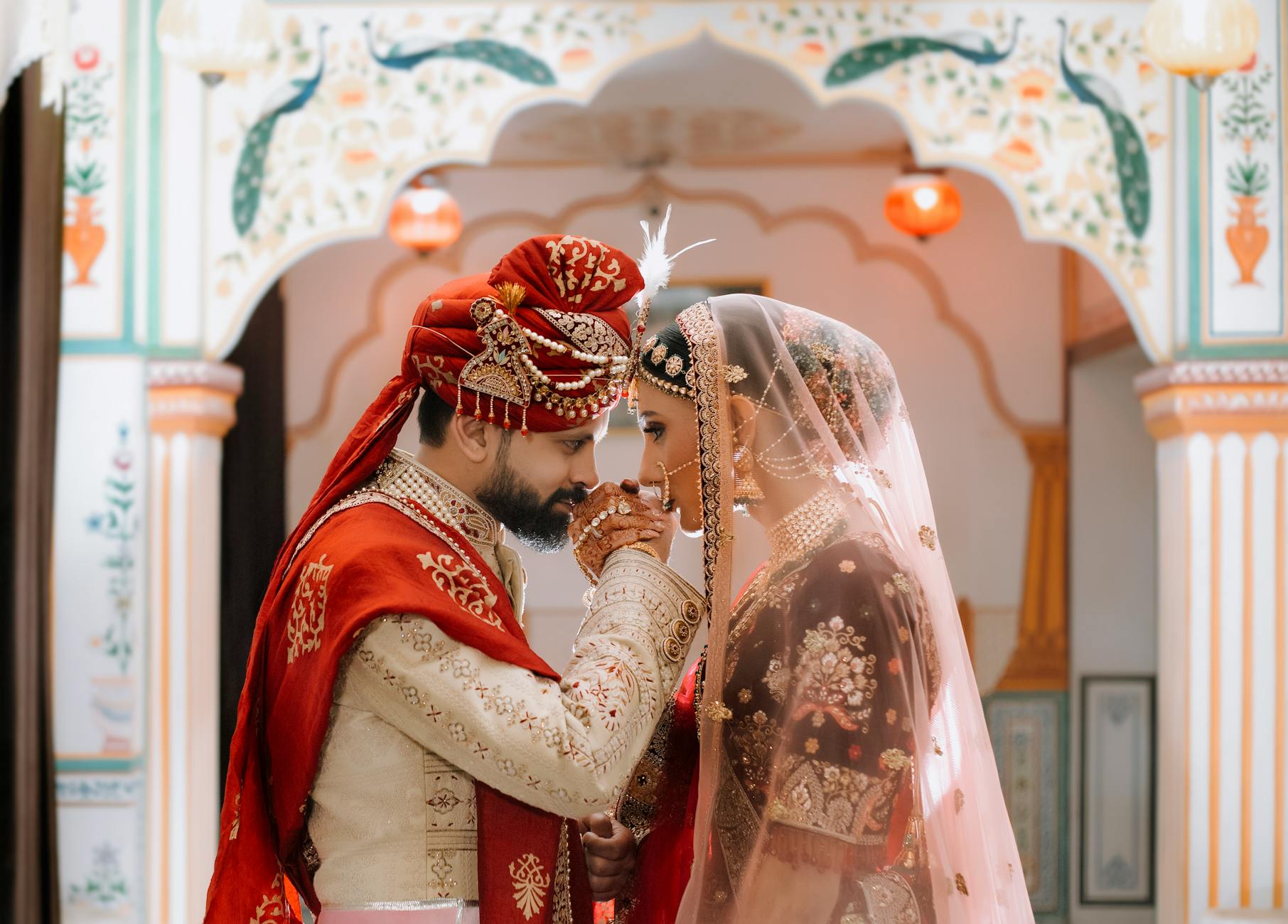
After years of will-they-won't-they speculation, the two actors got engaged on 3 October 2025 in a private Hyderabad ceremony attended only by close family. The wedding followed roughly five months later, on 26 February 2026, at a heritage hotel property in Udaipur, Rajasthan. Reports placed the auspicious muhurat — the astrologically chosen wedding moment — at around 10:10 in the morning.
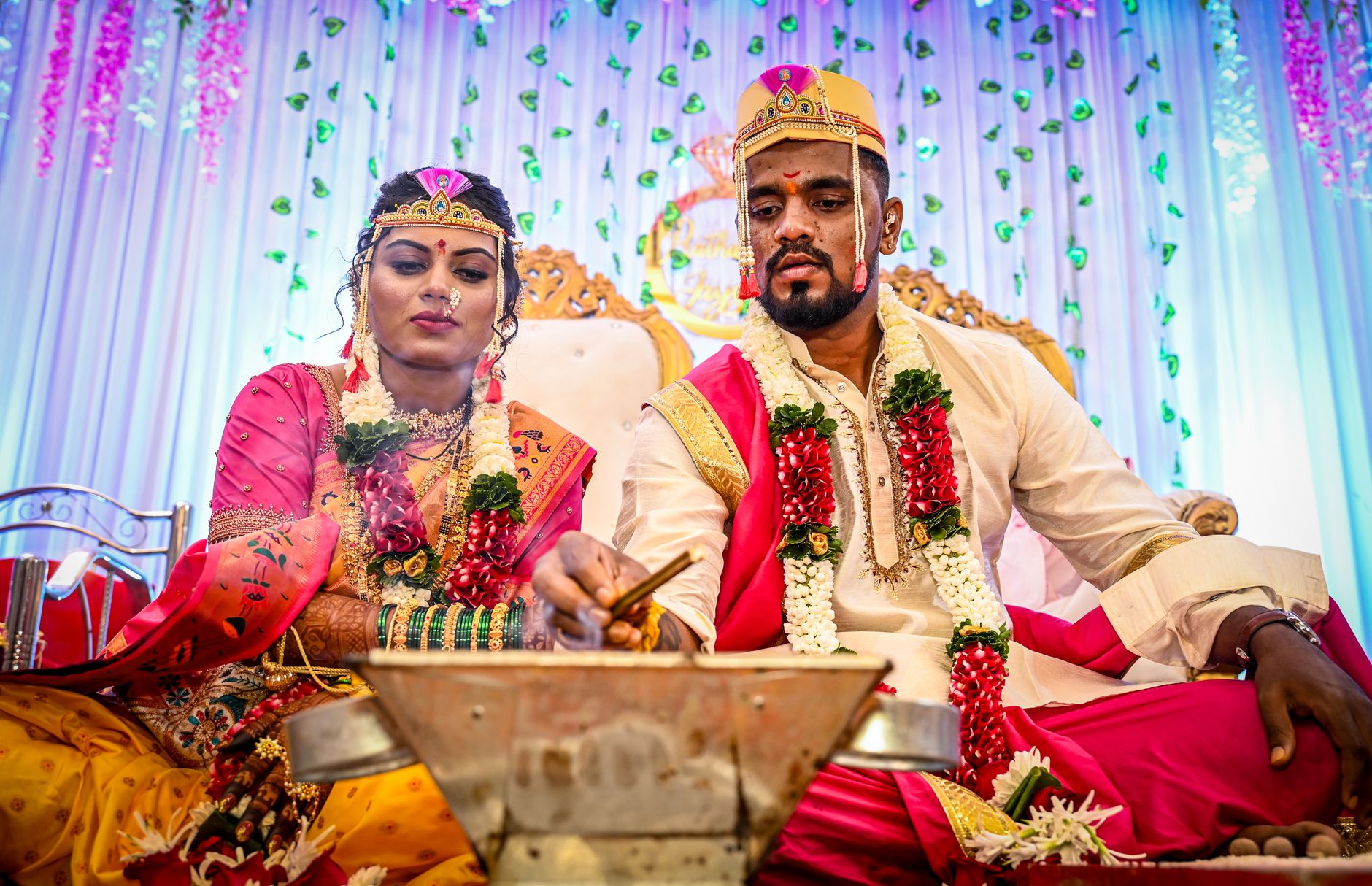
What made the day distinctive was that it honoured two very different family traditions. Vijay comes from a Telugu background; Rashmika is Kodava, from the Coorg region of Karnataka. So the couple held the Telugu Hindu rituals first, followed later in the day by the vibrant, martially-tinged customs of a Kodava celebration. It was deliberately intimate, heavily guarded, and almost entirely shielded from cameras until the couple chose to share images themselves — a now-familiar template for the modern Indian star wedding, where exclusivity is the real luxury.
The scale of public interest was telling. This was not just a marriage between two popular faces; it was a cross-regional union that fans had emotionally invested in for years, and it reignited an evergreen Indian fascination: what, beyond chemistry, makes a couple "compatible"?
How Indian astrology actually scores a couple
In most of India, a prospective match is run through Guna Milan, also called Ashtakoota matching. It is, at heart, a scoring system. An astrologer compares the two birth charts and awards points across eight categories — the kootas — for a maximum of 36. The closer a couple gets to that ceiling, the stronger the predicted bond.
The headline number families fixate on is the total. A score of 18 is the classical floor below which a match is traditionally discouraged. Between 18 and 24 is considered average, 24 to 32 is read as a genuinely good match, and anything above 32 is treated as rare and excellent. Many conservative families will not seriously consider a proposal below 18, and stricter ones push that bar up to 24.
But here is the part most people miss: the total alone is misleading. The eight kootas are not weighted equally, and two of them can quietly override an otherwise glowing scorecard.
The eight kootas, decoded
Each koota measures a different layer of a relationship, and each carries a different maximum:
- Varna (1 point) — a broad measure of temperament and spiritual outlook.
- Vashya (2 points) — mutual attraction and the balance of influence between partners.
- Tara (3 points) — health, destiny and general well-being.
- Yoni (4 points) — physical and intimate compatibility.
- Graha Maitri (5 points) — mental and intellectual rapport, friendship and shared values.
- Gana (6 points) — underlying nature and behavioural type.
- Bhakoot (7 points) — emotional harmony, family stability and shared prosperity.
- Nadi (8 points) — health and, in classical belief, genetic compatibility for children.
Notice the rising scale. The system loads its heaviest weight onto the final two categories — Bhakoot and Nadi together account for 15 of the 36 points. That design is not accidental. It encodes the priorities of the tradition that created it: long-term emotional steadiness and healthy offspring matter more to the verdict than surface attraction.
Why Nadi and Bhakoot can sink a high score
This is where the maths gets genuinely interesting, and where the popular "how many points did you get?" question falls apart. A couple can score an impressive-sounding 30 out of 36 and still be flagged as a poor match if they fail Nadi or Bhakoot.
When the two charts share the same Nadi, the result is Nadi dosha — a zero on the eight-point category. Classical texts treat this as one of the strongest warnings against a marriage, linking it to health and fertility concerns. Bhakoot dosha, similarly, is a zero on the seven-point family-harmony category, traditionally associated with friction, financial strain and emotional distance.
The practical rule astrologers repeat is blunt: a clean 22 can be safer than a flawed 30. A high total with an unresolved Nadi dosha worries a traditional astrologer far more than a modest score where every individual koota clears its threshold. In other words, the system rewards balance over brilliance — no single dazzling category compensates for a critical failure elsewhere.
Mangal dosha and the myth of the perfect kundli
Guna Milan is only half the analysis. A serious chart-matching also checks for separate afflictions, the most feared being Mangal dosha (or being "Manglik") — a placement of Mars believed to bring turbulence, particularly to the partner's longevity or to marital peace. It is one of the most socially loaded terms in Indian matchmaking; entire proposals have collapsed over it.
Yet astrologers themselves are quick to note nuance. A Manglik person matched with another Manglik is often considered to cancel the effect. Charts can carry remedies, and many practitioners stress that a single dosha is rarely a standalone verdict. The deeper point is that no kundli is flawless. The tradition was never designed to find a perfect match — it was designed to surface risks so two families could discuss them with eyes open.
That reframing matters. Read generously, Guna Milan functions less like a cosmic pass-fail and more like a structured conversation starter about temperament, health, values and expectations — the very things marriage counsellors elsewhere in the world also probe, minus the planets.
What modern couples — and celebrities — actually do
Few star couples publicise their kundli scores, and Rashmika and Vijay are no exception; their compatibility numbers are private, and it would be invention to claim otherwise. What is visible is the muhurat — that carefully chosen morning wedding time — which signals that astrology still had a seat at the table even in a thoroughly modern, cross-cultural celebration.
That is the wider pattern. Across urban India, couples increasingly meet on their own terms and decide for themselves, then run a kundli match almost as a cultural formality, or to win over hesitant elders. Apps now generate Guna Milan scores in seconds, democratising a practice that once required a family astrologer and a paper almanac. The ritual survives not because everyone believes Mars dictates a marriage, but because it offers families a shared language for blessing a union.
Why it matters
The VIROSH wedding is a useful mirror. A couple as contemporary and independent as Rashmika and Vijay still folded regional ritual and an auspicious timing into their day, proving how deeply this framework is woven into Indian life — even at its most glamorous, camera-shy peak.
For readers, the takeaway is practical, not mystical. If you ever sit through a kundli match, ignore the headline number first and ask about Nadi and Bhakoot. Understand that 18 is a floor, 24-plus is comfortable, and a balanced chart beats a lopsided high score. Whether you read the planets literally or treat them as folklore, the eight kootas quietly map onto the things every lasting relationship actually needs — friendship, temperament, health and stability. A grand celebrity wedding simply makes us curious enough to finally look up what the stars were supposedly saying all along.
Source: bollywoodshaadis.com