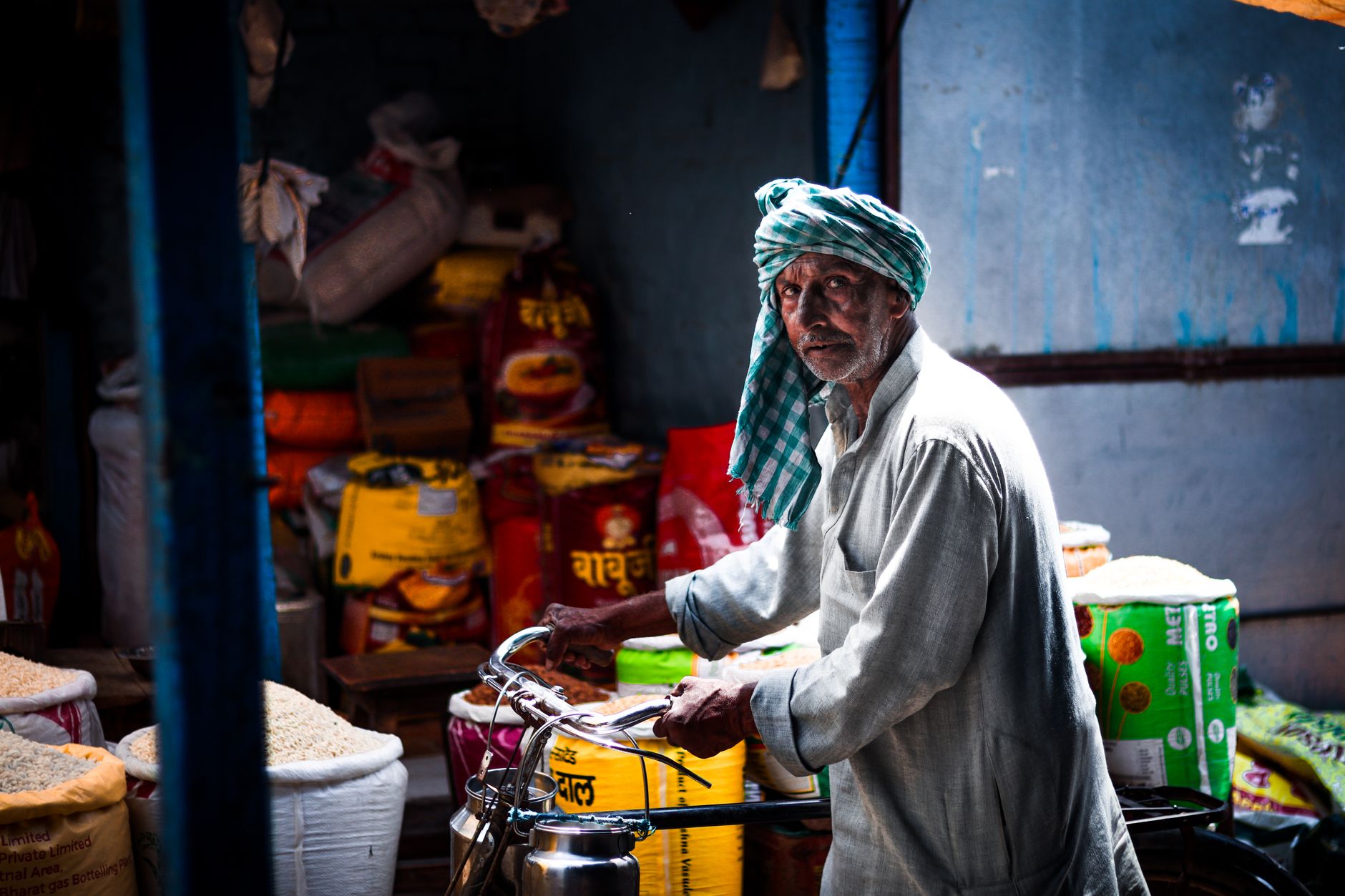
Photo: Abhishek Gupta / Pexels
Ration Card in 2026: Apply, Track and Add a Family Member Online
Few documents quietly shape an Indian household's monthly budget as much as the ration card. It is the key to subsidised — and right now, free — foodgrain for roughly 80 crore people, and it doubles as address and identity proof at banks, schools and government offices. Yet the rules around how you apply for one, check its status, or add a family member keep shifting from state to state. Here is how the system actually works in 2026, and the exact steps to act on it.

Who is eligible, and which card you get
Ration cards under the National Food Security Act (NFSA), 2013 come in two main subsidy categories. Priority Household (PHH) cards go to lower-income families and entitle each listed member to 5 kg of grain a month. Antyodaya Anna Yojana (AAY) cards are for the poorest households — the elderly without support, widows, landless labourers — and carry a flat 35 kg per household every month, regardless of how many people are on the card.
There is no single national income cut-off. States set their own ceilings within central guidelines, and for PHH the figure quoted in many states is an annual household income below roughly ₹1 lakh, with extra rules around landholding and assets. Households above these limits may still get a non-subsidised (APL-type) card in some states that mainly serves as ID and address proof.
One detail worth knowing: because of PMGKAY (Pradhan Mantri Garib Kalyan Anna Yojana), the NFSA grain is currently supplied free of cost, not at the old ₹3/₹2/₹1 rates. The Union Cabinet extended this free-grain scheme for five years, from January 2024 through 31 December 2028. So an eligible card today means free wheat or rice, not just cheaper grain.

How to apply for a ration card online
Ration cards are issued by state and Union Territory governments, not the Centre, so there is no single all-India application form. The starting point is the national portal nfsa.gov.in, which links out to every state's Food, Civil Supplies and Consumer Affairs portal. A handful of states still run an offline-only or part-offline process, so check yours first.
The online flow is broadly the same everywhere:
- Register or log in on your state's PDS portal, usually with a mobile number and OTP.
- Choose the new ration card option — it may be called "New RC", "Apply for ration card" or "NFSA application".
- Enter family details: the head of the household first, then every member with name, Aadhaar number, date of birth and relationship.
- Upload documents: Aadhaar of all members, a residence proof, an income certificate where required, a recent family photo and bank passbook details.
- Pick your Fair Price Shop (FPS) from the list tied to your address — this is the shop where you will collect grain.
- Submit and save the acknowledgement number. You will need it for tracking and at the dealer's verification.
The NFSA sets a 30-day outer limit for issuing a card after verification, though in practice it can run 30 to 90 days depending on the state's queue and field checks. Application fees are nominal and state-specific — typically a small amount in the range of a few rupees to a few tens of rupees, with some states waiving it entirely.
Checking your application status
Once you have applied, the acknowledgement or reference number is your tracking key. On the same state portal, look for a "Know your application status", "Track RC" or "Citizen corner" link, enter the number (and sometimes your district), and you will see whether the file is pending with the inspector, approved, or rejected.
If it is rejected, the portal usually states why — most often a document mismatch, an Aadhaar that didn't authenticate, or a duplicate name already on another card. You can correct and resubmit rather than starting from scratch. A nationwide rule worth remembering: no family may hold a ration card in more than one state, and Aadhaar seeding is used to catch duplicates.
Adding or removing a family member
This is the request that trips up most people, usually after a birth or a wedding. The process runs through the same state PDS portal, under a "Member addition", "Modify ration card" or "Add/Delete member" option. The request normally has to come from the head of the family whose card is being changed.
What you will need depends on the situation:
- A newborn or child: the child's birth certificate and Aadhaar (or enrolment), plus the parents' details.
- A spouse after marriage: the marriage certificate, the new member's Aadhaar, and proof that her or his name has been removed from the parents' card to avoid a duplicate.
- Removing a member who has died or moved out: a death certificate or the relevant transfer proof.
Enter the new member's name, Aadhaar, date of birth and relationship, upload the proof, and submit. You will again get an acknowledgement number to track, and processing typically takes one to four weeks. The Aadhaar requirement matters because it is used for biometric de-duplication — the system blocks the same person from drawing grain on two cards.
The Mera Ration app and mandatory e-KYC
Two apps have become central to managing a card without queuing at the ration office. The Mera Ration 2.0 app lets you view your card, check your entitlement and recent transactions, locate nearby Fair Price Shops, and use One Nation One Ration Card (ONORC) portability — the feature that lets a migrant collect grain from any FPS in the country, not just the home shop.
Separately, governments have pushed mandatory e-KYC, where every member on a card must verify identity against Aadhaar. This can be done at the ration shop on the dealer's biometric device, or from home using the Mera eKYC app together with the Aadhaar Face RD app, which authenticates through a selfie-style face scan.
Here is where you must be careful in 2026: the e-KYC deadline is not uniform. Different states have announced different cut-off dates through early 2026, and several have extended them more than once. A central reference date of around 30 April 2026 has been cited, but it is genuinely state-dependent, so treat any single "national deadline" you see online with caution and confirm the date on your own state's portal. The consequence of missing it is real — an unverified member can be flagged, which may pause that person's share of the grain until e-KYC is completed.
What to keep in mind
A ration card is one of the few entitlements where a small paperwork lapse directly cuts off food support, so a few habits help. Keep every member's Aadhaar correctly linked, complete e-KYC well before your state's date rather than at the last minute, and update the card promptly after any birth, marriage or death rather than letting it drift out of sync.
Because the finer numbers — income ceilings, fees, exact deadlines and even which steps are online — vary by state and change often, always cross-check against your state's official Food and Civil Supplies portal before you act. The national rules set the floor; your state fills in the details that decide what lands in your bag at the ration shop.