Rockies vs Red Sox: Why MLB Highlights Click in India
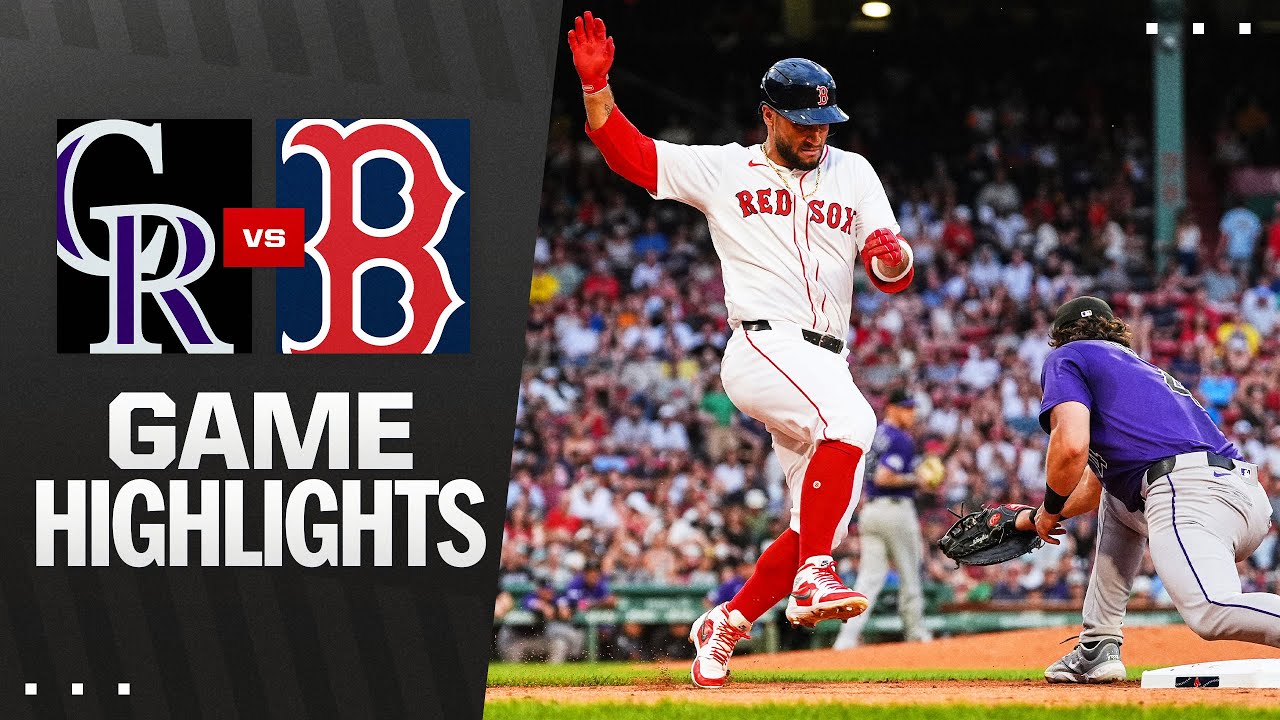
A three-minute MLB highlights package titled "Rockies vs. Red Sox Game Highlights" from a July 2025 fixture has been quietly racking up views in a country that does not play baseball at any serious level. That is the curious part. The clip itself is the standard fare MLB posts after every game — a tidy montage of pitches, hits and defensive plays set to the broadcaster's call. What is unusual is who is clicking on it. A noticeable slice of the audience is sitting in India, a place where the word "home run" still mostly turns up in cricket commentary by accident.
So this is a story less about one ballgame and more about how an American pastime keeps leaking into Indian feeds, and why a routine recap of the Colorado Rockies against the Boston Red Sox became the unlikely doorway.
What the clip actually shows
If you have never watched baseball, the video is a clean primer. A pitcher throws, a batter swings, the ball either dies in a glove or rockets into the gaps, and runners scramble between bases while fielders try to cut them down. The editing is brisk: every clip is a moment of consequence, so you get the dramatic beats without the long stretches of nothing that define a live game.
That compression is exactly why highlight reels travel so well. A full baseball game can run well over three hours with frequent pauses. The official recap strips it to the parts that matter, which suits a casual viewer scrolling at night far more than a live broadcast at an awkward hour. For Indian viewers, a US afternoon game lands deep in the local night, so the next-morning highlight is often the only realistic way in.
On the field, the two teams could hardly have been more mismatched in mood. The Red Sox are one of baseball's heavyweight franchises, a club with deep history, a famous home in Fenway Park and a national following. The Rockies, based in Denver, were going through a season many followers described as historically grim. The exact final score of this particular fixture is not the point worth dwelling on; the contrast in fortunes is.
Why a Rockies game became a talking point
Through 2025, the Colorado Rockies were repeatedly flagged as being on track for one of the worst records in modern Major League Baseball. That kind of futility becomes its own spectacle. Sports fans everywhere have a soft spot for a team in freefall, partly out of sympathy and partly out of morbid curiosity about just how bad it can get.
When a struggling side meets an established one, every flash of resistance gets amplified. A good inning from the underdog, a defensive gem, a batter refusing to fold — these become shareable moments precisely because the script says they shouldn't happen. Algorithms reward exactly that kind of mild surprise, and a clip with a clear David-and-Goliath framing tends to get pushed harder than a forgettable blowout.
There is also a simple recommendation effect. Once a user watches one sports highlight, YouTube floods the sidebar with more, regardless of sport. Indian viewers who came for football or cricket clips are increasingly nudged toward baseball, and a well-titled MLB recap is an easy click.
The cricket connection Indians can't unsee
For an Indian audience raised on cricket, baseball is both alien and oddly legible. The grammar is familiar even when the vocabulary isn't.
- A bowler becomes a pitcher, hurling overhand instead of with a straight arm.
- The batsman becomes a batter, swinging a round bat rather than defending stumps.
- Fielding, catching and the chess match between the man throwing and the man hitting all rhyme with cricket's core duel.
- The big difference is geometry and pace: baseball runs on a diamond, players sprint between four bases, and an innings ends after three outs, not ten wickets.
That half-recognition is a powerful hook. A cricket fan watching baseball is constantly translating, and translation is engaging. You find yourself comparing a slugger's swing to a six over long-on, or a diving outfield catch to a boundary save. The sports are genuinely different, but the muscle memory of watching one makes the other feel approachable rather than baffling.
MLB's slow march toward new markets
None of this is accidental on the league's side. Major League Baseball has spent years trying to widen its footprint beyond North America, with serious investment in Japan, South Korea, Latin America and parts of Europe. Posting free, polished highlights on global platforms is part of that strategy — low cost, high reach, and a gentle on-ramp for the merely curious.
India has never been a primary target the way cricket-rich markets are for the IPL, or the way Europe is for the NBA and NFL. But the country is too large an English-speaking, sports-hungry, smartphone-saturated audience to ignore entirely. The presence of a sizeable Indian diaspora in the United States adds another layer; families split across continents often share clips, and a parent in the US following the Red Sox can easily pull a cousin in India into the conversation.
The honest read is that baseball remains a niche curiosity in India, nowhere near football's growing fan base, let alone cricket's dominance. What is changing is the friction. It costs nothing to watch a highlight, the format is bite-sized, and the algorithm does the marketing for free.
How an Indian newcomer can actually follow along
If the clip has nudged you toward giving baseball a real try, a few practical notes help.
- Start with official highlights rather than full games. They teach the rhythm without the time commitment.
- Learn three terms first — strike, ball and out. Most of the drama hangs off those.
- Pick a team with a story. A famous club like the Red Sox or a chaotic underdog like the Rockies both give you a reason to care beyond the rules.
- Mind the clock. US games often fall in the Indian small hours, so highlights and condensed recaps are your friend.
- Treat the cricket comparison as a crutch, then drop it. The sports diverge fast once you understand outs and base running.
Live viewing and full archives in India usually sit behind a subscription service, and streaming arrangements can change from season to season, so it is worth checking the current terms before paying for anything.
What this trend really tells us
It would be a stretch to call a single trending highlight the dawn of baseball fever in India. It isn't. But it is a small, real signal of how sports fandom now spreads — not through television deals and stadium tours alone, but through a frictionless feed that ignores borders and serves whatever holds attention.
A losing team in Denver, a storied club from Boston, a three-minute recap, and an algorithm that doesn't care where you live. That is the whole machine. Whether MLB ever builds a meaningful Indian audience will depend on far bigger moves — local commentary, accessible streaming, maybe a marquee event in the region. For now, the takeaway is humbler and more interesting: curiosity travels cheaply, and a cricket country is quietly clicking play on baseball when nobody is forcing it to.