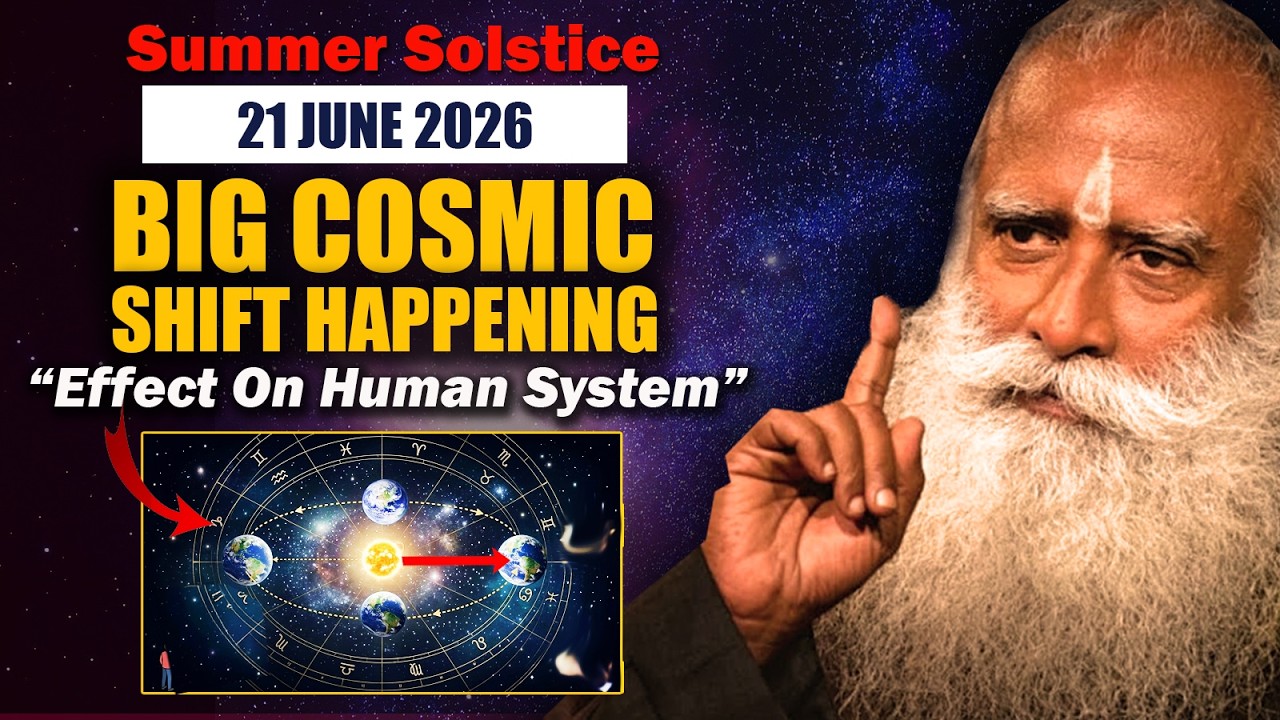
Sadhguru's Summer Solstice Video and the 'Cosmic Shift' Claim
On the night of 21 June 2026, a live video from spiritual teacher Sadhguru climbed the YouTube trending lists with a title built for clicks: a red dot, the words summer solstice, and a warning about a "big cosmic shift" and what viewers "must do." Within hours the comment counter was running fast and the clip was being reshared across WhatsApp groups and Instagram. The framing is dramatic. The underlying event is one of the most ordinary, dependable things in the sky.
What actually happened in the sky
The June solstice is the moment the Sun reaches its northernmost point relative to Earth's tilt. For everyone in the Northern Hemisphere, including all of India, it is the longest day of the year and the shortest night. After it, daylight begins to shrink again, minute by minute, all the way to December.
This is settled astronomy, not prophecy. The date moves by a day or so each year because our calendar and the Earth's orbit don't line up perfectly, which is why some years it lands on the 20th and some on the 21st. There is no scientific evidence that the solstice triggers a sudden surge of energy through the human body, alters mood overnight, or marks a literal shift in human consciousness. The day is longer; the planet keeps turning; nothing about your biology changes in a measurable jolt.
That gap, between a routine astronomical marker and the language of a cosmic turning point, is exactly where the video lives.
The idea Sadhguru is selling, and where it comes from
Sadhguru, founder of the Isha Foundation, has built years of solstice content around a traditional Indian idea: the solstice marks the start of Dakshinayana, the half of the year when the Sun is seen to travel southward. In classical Hindu reckoning the northward run, Uttarayana, is treated as a bright, outward, auspicious phase, while Dakshinayana is read as a more inward, reflective period suited to contemplation and spiritual practice.
So when the video talks about the body and mind being more receptive, or about this being a good time to "turn inward," it is drawing on that calendrical and yogic framework rather than on physics. It is belief and tradition presented with confidence. None of that is hidden, but the packaging, with its alert-red styling and "must do this" urgency, blurs the line for a casual viewer between an observed sky event and a claimed effect on human beings.
It is worth being plain here: the "effect on humans" part is interpretation. Treat it as one teacher's spiritual reading of the calendar, not as established fact.
Why this clip is blowing up
A few things stack up to push a video like this into the trending tab, and most of them have little to do with the solstice itself.
- A fixed, shareable date. Everyone knows roughly when the solstice is, so the content has a built-in calendar hook that resets every year and feels timely the moment it drops.
- Live-premiere mechanics. The red "live" badge, a countdown, and real-time chat reward early viewers and tell YouTube's recommendation system that people are watching now, which amplifies reach.
- A massive existing audience. Sadhguru's channels run into tens of millions of subscribers, so even an average upload starts with enormous distribution.
- Curiosity-gap wording. "Must do this" and "effect on humans" are classic open loops. You have to click to find out what the this is.
- Low-cost, high-comfort payoff. The actual advice tends to be gentle and harmless, so people share it without the hesitation a riskier claim would invite.
The result is a feedback loop that has very little to do with whether the central claim holds up and everything to do with how attention moves online in 2026.
The public reaction is split, and predictable
Responses to the video fall into recognisable camps. Devotees and longtime followers post gratitude, screenshots of the timestamp, and notes that they paused work to watch. A second group treats it as soothing background, a reason to slow down on a hot June evening without buying into the metaphysics.
Then there are the skeptics, who push back on the "cosmic shift" language as fear-flavoured marketing dressed up as ancient wisdom. The criticism is less about whether meditation helps and more about the gap between the calm advice and the alarmed thumbnail.
There is also the recurring scrutiny that follows the Isha Foundation itself, from land-use questions around its Coimbatore centre to a high-profile habeas corpus matter that reached the courts. That history means a section of viewers approach any viral Isha content with caution. Mention it to be fair, not to convict; the legal and administrative debates are separate from whether a solstice meditation does any harm.
What the advice usually amounts to
Strip away the styling and the practical suggestions in this genre of content are mild and, frankly, sensible for the season. If you are curious but cautious, this is roughly what "must do this" tends to translate into:
- Spend a few quiet minutes inward through meditation or simply sitting still, ideally around sunrise or sunset.
- Slow the pace of an over-scheduled day and notice the longer light instead of rushing through it.
- Eat a little lighter and stay hydrated, which is good advice during an Indian June regardless of the date.
- Step outside and mark the moment, even informally, as a small seasonal reset.
None of this requires you to accept the cosmic-shift premise. The risk lies not in the practice but in the possibility that urgent framing pushes vulnerable viewers toward fear, paid programmes, or a belief that skipping a ritual on one specific evening carries some cost. There is no evidence it does.
How to read trending spiritual content without getting played
The solstice video is a clean case study in a wider pattern: real events wrapped in supernatural urgency, then optimised for the algorithm. A simple filter helps separate the signal from the sell.
- Ask what is observable fact (the longest day) versus interpretation (its supposed effect on you).
- Notice urgency cues, the red dot, the deadline, the "must." Genuine guidance rarely expires at midnight.
- Check whether the payoff costs you anything, money, fear, or a subscription, before you act on it.
- Remember that virality is not validity. A clip's view count measures distribution, not truth.
Apply that and you can enjoy a calming solstice meditation for what it is, without mistaking a recommendation system's enthusiasm for cosmic instruction.
What happens next
Expect the cycle to repeat. The December solstice and the next two equinoxes will bring fresh versions of the same template, and Sadhguru is far from the only creator working this seam; astrologers, wellness influencers and reaction channels all chase the same dates. As long as live premieres reward real-time attention and a recurring calendar guarantees a hook, this kind of content will keep surfacing on trending.
The sky did exactly what it does every June. The more interesting story is on the screen: how a longer-than-usual day became a "big cosmic shift," how that phrase travelled, and how millions of us decided, for a few minutes on a Sunday, to sit still and watch.