Scotland vs Netherlands: Why This Cricket Clash Is Viral
A live stream titled simply "Scotland v Netherlands" is racking up views on YouTube, and on the face of it that should not be a global event. Neither side is a Test nation. There is no marquee superstar, no billion-dollar broadcast deal, no prime-time slot built around it. Yet Scotland vs Netherlands cricket keeps trending — and the reason says a lot about where the sport is quietly heading.
This is Associate cricket, the tier below the established giants, and it is having a moment. A free stream, two genuinely competitive teams and a worldwide audience of cricket-starved fans have combined into something organisers have chased for years: eyeballs from places these teams will probably never tour.
Why a Scotland vs Netherlands cricket stream is suddenly everywhere
The simplest explanation is access. Top-tier internationals sit behind paywalls and regional rights deals. Associate fixtures, by contrast, are frequently streamed free on official YouTube channels run by the ICC or the home cricket board. There is no login, no subscription, no geo-block headache for most viewers — you click and you are watching live cricket.
That matters in a market like India, where appetite for live cricket is effectively bottomless. When there is no IPL game, no India fixture and nothing else on, a competitive, freely available match between two well-matched sides fills the gap nicely. Algorithms do the rest: a live sports thumbnail, a steady viewer count and the word "LIVE" are catnip to YouTube's recommendation engine.
There is also novelty. For many casual fans, watching Netherlands and Scotland is a glimpse of a cricket world they rarely see — different accents, modest grounds, and players who often hold day jobs or county contracts rather than franchise riches.
Two 'small' teams with a giant-killing habit
The label "minnow" badly undersells both sides. These are teams with a documented history of ambushing the establishment, and that pedigree is a big part of the appeal.
- The Netherlands beat South Africa at the 2022 T20 World Cup, a result that knocked the Proteas out of the tournament.
- The Dutch did it again at the 2023 ODI World Cup in India, stunning South Africa in Dharamsala — on Indian soil, in front of Indian fans.
- The Netherlands famously beat England at Lord's in the very first match of the 2009 T20 World Cup.
- Scotland beat England in a one-off ODI in 2018, and shocked the cricket world by beating teams above them at multiple T20 World Cup qualifiers.
When two sides like that meet, the cricket is rarely a procession. The head-to-head record in T20 internationals runs to roughly 15 matches, split almost evenly — exactly the kind of finely balanced rivalry that produces last-over finishes and clips worth sharing.
A rivalry built on the road to qualification
What looks like a low-stakes friendly is usually anything but. Scotland and Netherlands meet repeatedly across the ICC's qualifying architecture, where every result carries real consequences.
Much of their cricket runs through structures such as ICC Cricket World Cup League 2 (the ODI pathway) and regional T20 World Cup qualifiers. Points and net run rate accumulated in these unglamorous fixtures decide who advances to global qualifiers — and, ultimately, who books a seat at a World Cup alongside the big names.
In other words, a wicket in an empty-looking ground in Voorburg or at Edinburgh's Grange can be the difference between a World Cup berth and another four-year wait. That jeopardy is why these teams play so hard, and why the cricket holds up despite the lack of fanfare.
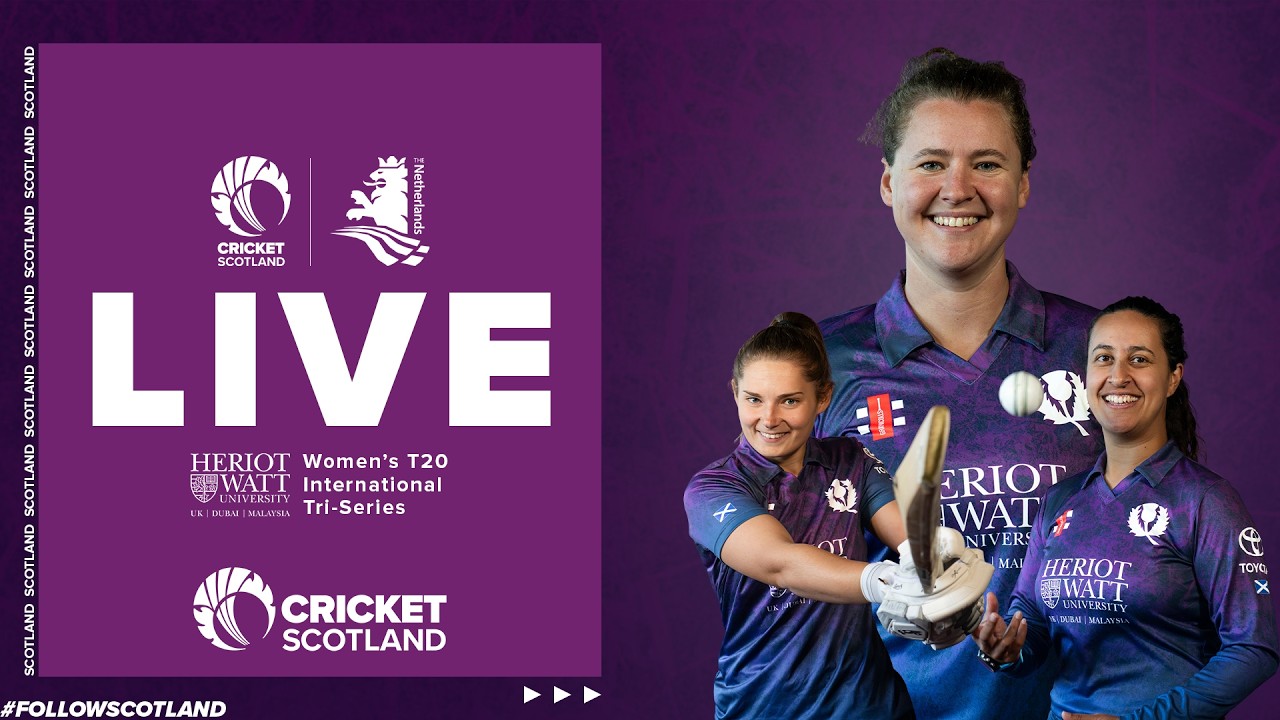
The rivalry also spans the women's game. Scotland and Netherlands feature in T20I tri-series and Women's T20 World Cup qualifying events, where the same logic applies: limited chances, narrow margins and matches that genuinely shape a team's international future.
Why YouTube changed the game for Associate cricket
For decades, the biggest barrier facing teams outside the elite was not talent — it was visibility. If nobody can watch you, nobody talks about you, and sponsors stay away. Free YouTube streaming has cracked that open.
The model is straightforward and cheap to run: a handful of cameras, basic graphics, sometimes a single commentator, and a live feed pushed straight to a global platform. The production is modest, but it works. A close finish travels instantly through clips, reaction videos and social posts, and suddenly an Associate match has a footprint that no amount of press releases could buy.
For fans, the trade-offs are honest:
- Pros — it is free, easy to find, available worldwide, and a genuine window into the wider cricket world.
- Cons — production values are basic, replays and analysis are limited, and feeds can occasionally drop.
For the boards involved, every viewer is a data point that strengthens the case for funding, sponsorship and more fixtures. Going viral is not a vanity metric here — it is a survival strategy.
The gap Associate cricket still has to close
The enthusiasm should not paper over the structural reality. The financial chasm between full members and Associates remains vast. The richest boards command broadcast revenues that dwarf the entire annual budgets of smaller nations, and that imbalance shapes everything from player wages to how often these teams get to play the big sides.
Many Netherlands and Scotland players juggle cricket with county stints, club commitments or outside work. Schedules can be thin, and prized matches against Test nations are rare. Critics argue the global game is still built to protect the incumbents, with too few pathways for outsiders to break through and stay up.
Yet the counter-argument is playing out live on these very streams. Expanded World Cups, more qualifying cricket and free distribution are slowly widening the base. The 2022 and 2023 upsets were not flukes; they were proof that the gap, while real, is closing where it counts — on the field.
What happens next
Expect more of this, not less. As global tournaments expand their fields, qualifying cricket becomes more frequent and more meaningful, which means more Scotland vs Netherlands-style fixtures with genuine stakes attached. Free streaming will keep delivering these games to audiences in India and beyond.
The likely trajectory is a virtuous loop: viral moments build audiences, audiences attract sponsors, sponsors fund better cricket, and better cricket produces more viral moments. None of it turns an Associate nation into a financial superpower overnight. But it does something arguably more important — it keeps these teams visible, watched and in the conversation.
So the next time a plain-looking live cricket stream from a small European ground starts trending, it is worth a closer look. Behind the modest setup is a fierce, well-matched rivalry, a real shot at a World Cup, and a quiet revolution in who gets to watch the game — and who gets to dream of beating the best.