
Photo: Ayyeee Ayyeee / Pexels
Solid-State Battery EVs: 2026 Is the Tipping Point for India
For a decade the solid-state battery has been the electric-vehicle world's favourite vapourware — always five years away, always one lab breakthrough short of changing everything. In 2026 that excuse is finally running out. A cluster of announcements from China, the United States and Europe suggests the technology has crossed from the research bench onto the production line, and the implications for India's fast-growing EV market are bigger than most buyers realise.
This is not another concept teased on a stage. Real cells are coming off real assembly lines, passing the kind of brutal safety tests that have humbled earlier prototypes. Whether your next car or scooter benefits soon, or only a few years from now, depends a lot on where you live — and India sits in an awkward but fascinating spot.

What A Solid-State Battery Actually Changes
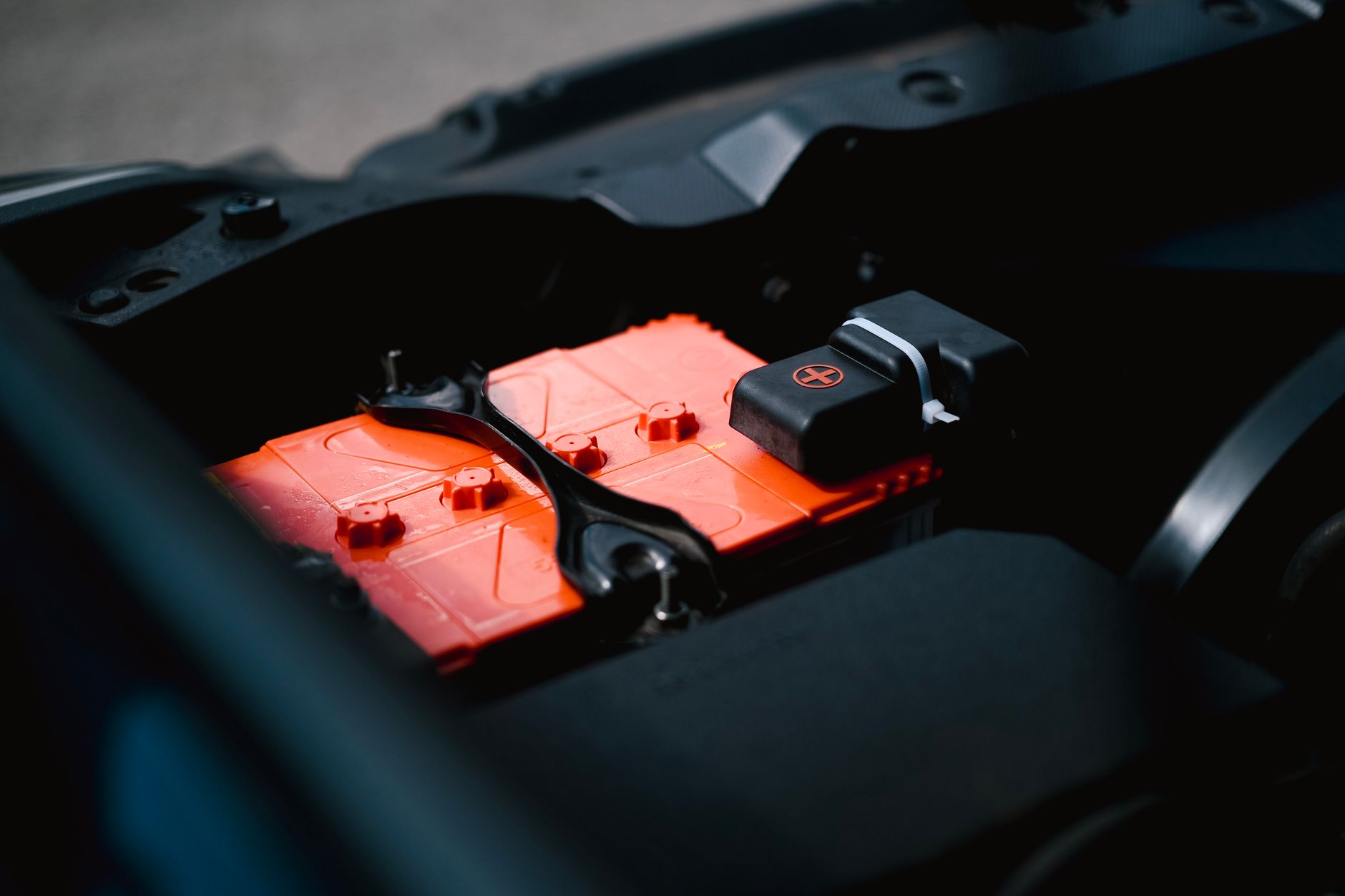
Every EV on Indian roads today runs on a lithium-ion battery that uses a liquid electrolyte — the medium ions travel through as the cell charges and discharges. That liquid is flammable, sensitive to heat, and a big reason batteries need bulky cooling systems and careful charge management. A solid-state battery swaps the liquid for a solid electrolyte. It sounds like a small substitution. It is anything but.
A solid electrolyte is far less likely to catch fire, tolerates higher temperatures, and lets engineers pack more energy into the same space. Manufacturers are quoting cell energy densities in the range of roughly 260 to 500 watt-hours per kilogram, against the rough 150 to 250 typical of today's mainstream packs. More energy in less weight is the holy grail of EVs: it translates directly into longer range, lighter cars, and — crucially — far less anxiety about catching fire in a 45-degree Indian summer.
The 2026 Breakthroughs That Changed The Conversation
The loudest signal came from Greater Bay Technology (GBT), a Chinese firm backed by automaker GAC Group. GBT confirmed that its first A-sample all-solid-state cells have rolled off a production line, and — this is the headline — they passed stress testing without fire or explosion. The company is targeting gigawatt-hour-scale mass production and in-vehicle use within 2026, using a composite solid electrolyte that it says finally cracks the manufacturing problems that stalled rivals.
GAC, for its part, has talked up solid-state packs with energy density above 400 Wh/kg and a claimed driving range beyond 1,000 km on China's CLTC test cycle — roughly 621 miles. It is worth treating that figure with healthy scepticism: test-cycle numbers are optimistic everywhere, and real-world range in mixed driving is always lower. But even a heavily discounted version of that claim would comfortably beat almost anything on sale today.
The news was not confined to China. At CES 2026, Finland's Donut Lab unveiled a production-ready solid-state cell rated around 400 Wh/kg with a claimed full recharge in about five minutes, and named Verge Motorcycles as the first production vehicle to use it. US-based Factorial and QuantumScape, meanwhile, both edged closer to manufacturing maturity. Toyota, long the most-watched name in the field, is still aiming at a 2027–28 commercial launch — which means it now risks being beaten to market by companies it once dismissed.
Why This Matters More In India Than Anywhere
India's two biggest EV headaches are heat and range anxiety, and solid-state technology aims straight at both. A solid electrolyte stays stable at temperatures that would push a liquid cell toward thermal runaway, the chain reaction behind the EV fires that periodically make headlines here. For a country where surface temperatures routinely punish parked vehicles, a chemistry that shrugs off heat is not a luxury feature — it is a safety upgrade.
Then there is range. Indian buyers have learned to mentally subtract a chunk from every brochure figure: a real-world range roughly 20 to 30 percent below the official ARAI number is a fair rule of thumb, meaning a claimed 500 km often becomes 350–400 km in city-and-highway use. Solid-state energy density could rebuild that lost cushion, or let manufacturers fit smaller, cheaper, lighter packs for the same usable range. In a price-obsessed market, the second option may matter even more than the first.
Faster, cooler charging helps too. India's public charging network is thin and unevenly spread, so every minute shaved off a top-up reduces the practical penalty of not having a charger at home — a reality for the vast majority of urban Indians who park on the street or in shared lots.
The Catch: When Will Indians Actually Buy One?
Here is the sober part. As of now there is no fully solid-state EV on Indian roads, and there will not be one for a while. India has historically adopted premium battery technology three to five years after it debuts in global luxury segments. Even on an optimistic reading, that points to meaningful local availability around the end of the decade rather than next festive season.
The near-term story is more modest: semi-solid-state cells, a halfway chemistry that keeps a small amount of gel or liquid while capturing some of the safety and density gains. Pilot-scale production of such cells in India is expected to begin later in 2026, and that transitional tech is the realistic bridge for the next few years. Anyone promising a 1,000 km solid-state EV in an Indian showroom this year is selling hype.
Cost is the other wall. First-generation solid-state cells will be expensive, and new manufacturing lines take years to reach the scale that brings prices down. Early adopters will be premium cars in wealthy markets; mass-market hatchbacks and the electric scooters that dominate Indian EV sales will wait their turn. India's domestic cell-manufacturing push, still in its infancy, will shape how quickly that turn arrives.
What To Watch Next
The genuine test is not the press release but the durability data. A cell that survives a few hundred charge cycles in a lab is interesting; one that holds up over years of pothole vibration, monsoon humidity and 12-month summers is what actually matters. Watch for independent, real-world cycle-life results rather than headline range claims.
Watch the supply chain too. Solid-state designs can reduce dependence on some scarce materials but may demand others, and India will want to localise as much of that as possible rather than swap one import bill for another. The government's battery manufacturing incentives and any moves toward semi-solid-state production lines will be the clearest signs of how seriously local industry is taking the shift.
For now, the honest takeaway is this: 2026 is the year solid-state batteries stopped being a someday technology and became a soon technology. For Indian buyers it is less a reason to delay a purchase than a reason for optimism about what the next EV — the one after the one you might buy this year — will be capable of. The vapourware is finally condensing into something you can hold in your hand. The only real question left is price, and how fast it falls.
Source: electrek.co


