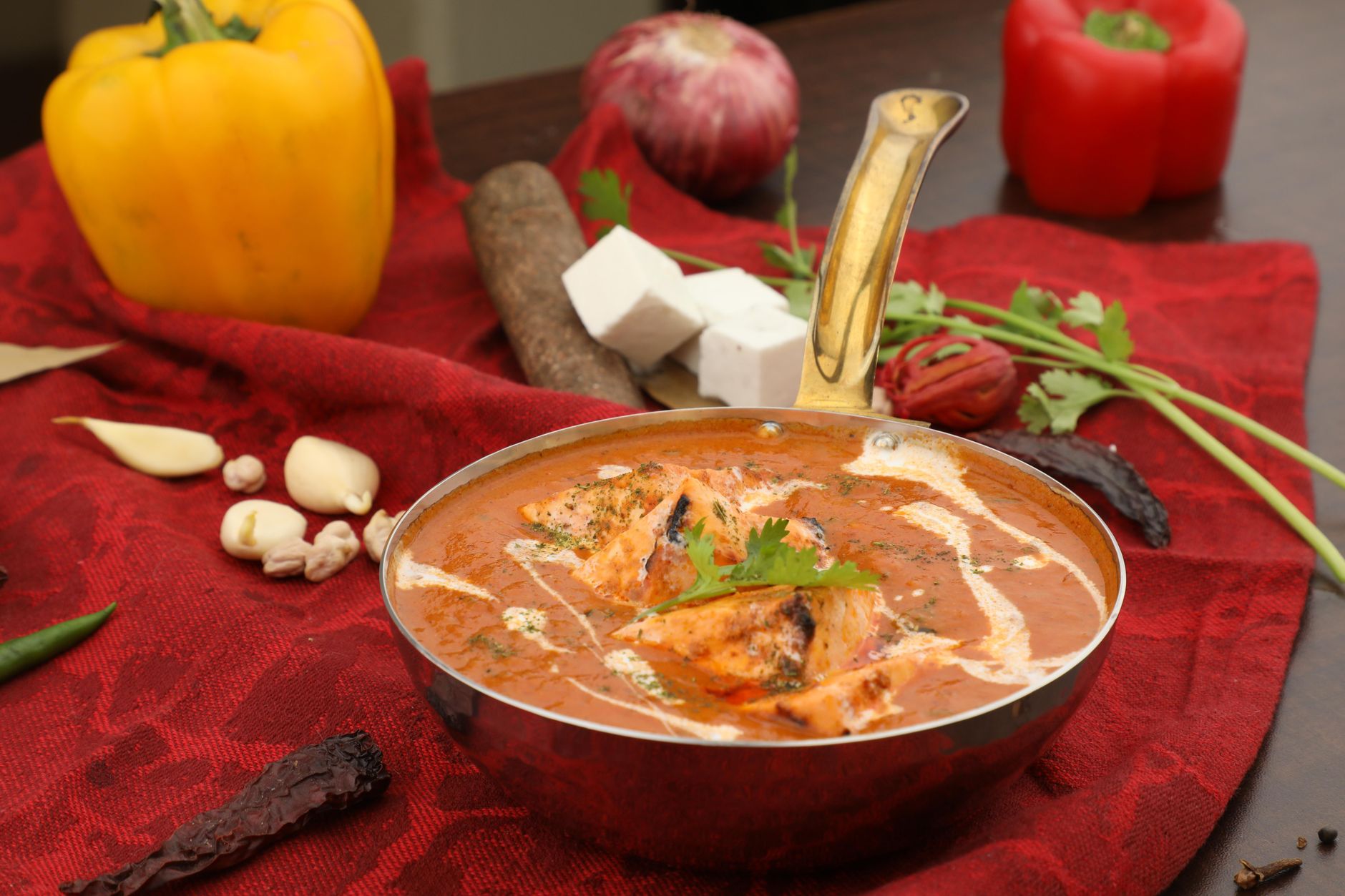
Photo: Prabal Pratap Singh / Pexels
That Cheap Restaurant Paneer Might Not Be Paneer At All
Walk into almost any Indian kitchen, sabzi market or restaurant supply store and paneer is everywhere. What fewer people realise is that a growing share of those soft white cubes never came from milk at all. They are analogue paneer — a manufactured stand-in built from vegetable oil, starch, emulsifiers and a little protein, engineered to melt, fry and crumble enough to fool you. It costs a fraction of the real thing, which is exactly why it keeps turning up in your kadhai paneer.
The issue boiled over in early 2025 when a customer flagged that a large restaurant-supply platform was listing analogue paneer in its catalogue. The backlash was less about the product existing and more about the silence around it: diners had no idea whether the ₹320 paneer tikka on their plate was dairy or a vegetable-fat lookalike. Food regulators have since leaned on the industry to come clean, and home cooks are learning to test what they buy.
What analogue paneer actually is
Think of it as a copy that swaps out the expensive part. In genuine paneer, milk is curdled with an acid, the milk fat and protein bind together, and the whey is drained off. In analogue paneer, the milk fat is replaced wholly or partly by cheaper vegetable oil — often refined palm or similar — while starch, emulsifiers and sometimes skimmed milk powder or plant protein hold the block together.
The result is deliberately convincing. It has the right colour, a similar bite, and it survives frying and gravies. The economics are the whole point: milk fat is one of the costliest ingredients in dairy, so cutting it out lets a manufacturer sell a paneer-shaped product for far less. In a market where loose paneer can swing wildly in price, that gap is tempting for anyone buying in bulk.
It is worth separating two different problems here. One is honest analogue paneer, sold as a labelled non-dairy product to people who knowingly want a cheaper or vegetarian-friendly option. The other is plain adulteration — where it is dumped into the supply chain and billed as real paneer. The first is legal. The second is fraud.

What the rules say
India's food regulator, the FSSAI, does not ban analogue dairy outright. Instead it draws a hard line on honesty. A product where milk constituents are fully or partly replaced by non-dairy ingredients must be sold and described as an analogue or non-dairy product, never simply as paneer.
The labelling has to spell out the substitution in plain terms — declaring that it contains a non-milk ingredient and naming its source, and that it does not contain the milk component it is replacing. The point is that a shopper should be able to read the pack and know immediately that this is not curdled milk.
Through 2025 the regulator pushed states to step up inspections, especially around festival seasons when demand spikes and fake dairy floods in. The newer front is restaurants: there is a clear move to make eateries declare on their menus when a dish uses analogue paneer, so the disclosure reaches the diner and not just the wholesaler. Until that is universal, the burden of asking still falls on you.
Why the viral iodine test can mislead you
If you have scrolled through food reels, you have seen the iodine test: drop tincture of iodine on a piece of paneer, and if it turns blue-black, it is declared fake. Iodine reacts with starch to form that dark colour, and real paneer should contain no starch. So a blue patch is a genuine warning sign.
The problem is what it misses. A lot of analogue paneer leans on vegetable oil rather than heavy starch, and iodine says nothing about fat. A clean, no-colour result can lull you into thinking your paneer is pure when the fat has quietly been swapped. Dairy-industry voices have pushed back hard on the viral test for exactly this reason — it produces false confidence, and in some hands it has wrongly smeared honest sellers.
Treat the iodine test as one narrow check for one specific cheat, not a verdict. A positive is a strong reason to walk away. A negative proves very little.
Better ways to check at home
No single home test is foolproof, but stacking a few gives you a far more honest read than a colour reaction alone. Real paneer behaves like a soft, fragile dairy block; analogue versions tend to be rubbery, oddly elastic or unnaturally smooth.
- The boil test. Cut a cube and boil it in water for a few minutes. Genuine paneer stays largely intact and may soften; an analogue block can turn greasy, leave an oily film on the water, or fall apart in an unnatural way.
- The squeeze and crumble. Press a piece between your fingers. Real paneer crumbles into a grainy, slightly moist mass. A springy, chewy texture that bounces back like a cheese slice is suspect.
- The taste. Fresh dairy paneer tastes mildly milky and a touch sweet. A flat, oily or faintly chemical aftertaste is a warning.
- The hot-water rub. Mash a piece into warm water and rub it. Some adulterated samples release a slippery, soapy feel rather than the clean grain of milk solids.
- The price gut-check. This is the simplest of all. If a vendor's paneer is dramatically cheaper than the going rate for milk paneer, ask why before you assume you found a bargain.
None of these is a lab result, and a clever product can pass one or two. But a sample that fails the boil and feels rubbery and costs suspiciously little is telling you something.
What this means for the way you shop and eat
The honest takeaway is not that paneer has become poison. Analogue paneer, eaten knowingly, is a legitimate cheaper option. The real injury is deception — paying full dairy price, and assuming full dairy nutrition, for something built largely from refined oil and starch. Milk paneer is prized for its protein and calcium; the vegetable-fat version delivers far less of both.
A few habits protect you. Buy from sellers who can tell you exactly what their paneer is, prefer branded packs that carry a proper ingredient label, and read that label for words like non-dairy, analogue, vegetable oil or starch. When you eat out, simply ask the staff whether the kitchen uses analogue paneer — the more diners ask, the faster disclosure becomes routine. If something tastes off, push the plate back and say why.
The paneer scare is really a transparency story. The product is allowed; hiding it is not. Knowing the difference, and being willing to ask one direct question, is most of the defence you need.