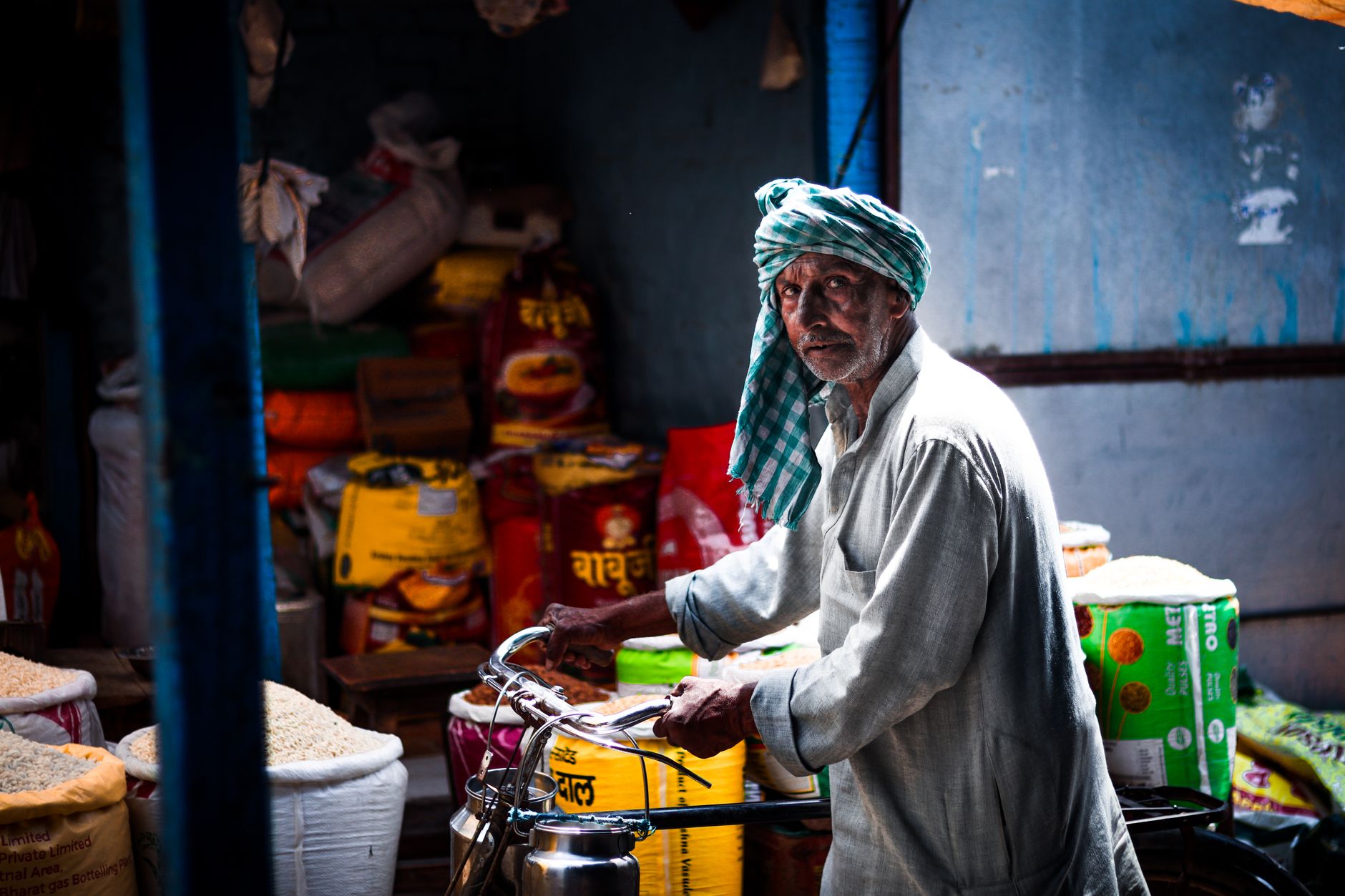
Photo: Ankit Rainloure / Pexels
Where Does Your MP's ₹5 Crore Go? Track MPLADS Yourself
Every year, each Member of Parliament in India is handed a pot of ₹5 crore to spend on building things in their patch — culverts, classrooms, water tanks, community halls. The scheme is called MPLADS, the Members of Parliament Local Area Development Scheme, and it is one of the few pots of public money that is tied directly to the person you voted for. Yet most voters have no idea how much was spent in their ward, on what, or whether anything was built at all. The good news: the data is largely public, and you can pull it yourself.
The single most important thing to understand is that the headline figure is misleading in a useful way. Your MP does not actually spend this money. They recommend. Someone else writes the cheque. Once you grasp that split, the whole system — and where it tends to break — becomes much easier to see.
What MPLADS is and where the ₹5 crore really sits
MPLADS started back in 1993 with a modest ₹5 lakh per MP. It climbed over the years and has stood at ₹5 crore a year since 2011-12. The scheme is run by the Ministry of Statistics and Programme Implementation (MoSPI), not by Parliament's own staff.
Here is the part that surprises people. The annual ₹5 crore is released in two equal instalments of ₹2.5 crore, and it goes directly from the central government to the District Authority of the MP's nodal district — usually the District Collector or a designated officer. The MP never touches the cash. They send a recommendation letter; the district vets it, sanctions it, picks the executing agency, pays the contractor and certifies completion.
That design is deliberate. It keeps the money inside the government's normal audit chain. It also means accountability is shared in a way that lets everyone point at someone else when a project stalls.

Who can recommend works, and where
Not every MP can spend anywhere. The rules follow the type of seat:
- A Lok Sabha MP recommends works only within their own constituency.
- An elected Rajya Sabha MP can recommend works anywhere in the state they were elected from.
- Nominated members of either House can recommend works anywhere in the country.
The money is also meant to be socially targeted. An MP must recommend works worth at least 15% of the annual entitlement for areas with a large Scheduled Caste population and 7.5% for Scheduled Tribe areas. When you check the records, those two numbers are a quick test of whether your MP is following the spirit of the scheme or just funding the well-connected pockets of the constituency.
What the money can and cannot buy
MPLADS is built for durable community assets — things the public can use long after the contractor leaves. Think pucca roads, school buildings, drinking-water schemes, drains, public libraries, primary health sub-centres, solar lights, bus shelters.
What it is not for matters just as much:
- No salaries, office expenses or running costs.
- No assets for an individual's private benefit.
- No purely commercial buildings, places of worship or land acquisition.
- A standing ceiling of ₹75 lakh applies to assets built through trusts and societies, to stop the fund being routed into private institutions.
There is one more feature with big consequences: MPLADS money is non-lapsable. If a year's funds are not released or used, they carry forward instead of being returned. That sounds taxpayer-friendly, but it is also why so many constituencies sit on crores in unspent balances year after year. An MP can finish a five-year term having recommended only a fraction of what was available.
How to actually track the money in your constituency
This is the part worth bookmarking. You do not need an insider. The workflow:
- Start on the official portal. Go to the MPLADS website (mplads.gov.in). It carries constituency-level data on funds released, works recommended, sanctioned and completed. The newer eSAKSHI platform, which took effect on 1 April 2023, runs the recommendation-to-sanction process end to end and feeds this public reporting.
- Pick your MP and constituency and look at three numbers together: total funds available, amount sanctioned, and amount actually spent. A wide gap between sanctioned and spent usually means projects are stuck.
- Read the works list. Each entry shows the project, its cost and its status. Cross-check whether the SC and ST share is anywhere near the 15% / 7.5% floor.
- File an RTI for the gritty detail. The portal shows what was sanctioned, not always what was built well. A one-page Right to Information application to the District Authority can ask for the list of works in your block, the executing agency, the sanctioned cost and the completion certificates. The fee is usually just ₹10.
- Visit the site. Most MPLADS works carry a signboard naming the scheme and cost. If the board is missing or the cost looks padded, that is your story.
A practical tip: compare your MP against the neighbouring constituency. Utilisation varies wildly between members, and the contrast often says more than any single number.
Why this matters more than it looks
MPLADS is small change next to the Union Budget, but it is intensely local. A blocked drain, a missing classroom, a dark stretch of road — these are exactly the things the scheme is supposed to fix, and exactly the things voters notice. Because the money is non-lapsable and the MP only recommends, it is also easy for both the politician and the bureaucrat to coast. Sunshine is the cheapest fix.
The scheme has drawn criticism over the years from auditors for weak monitoring, ghost works and diversion, and it was suspended during 2020-22 to redirect funds toward the pandemic response before being restored. None of that means the model is broken; it means oversight is thin and citizen attention is rare.
The five-minute habit worth building
You elect an MP for many reasons, but here is one concrete yardstick that does not depend on speeches. Has the ₹5 crore a year actually turned into things you can stand next to?
Once a year, open the portal, note the spent-versus-available gap, scan the works list for your area, and check the SC/ST share. If something looks off, an RTI costs less than a cup of chai and a stamp. The fund belongs to your constituency, not to the MP — and the only reason it so often goes unwatched is that almost nobody bothers to look.