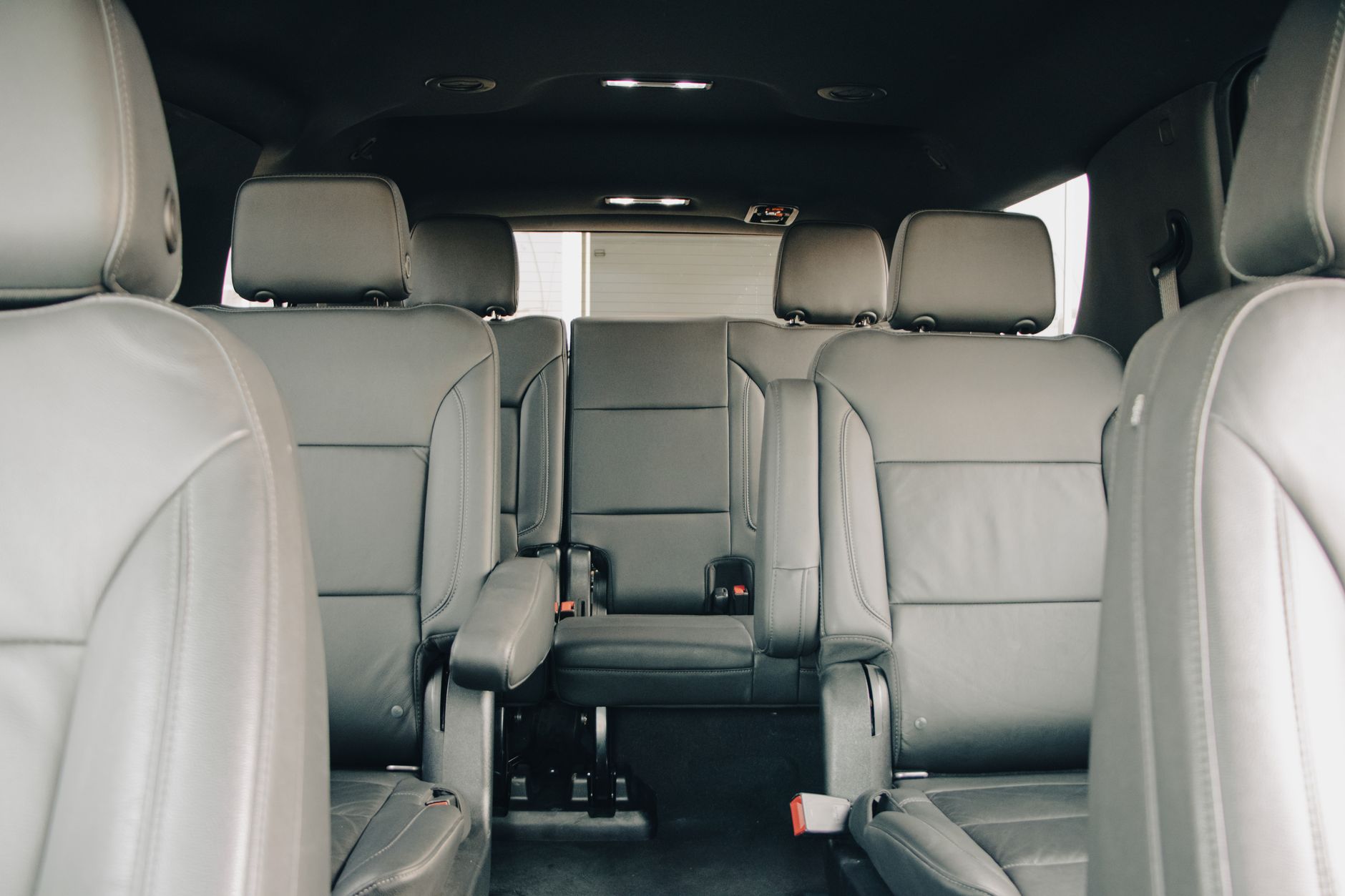
Photo: Esmihel Muhammed / Pexels
Best 7-Seater Cars in India 2026: Picks for Every Budget
Buying a 7-seater car in India in 2026 has never offered more choice — or more ways to overspend. The segment now stretches from a ₹6 lakh modular hatchback-MPV all the way to luxury three-row SUVs nudging ₹40 lakh, and the right pick depends almost entirely on how you actually use that third row. Is it for daily school runs and the in-laws, or two genuine adults on a 600 km highway drive? That single question changes everything.
The other big shift is that families are no longer choosing blindly between a boxy MPV and a muscular SUV. Hybrids have arrived, a 5-star crash rating is now a realistic expectation rather than a luxury, and even electric 7-seaters are landing on showroom floors. Here is a clear, budget-by-budget guide to the best 7-seater cars in India in 2026, plus the trade-offs nobody tells you about until you've signed the cheque.
The budget champions: under ₹12 lakh
If your third row is occasional and your wallet is the priority, two cars dominate this space.
- Renault Triber (from around ₹6 lakh): India's cheapest true 7-seater, and a genuinely clever piece of packaging. It squeezes seven seats into a sub-4-metre body, with a 1.0-litre petrol engine and rear seats that fold and even lift out entirely. Don't expect highway muscle — it's a city car first — but for value, nothing touches it.
- Maruti Suzuki Ertiga (from around ₹8.8 lakh): the segment's perennial best-seller, and for good reason. It is refined, frugal, easy to drive and cheap to maintain, and the CNG version makes it the lowest-running-cost 7-seater you can buy. In the most recent financial year it led the entire segment by sales volume, which tells you how much India trusts it.
The honest caveat here: both cars are about practicality, not protection or plushness. Third-row space is best reserved for children or short hops, and feature lists are modest. But as a no-drama family workhorse, the Ertiga in particular is hard to argue against.

The sweet spot: ₹12–20 lakh
This is where most serious family buyers land in 2026, and the competition is brutal — in a good way for you.
The Kia Carens (from roughly ₹11 lakh) blurs the line between MPV and SUV, with crossover styling, multiple engine options and a feature list — ventilated seats, big touchscreen — that punches above its price. The Toyota Rumion is essentially a rebadged Ertiga with Toyota's after-sales reassurance.
On the SUV side, the Mahindra Scorpio N (from around ₹13.5 lakh) is the value hero. It offers proper body-on-frame toughness, real 4×4 capability in higher trims, a 2.2-litre diesel or 2.0-litre petrol, and crucially a 5-star Global NCAP safety rating. Its sibling, the Mahindra XUV700 (now badged XUV 7XO, from around ₹13.7 lakh), throws in Level-2 ADAS, twin 10.25-inch screens and connected-car tech that shames cars costing far more.
The Hyundai Alcazar and Tata Safari round out this bracket. The Safari, with its 2.0-litre Kryotec diesel and a 5-star NCAP score of its own, is the value pick for buyers who want a big, imposing diesel SUV without crossing ₹20 lakh in most trims.
The premium family haulers: ₹20 lakh and up
Spend more and the conversation shifts from "can it seat seven" to "how comfortable is the seventh seat." Here, one car still sets the benchmark.
The Toyota Innova Hycross (on-road from roughly ₹21 lakh) is the default choice for buyers who genuinely use all three rows. Its petrol-hybrid powertrain delivers a claimed efficiency above 20 km/l — remarkable for a vehicle this size — and the third row offers the most usable legroom and cushioning in the class. Captain chairs in the middle row, a panoramic sunroof and a quiet cabin make it the airport-run and road-trip favourite for a reason.
Above it sit the lifestyle and luxury options: the Jeep Meridian for European road manners, the seven-seat MG Hector Plus, and, new for 2026, the imposing MG Majestor — a fully loaded flagship with multiple off-road modes, Level-2 ADAS and massaging front seats — for those who want a ₹40 lakh statement.
The electric and upcoming wave
2026 is also the year the third row goes electric. The VinFast Limo Green, an all-electric 7-seater MPV, is slated for an India launch in the first half of the year, targeting a real-world range of around 450 km and a price reportedly in the ₹18–22 lakh band — aimed squarely at fleet operators and forward-looking families.
More is coming. A 7-seater Renault Duster is expected later in 2026, stretching the popular SUV's body to fit a third row, while the Volkswagen Tayron brings a brand-new three-row turbo-petrol SUV to the German brand's India line-up. If you can wait, the back half of the year will only widen your options — and likely sharpen prices on today's models.
MPV or SUV? The honest trade-off
The single most useful thing to understand before you buy is that an MPV and an SUV of the same price are not interchangeable. MPVs — the Ertiga, Carens, Innova — are designed around their interior, so they almost always give you a more usable, easier-to-access third row and a flatter floor. SUVs — Scorpio N, Safari, XUV700 — prioritise stance, ground clearance and that go-anywhere image, often at the cost of a tighter last row.
A few questions that cut through the showroom noise:
- Who sits in row three, and how often? Kids and rare use? An SUV is fine. Two adults regularly? Lean MPV, ideally the Hycross.
- How much boot do you need with all seven up? Many 7-seaters leave barely a school bag's worth of space behind row three — check it physically.
- Petrol, diesel, CNG or hybrid? High annual mileage rewards diesel or hybrid; city-bound, budget buyers should look hard at CNG.
What it means for buyers
The 2026 market rewards buyers who match the car to the real job. If running cost rules, the Ertiga (especially CNG) is unbeaten. If safety is non-negotiable, the Scorpio N and Safari bring 5-star crash protection within reach. If your third row carries real people on real journeys, the Innova Hycross justifies its premium. And if you're tempted by an EV or simply not in a hurry, a busy pipeline of new launches means waiting a few months could pay off.
Whatever the badge, the rule holds: book a test drive, sit in the back yourself, and load the boot the way your family actually travels. A 7-seater that looks great on a spec sheet but cramps the people you bought it for is the most expensive mistake in the segment.


