Photo: Luis Becerra Fotógrafo / Pexels
Decode Red-Carpet Glamour: Fabrics, Silhouettes & Accessories
When Aishwarya Rai Bachchan stepped onto the Cannes 2025 carpet in a handwoven ivory Banarasi saree by Manish Malhotra, the internet called it elegant. A stylist saw something more specific: a Kadwa brocade where every motif is woven separately by shuttle, a fabric heavy enough to hold a fold under harsh flashbulbs, and a drape engineered to move on camera. That gap — between looking at red-carpet glamour and reading it — is what this guide closes.
Decode red-carpet glamour properly and the spectacle stops being magic. It becomes a set of decisions about fabric, silhouette and accessories, made by people who think in millimetres. Once you know what they are choosing and why, you will never watch a Met Gala or a Filmfare arrival the same way again.

Why the Red Carpet Is an Engineering Problem
The first myth to drop is that great looks are simply expensive. Price helps, but the real work is structural. A showstopper gown is usually built on hidden corsetry, boning and interlining — an invisible internal skeleton that gives the body its sculpted line before a single bead is added.
This matters because cameras are merciless. Red-carpet lighting is flat, bright and frontal, which flattens depth and exposes every wrinkle and sag. So designers fight back with structure: stiff foundations to hold a shape, weighted hems so fabric falls cleanly, and made-to-measure tailoring that off-the-rack clothing can never match.
Think of it as the difference between a tent and a building. Most of us dress in tents — cloth draped on a frame. A couture gown is a building, with load-bearing seams and a foundation you cannot see. That is why a ₹5,000 dress and a couture piece can use similar fabric yet read completely differently on camera.
The Four Silhouettes That Explain Almost Everything
Once you can name the silhouette, you can describe any look like an insider. Nearly every gown belongs to one of four broad families, and learning them is the single fastest upgrade to your fashion literacy.
- The column (or sheath): A straight, vertical line from shoulder to floor. It reads modern, minimal and powerful — think of a sleek satin gown with no flare. It rewards a confident posture and clean fabric.
- The A-line: Fitted at the top, gently widening to the hem like the letter A. It is the most universally flattering shape and a safe-but-elegant default for formal events.
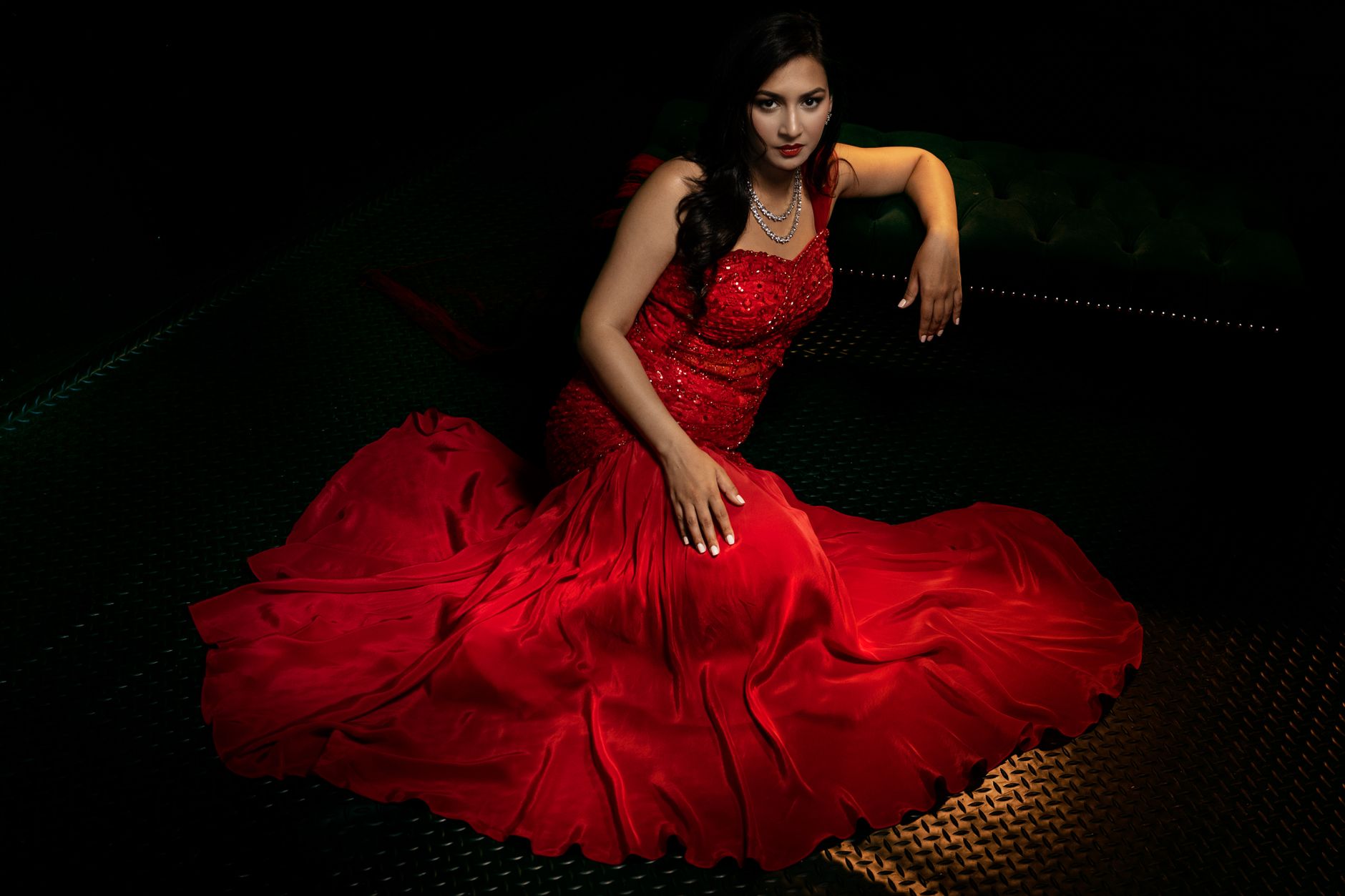
- The mermaid (or fishtail): Sculpted through the bodice, waist and thighs, then exploding into a flare below the knee. It is the drama queen of the carpet, built to photograph curves and movement.
- The ballgown: A fitted bodice over a huge, voluminous skirt. This is the fairytale, princess-moment silhouette — high impact, hard to walk in, impossible to ignore.
Indian carpets add two more vocabularies on top: the saree drape, where the story is in the pleating and the pallu, and the lehenga, often restructured with corset blouses and trains, as Janhvi Kapoor's blush Tarun Tahiliani look at Cannes 2025 showed. Designers increasingly blur these lines — a gown with a saree's drape, a lehenga with a mermaid flare.
Fabric Is the Real Story
Ask any stylist what they touch first, and the answer is fabric. The same silhouette in two different cloths is two different looks, because each material has its own weight, sheen and personality under light.
- Duchess satin: Heavy, structured and matte-glossy. It holds sculptural shapes and is the go-to for grand, architectural gowns.
- Silk crepe: Matte, fluid and grown-up. It skims the body and signals understated, expensive restraint rather than shine.
- Organza and tulle: Sheer, crisp and airy. They create volume and that floating, ethereal effect without adding weight.
- Velvet: Deep, light-absorbing and dramatic, perfect for cooler-season events and rich jewel tones.
- Banarasi silk and tissue: The Indian heroes — woven with zari (metallic thread) that genuinely glows under flashbulbs, carrying centuries of craft in the weave.
The tell of a truly high-end look is often hand-embroidery: zardozi, sequins, crystals or beadwork applied stitch by stitch over hundreds of hours. At Cannes 2025, Aishwarya's saree carried silver zari and zardozi detailing, while Alia Bhatt's nude Schiaparelli gown leaned on sculpted floral embroidery — two opposite philosophies of the same idea. When you hear a look took an atelier 600 hours, the labour is in exactly this.
Accessories: Editing, Not Piling On
The biggest amateur mistake is thinking glamour means more. On the red carpet, the opposite is true. The governing principle is editing: choose one hero accessory and let everything else stay quiet.
Usually the hero is jewellery — a single statement necklace, a pair of chandelier earrings, or a striking cuff. If the earrings shout, the neck stays bare. If the necklace is the star, the ears go minimal. Stylists also weigh the neckline: a high neck pushes drama to the ears, a plunging one invites a necklace, and a one-shoulder gown often wants a single bold earring or none at all.
The rest is deliberate, not accidental. Watch for three quiet decisions:
- Hair as architecture: A slicked-back bun exposes the jawline and lets earrings dominate; loose waves soften a structured gown.
- Shoes you will barely see: Often invisible under a long hem, but the heel height sets the whole posture and the way the fabric falls.
- The clutch and the gloves: Tiny, tonal and chosen to disappear — or, at a themed event, to become a sly talking point.
At themed galas the rules flex. The Met Gala 2025 theme, "Superfine: Tailoring Black Style," put menswear and sharp tailoring centre stage, which is why Shah Rukh Khan arrived in a floor-length Sabyasachi coat in superfine wool with carved horn buttons, and Diljit Dosanjh in an embroidered cloak and jewelled turban. There, the accessory was the argument.
How India Rewrote the Global Carpet
For decades, the red-carpet language was Western: a Hollywood gown, a European maison, a column of satin. That has flipped. Indian designers and Indian craft now set the conversation at the world's biggest events, not as exotic guests but as headline acts.
The Cannes 2025 line-up made it obvious. Aishwarya in Manish Malhotra and Gaurav Gupta, Janhvi in Tarun Tahiliani and Anamika Khanna, Alia closing the festival in what was billed as Gucci's first-ever saree. Each look married a global platform with a deeply Indian technique — Kadwa weaving, corset-blouse drapes, sculptural couture born in Delhi and Mumbai ateliers.
This is why decoding glamour now means knowing two grammars at once: the Western silhouette vocabulary and the Indian craft vocabulary, increasingly spoken in the same sentence. A modern showstopper might pair a mermaid flare with a Banarasi weave, or a tailored Western coat with zardozi.
A Quick Field Guide for Your Next Watch
Next time a carpet trends, run a fast three-step read instead of just scrolling. It turns gawking into genuine understanding.
First, name the silhouette — column, A-line, mermaid, ballgown, saree or lehenga. Second, guess the fabric by its behaviour: does it hold a shape (satin, structured silk) or float (organza, tulle)? Stiff usually means structure underneath; fluid means the cut is doing the work. Third, find the hero accessory and notice what was left bare to let it shine.
Do this a dozen times and the vocabulary becomes instinct. You will start predicting which looks photograph well, which are styled by a real expert, and which are simply expensive clothes worn hopefully. That is the quiet pleasure of decoding red-carpet glamour: the show is still dazzling, but now you can see the machinery — and machinery, once understood, is its own kind of beautiful.