Photo: Atlantic Ambience / Pexels
Delhi-Dehradun Expressway Wildlife Corridor: 18 Species Cross
When a six-lane highway slices through one of northern India's last great elephant landscapes, the usual outcome is grim: smashed barricades, crushed deer, animals stranded on the wrong side of a concrete river. So the early results from the Delhi-Dehradun Expressway wildlife corridor are quietly remarkable. A new study has found that 18 wild species are already slipping through the underpasses and beneath the elevated viaducts built into the route near Rajaji National Park — and that includes elephants, recorded crossing roughly 60 times. For a piece of infrastructure barely a year old, that is faster adaptation than many ecologists dared to expect.
But the same study carries a warning that should temper the celebration. The animals are not using the structures evenly, and an invisible problem — noise — appears to be quietly reshaping which species go where. The story of this corridor is really a story about whether India can build its way out of the conflict between fast roads and wild animals, or whether it is simply learning how complicated that promise turns out to be.

Why this wildlife corridor matters
The Delhi-Dehradun Economic Corridor is a roughly 210-kilometre, access-controlled expressway that has cut the drive between the two cities from around six hours to about two and a half. It was formally inaugurated in April 2026, though traffic had been moving on stretches of it earlier. Engineering-wise, it is a flagship: tunnels, flyovers and an elevated section near the Mohand region that ranks among Asia's longest stretches of highway built specifically with animal movement in mind.
That ambition exists because of where the road runs. The expressway crosses the Terai arc, a belt of forest and grassland that links Rajaji National Park with the wider Shivalik landscape — habitat for elephants, tigers, leopards, great hornbills and even king cobras. This is not empty land that a road merely inconveniences. It is a living migration route, and fragmenting it would sever the seasonal movements that keep elephant populations genetically healthy and ecologically viable. The corridor's dedicated underpasses and elevated spans were meant to keep that connectivity alive while the traffic roared overhead.
What the camera traps actually saw
The evidence comes from a joint exercise by the Wildlife Institute of India (WII) and the National Highways Authority of India (NHAI). Researchers blanketed an 18-to-20-kilometre stretch between Ganeshpur and Asharodi — about 11 kilometres of which consists of elevated or underpass structures — with nearly 150 camera traps and a network of acoustic recorders. Over a roughly 40-day window in 2025, the cameras captured more than 40,000 images of wildlife.
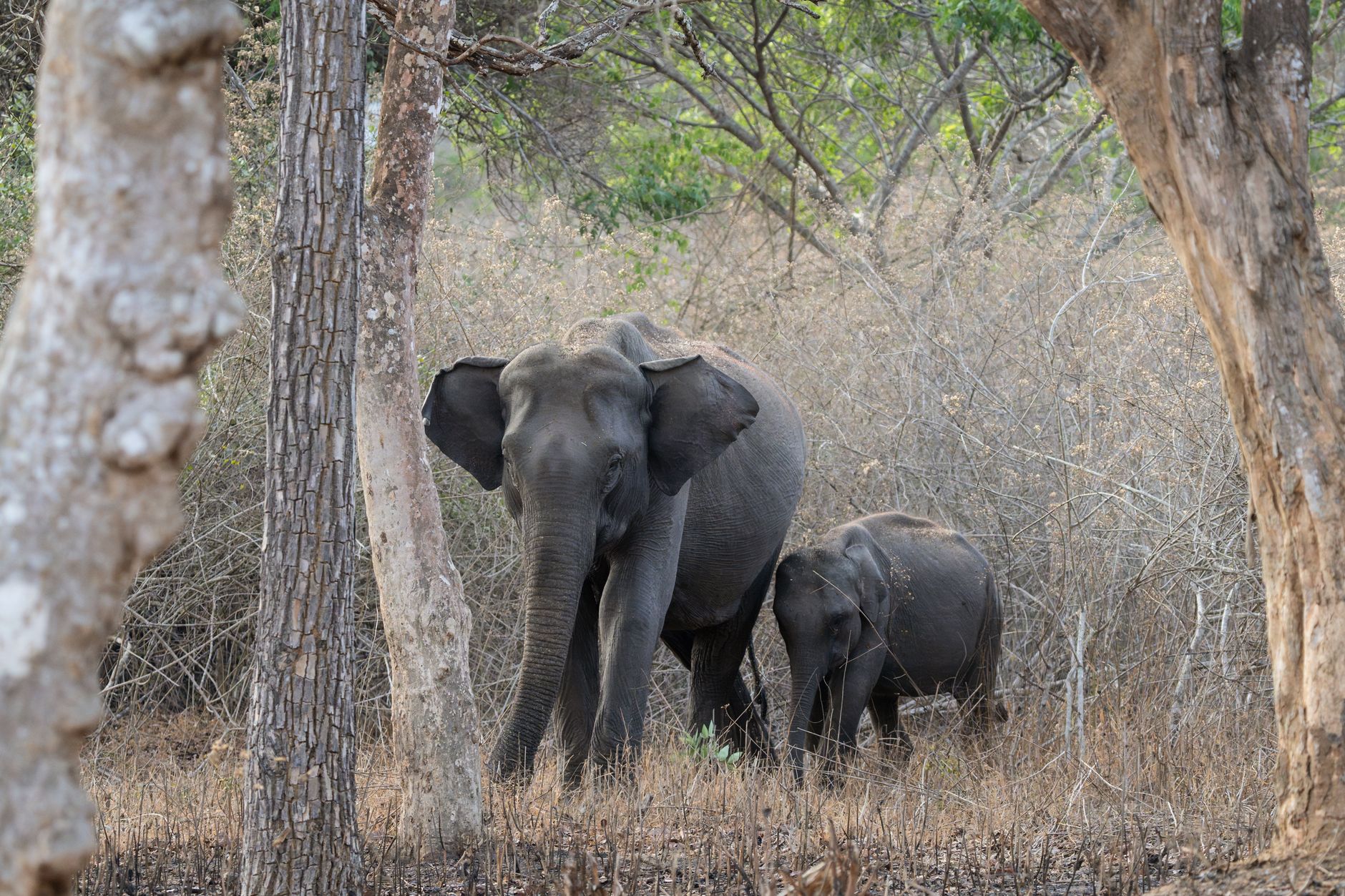
The headline number is that diversity: 18 species documented moving through the structures. Golden jackals turned out to be among the most frequently photographed animals, alongside nilgai, sambar, spotted deer and the humble Indian hare. Rarer sightings included leopards, rusty-spotted cats and grey mongoose. Crucially, the heavyweights showed up too — elephants were logged crossing about 60 times, proof that even a multi-tonne animal can be coaxed to use engineered passage rather than charging across open lanes.
What impressed researchers was the speed. Nilgai were among the earliest adopters, and within the first five days of monitoring, elephants, jackals, hares, sambar and deer had all been recorded. Wild animals are usually wary of novel structures, so this rapid uptake suggests the underpasses were at least placed where animals already wanted to travel.
The noise problem nobody markets
Here is the finding that complicates the feel-good narrative. The team did not just watch the animals — it listened. Using a spread of AudioMoth acoustic recorders across different zones, researchers measured the soundscape inside and around the crossings. The result was stark: human-made noise, overwhelmingly traffic, consistently drowned out the natural sounds of the forest along the corridor.
And different species reacted in opposite ways. Sambar, spotted deer and elephants tended to favour the quieter sections of the underpasses, shying from the loudest zones. Golden jackals, nilgai and wild boar, by contrast, seemed comparatively untroubled and concentrated even in noisier stretches. In other words, the corridor may be silently sorting wildlife — comfortable for some, a partial barrier for the more sound-sensitive. A structure that looks open on a map can still be functionally closed to a nervous herd of deer if the acoustic environment feels threatening.
This matters because a corridor is only as good as its least-served species. If the animals most vulnerable to fragmentation are also the ones most repelled by noise, then concrete alone has not solved the problem.
Elephants, clustering, and the limits of design
The study also found that movement was uneven in space, not just sound. Elephants and ungulates clustered at particular points rather than spreading uniformly across the available structures. Some crossings did heavy traffic; others were comparatively ignored. That pattern echoes a long-standing critique from conservationists — that animal crossings sometimes get built where engineering is convenient rather than where animals actually want to walk.
References in earlier court proceedings, including a 2021 Uttarakhand High Court matter, had flagged exactly this worry: that not every traditional elephant route lines up with a constructed underpass. The new data does not fully settle that debate. The encouraging read is that animals are finding and using the structures; the cautious read is that clustering hints at gaps where natural pathways and built passages still do not match.
What the experts are actually saying
The scientists involved have been careful not to oversell. Upasana Ganguli of the Wildlife Trust of India framed the results as "a starting point rather than proof of long-term success." Abhijay Negi, representing petitioner interests in the litigation around the project, struck a similar note, suggesting it remains too early to conclude that the crossing problem has been solved.
That restraint is the right instinct. Forty days of camera data captures a snapshot, not a generation. Wildlife behaviour around new infrastructure can shift over years as animals habituate — or as the novelty wears off and avoidance sets in. Genuine success would mean stable, repeated, multi-season use by the full range of resident species, including breeding females leading calves, not just bold individuals testing a new path.
What conservationists want next
The study comes with a practical wish list. Researchers and conservation groups have pushed for sound barriers at the most important crossing points to soften the traffic roar that deters sensitive species. They want human activity restricted beneath the flyovers, where encroachment and informal use can scare animals off. There are calls to route as much traffic as possible onto elevated sections, to let natural vegetation regenerate under and around the structures so the passages feel like forest rather than tunnel, and — above all — to commit to long-term monitoring with periodic reviews rather than declaring victory after one promising survey.
None of this is exotic. It is the difference between building a crossing and maintaining a functioning corridor.
The bigger test for India's green infrastructure
The Delhi-Dehradun corridor is not an isolated experiment. India has begun threading similar measures into other megaprojects — including dedicated animal overpasses on a stretch of the Delhi-Mumbai Expressway near the Ranthambore buffer, complete with broad green bridges and one of the country's longest wildlife underpasses. The country is, in effect, running a live trial of whether high-speed mobility and wildlife connectivity can genuinely coexist.
The early Delhi-Dehradun numbers offer real reason for optimism: animals adapt faster than skeptics assumed, and thoughtful engineering can keep a landscape stitched together. But the noise data and the clustering are a reminder that a wildlife corridor is a biological system, not a ribbon-cutting. The cameras will keep rolling for years. If the elephants are still crossing in 2030 — calves and all, through the quiet and the loud alike — then India will have proof that a road need not be a wall. For now, it has something rarer in infrastructure debates: honest evidence, and the humility to call it a beginning.
Source: india.mongabay.com