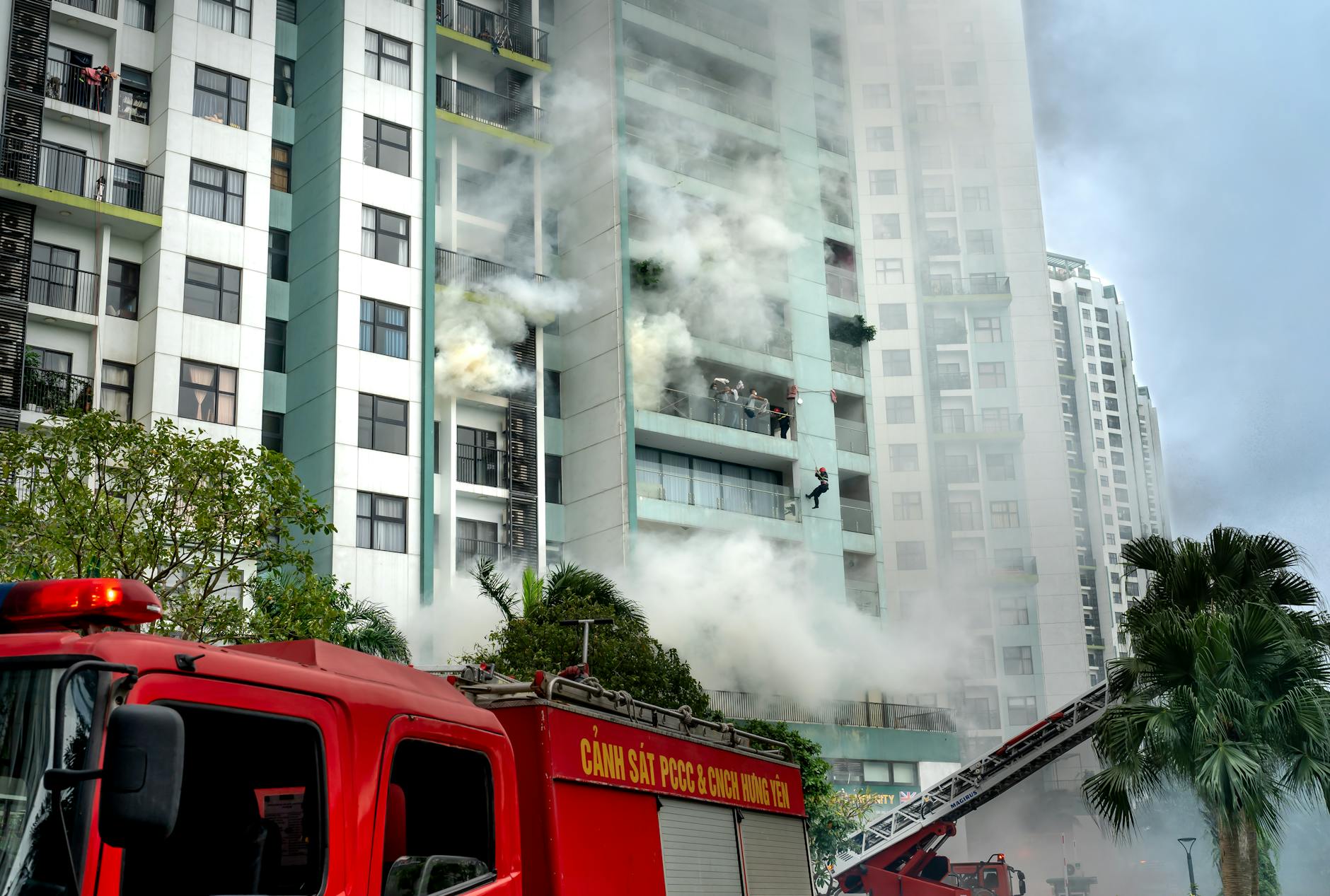
Photo: Quang Nguyen Vinh / Pexels
Delhi Hotel Fire Kills 21: Why a Budget B&B Became a Death Trap
At least 21 people died and more than 40 were rescued after a fire tore through a small hotel in south Delhi on the morning of 3 June 2026, in one of the capital's deadliest blazes in years. Most of the dead were foreign nationals — and the Delhi hotel fire has reopened a painful, recurring question: why do Indian buildings keep burning with people trapped inside?
The blaze broke out at a bed-and-breakfast called Flourish Stay in Malviya Nagar, a congested, mixed-use pocket of southern Delhi. A restaurant occupied the ground floor; guest rooms sat above it. When fire and smoke surged upward at around 8:48 am, the people sleeping on the upper floors had almost no way out.
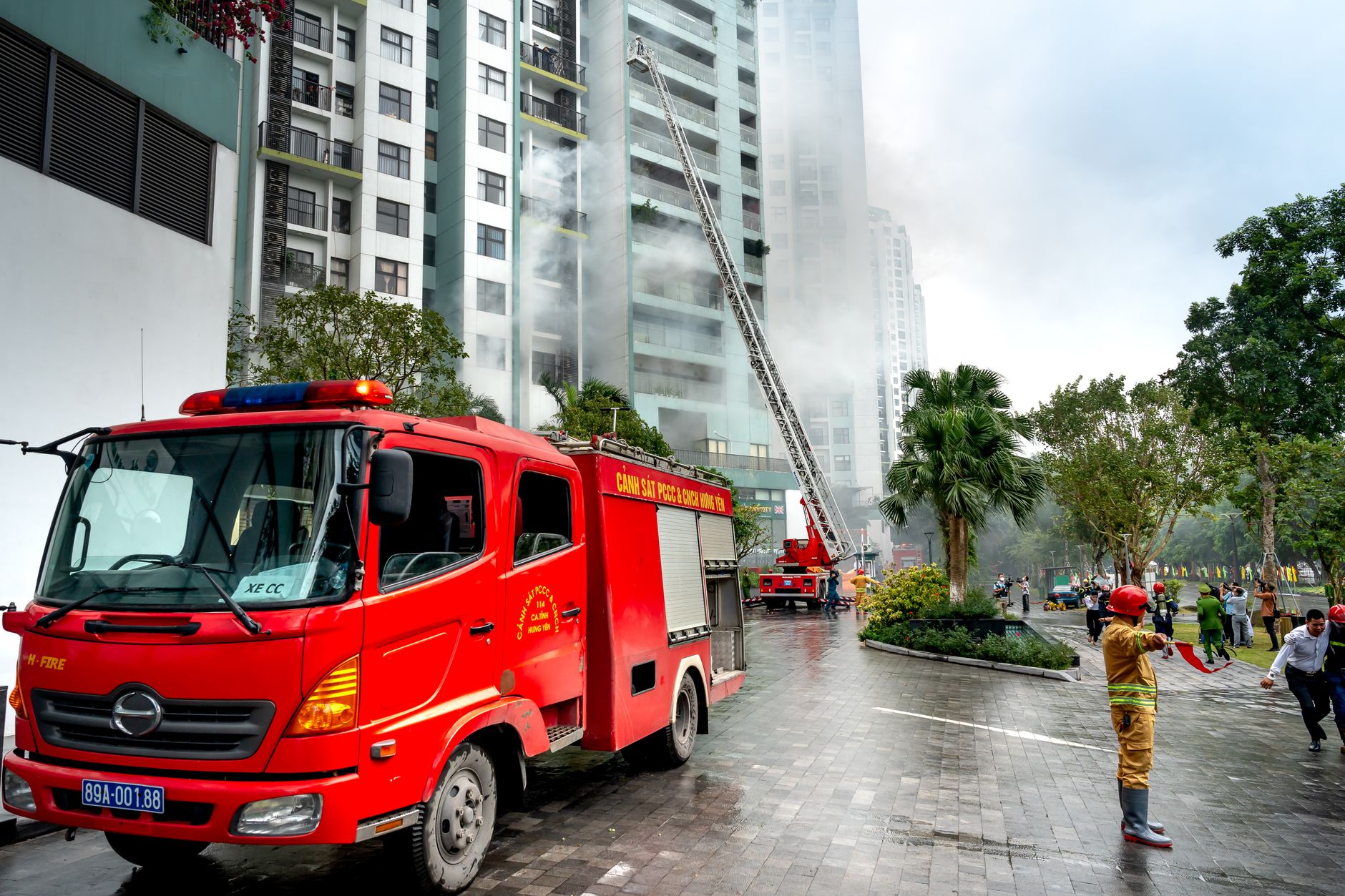
What we know so far
Police say the dead included nationals of Bangladesh, Nigeria, Mozambique and Liberia, alongside a small number of Indians. Television footage captured the most harrowing detail of the morning: people appearing at upper windows and jumping to escape the heat, with neighbours and bystanders trying to help before fire crews arrived.
Eight fire engines were deployed to bring the blaze under control. Hospitals later reported that several of the injured were on ventilator support in critical condition, most suffering from smoke-inhalation injuries, while others had fractures consistent with jumping from height.
Key facts at a glance:
- Death toll: at least 21, the majority foreign nationals
- Rescued: more than 40 people
- Location: Flourish Stay B&B, Malviya Nagar, south Delhi
- Time: roughly 8:48 am, Wednesday 3 June 2026
- Likely origin: the ground-floor restaurant; early reports cite a possible electrical short circuit
- Official response: Prime Minister Narendra Modi expressed condolences and wished the injured a speedy recovery; an investigation has been ordered
The exact cause remains under investigation. A local administration official, Jitendra Kumar, told reporters the fire was most likely connected to the restaurant downstairs. What is already clear is that the building offered almost no defence once flames took hold.

The hidden story: a medical-tourism trap
The most striking and least-discussed angle is who died here. Many of the foreign guests had reportedly come to Delhi for medical treatment — a reminder that India's booming, genuinely life-saving medical-tourism industry has a fragile underbelly.
Patients from across Africa, South Asia and beyond travel to Indian metros because world-class surgery and care cost a fraction of prices back home. But treatment can stretch over weeks of consultations, tests and recovery. To afford the stay, patients and their attendants rarely book five-star hotels. Instead, they cluster in cheap guesthouses, serviced rooms and B&Bs packed into residential lanes near major hospitals — exactly the kind of informal lodging that often operates below the radar of safety regulators.
That creates a brutal mismatch. The people most likely to fill these rooms are often unwell, sometimes post-surgery, sometimes elderly, frequently unfamiliar with the building's layout or even the local language. They are, in other words, the least able to sprint down a smoke-filled staircase in the dark — yet they are the ones most likely to be staying somewhere that has only one.
Why the building became a chimney
When rescuers reached Flourish Stay, they reportedly found the building completely lacked an internal fire-protection system. The structure's vertical design did the rest: heat and dense smoke shot upward almost instantly, cutting off the upper floors so fast that guests had little time to react.
Fire-safety experts call this the chimney effect — narrow, tall buildings with a single open stairwell behave like a flue, channelling toxic smoke straight up to where people sleep. In most fatal Indian building fires, it is not the flames that kill first. It is the smoke. Carbon monoxide and superheated air can render a person unconscious within minutes, long before fire reaches them.
Layer on the common failings of such structures — combustible interiors, blocked or locked exits, no sprinklers, no alarms, illegal additions on upper floors — and a kitchen mishap downstairs becomes a mass-casualty event upstairs.
A grim pattern Delhi keeps repeating
If this feels familiar, it is. Delhi has a long, bloody history of avoidable fire disasters, and the post-mortems read almost identically each time.
- Uphaar cinema, 1997: 59 people died, many from asphyxiation, in a packed theatre with compromised exits.
- Anaj Mandi, 2019: 43 workers were killed in a factory building with no fire NOC and a single narrow staircase.
- Mundka, 2022: 27 people died in a commercial building, again with inadequate escape routes.
The common thread is not bad luck. It is the gap between rules on paper and reality on the ground. Under the Delhi Fire Service framework, many commercial and mixed-use buildings are legally required to obtain a fire NOC (No Objection Certificate), granted only when proper safety measures exist. Yet tens of thousands of units are estimated to operate informally across the city, including in residential zones never designed for paying guests or commercial kitchens.
Enforcement tends to spike after a tragedy — inspections, sealings, suspensions — and then fade as attention moves on. The result is a cycle: disaster, outrage, crackdown, complacency, disaster.
What comes next — and what should
In the immediate aftermath, authorities have ordered a probe into the cause and the building's compliance status, and questions will centre on whether Flourish Stay held a valid fire clearance, who approved its operation, and how a commercial kitchen came to sit beneath occupied guest rooms.
But the deeper fix is structural. A few changes would matter more than another round of post-tragedy sealings:
- Tie lodging licences to real inspections — not just paperwork, but verified exits, alarms and sprinklers, re-checked periodically.
- Regulate the medical-stay ecosystem — hospitals that draw international patients could be required to refer them only to certified accommodation.
- Mandate basic kit — smoke detectors, extinguishers and a second escape route should be non-negotiable for any building taking in overnight guests.
- Publish compliance data — a searchable public register of fire-NOC status would let travellers and booking platforms vet properties themselves.
How travellers can protect themselves right now
Until enforcement catches up, the burden unfairly falls on guests. A few quick checks can genuinely save lives:
- Ask directly whether the property has a valid fire NOC and working smoke alarms.
- On arrival, locate at least two exits and walk the route to the stairs once — never rely on a lift in a fire.
- Be wary of rooms on very high floors of narrow buildings, especially above a restaurant or commercial kitchen.
- Check that the staircase is clear and unlocked, and that any terrace is accessible.
- Keep a phone, shoes and a wet cloth within reach at night; staying low under smoke buys precious time.
Twenty-one people travelled to India hoping, in many cases, to get well. That so many died in their sleep in a building that should never have housed them is the real scandal here. The flames will be investigated; the system that put them there deserves the same scrutiny.