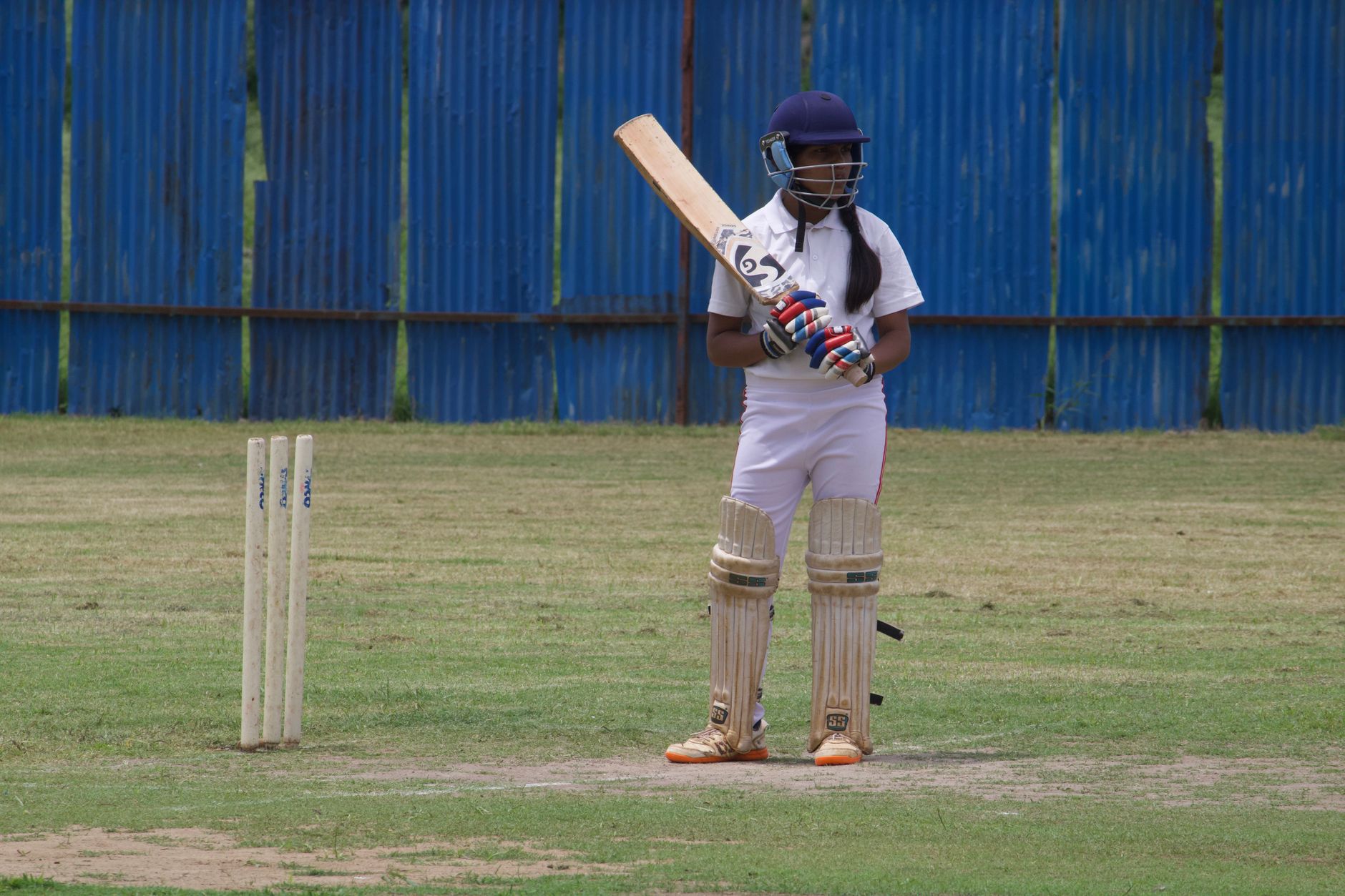
Photo: Engineer John / Pexels
Umpire's Call in DRS: Why a Ball Hitting Stumps Stays Not Out
Every Indian cricket fan has lived this moment. A batter is rapped on the pad, the bowler roars, the on-field umpire shakes his head, and a review goes upstairs. The big screen lights up, the ball-tracking line clips the top of leg stump, the crowd erupts — and then the verdict reads UMPIRE'S CALL and the batter survives. It looks like a contradiction. It isn't. It is the single most misunderstood rule in modern cricket, and once you understand the logic behind DRS umpire's call, you will never argue with the screen the same way again.
This is a practical guide to how the Decision Review System actually decides, written for the viewer who wants to read the screen like a third umpire rather than shout at it.

What DRS is really doing
DRS is not one gadget. It is a bundle of technologies that the third umpire consults in a fixed order, and each one answers a different question.
- Ball-tracking (Hawk-Eye or similar): multiple high-speed cameras plot the ball's path, then a computer predicts where it would have gone had the pad not been in the way. This drives every LBW verdict.
- Edge detection (UltraEdge or Snicko): a sound-and-vision tool that lines up the audio spike of a nick with the exact frame the ball passes bat or pad. It settles caught-behind and inside-edge calls.
- Hot Spot / infrared: a thermal camera that shows a white mark where the ball makes contact. Expensive and used less often now, but still a tie-breaker in some series.
The crucial word above is predicts. Ball-tracking does not film the ball hitting the stumps, because the ball never reaches them. It estimates the path with a small, unavoidable margin of error. Umpire's call exists entirely because of that margin.
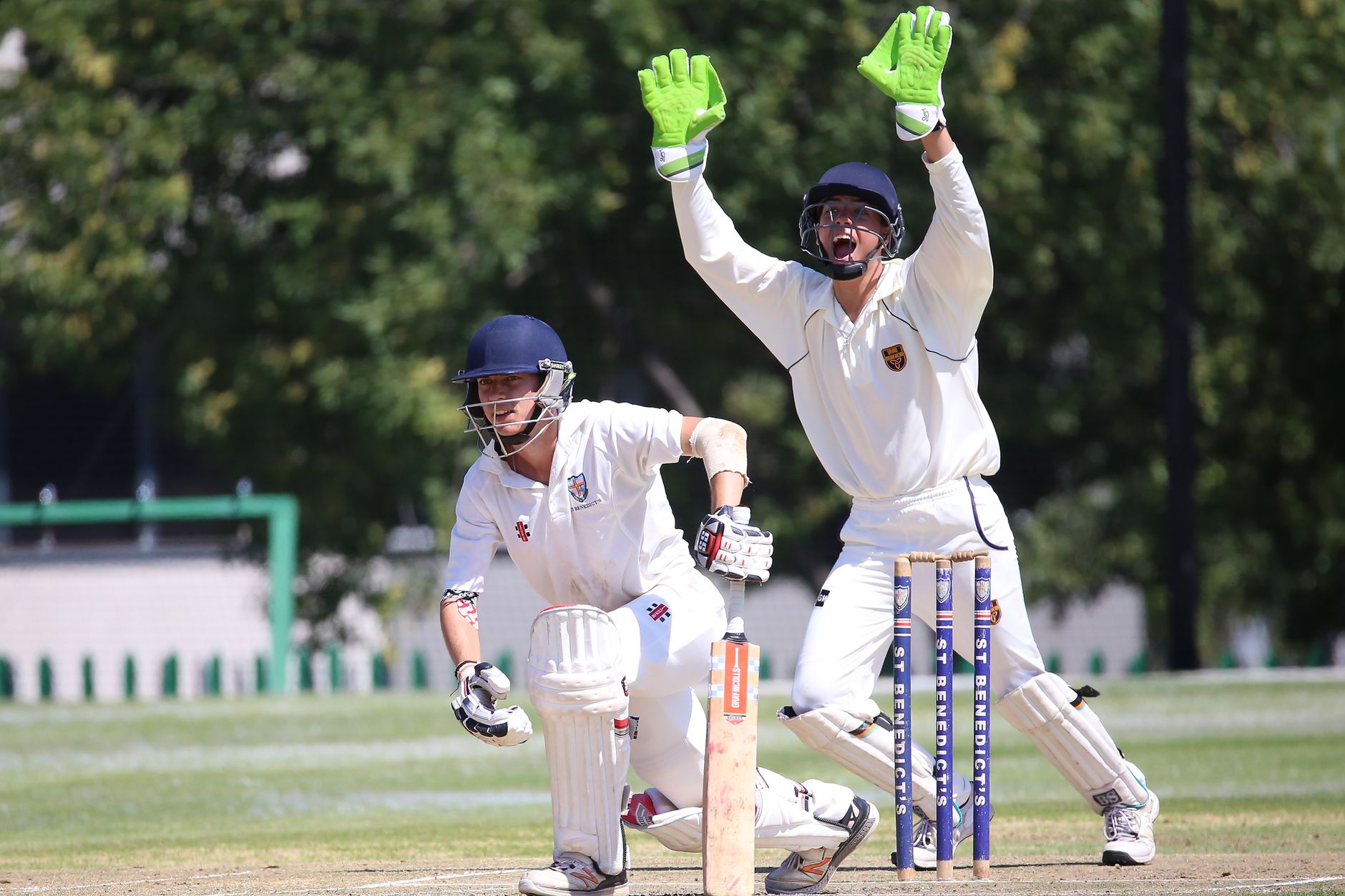
The three reds that decide an LBW
For a leg-before decision, ball-tracking must answer three separate questions, and on the screen each is shown as a panel that turns red (in favour of the bowler) or green.
- Pitching: did the ball bounce in line with the stumps, or at least not outside leg stump?
- Impact: did it strike the pad in line with the stumps (unless no shot was offered)?
- Wickets: would it have gone on to hit the stumps?
To turn a not out into an out, the reviewing side essentially needs all the relevant panels showing red — three reds. To turn an out into a not out, the batting side needs just one clear green. That asymmetry is deliberate, and it leads straight to the part everyone gets wrong.
The 50% rule that creates umpire's call
Here is the heart of it. The system protects the on-field umpire's original decision unless the evidence is decisive. "Decisive" has a precise definition built around the 50% threshold.
For the pitching and impact zones, at least half the ball must be shown inside the line for the verdict to be conclusive. For the wickets zone, more than half the ball must be projected onto the stumps for it to count as a clear hit. If the projection is more marginal than that — a sliver clipping leg stump, the edge of the ball brushing the zone — the technology is saying, in effect, "too close for me to be sure." In that situation it hands the decision back to the human in the middle. That is umpire's call.
So the famous frustration — the ball is clearly hitting the stumps, how is he not out? — usually has a clean answer. Yes, the ball is hitting. But less than half of it is, and the original verdict was not out. With marginal evidence, the standing decision stays. Had the umpire originally raised his finger, the very same picture would have produced an out. The ball-tracking didn't change; the starting point did.
Why the wicket zone got bigger
The ICC has nudged these definitions over the years, almost always to give the bowler a fairer shake. The most important change extended the wicket zone upward so that the hitting area now reaches the top of the bails rather than stopping at the bottom of them. A ball clipping the very top of the stumps is now more likely to be judged as hitting.
There is also a live debate about shrinking the margin itself. One proposal would lower the overturn threshold from 50% of the ball to 25%, meaning a quarter of the ball hitting the stumps would be enough to overturn a not-out. England captains and several former players have pushed to remove umpire's call for pitching and impact altogether, arguing you can physically see where the ball landed. The counter-argument is that ball-tracking is a model, not a photograph, and the umpire's-call buffer is honest about the model's limits. For now, the 50% rule stands.
How many reviews you get, and how to spend them
The maths of reviews matters as much as the technology, because captains routinely waste them on hope.
- Tests: three unsuccessful reviews per team, per innings.
- ODIs and T20Is: two unsuccessful reviews per team, per innings.
- A successful review (you got the decision overturned) does not count against you.
- An umpire's call result also does not cost you a review — the ICC fixed this in 2017 so that a marginal LBW no longer punishes the reviewing side.
The practical lesson for captains, and for armchair selectors: review the decisions where you have evidence, not emotion. The smartest sides treat reviews like wickets in hand — a resource to be protected. A burned review in the 10th over of a chase can mean swallowing a howler at the death.
There is also a clock. To stop players phoning the dressing room for help, the on-field signal — the famous T drawn with both hands — must be made within a fixed window, around 15 seconds, of the umpire's decision.
India's long fight with the machine
For an India-first audience, the most interesting twist is that India was, for years, the system's loudest opponent. While other boards embraced DRS soon after its rollout around 2009, the BCCI refused to use it in bilateral series. The doubts were not just political. Sachin Tendulkar publicly questioned the ball-tracking projections, arguing that predicting a ball's path after it has stopped on the pad carried too much guesswork to decide a batter's fate.
That scepticism kept DRS out of many India series through the early 2010s. The turn came mid-decade, as the technology improved and the BCCI ran its own trials. By the 2016-17 home season India had accepted DRS, and today the country that resisted it longest is among its heaviest users. The irony is sharp: the umpire's-call buffer that frustrates Indian fans every match is, in spirit, exactly the cushion Tendulkar wanted — the system admitting it cannot be certain.
Reading the screen like a pro
Next time a review goes upstairs, watch in this order. First the edge detector for any spike — a nick changes everything. Then the three LBW panels. Count the reds. Then check whether the ball-tracking graphic shows the ball flush on the stumps or merely shaving them. If it's shaving, glance back at what the on-field umpire originally signalled, because that is now the tie-breaker.
Umpire's call is not the system failing. It is the system being honest about the difference between what it can prove and what it can only predict. Once you see it that way, the screen stops being infuriating and starts being fair.