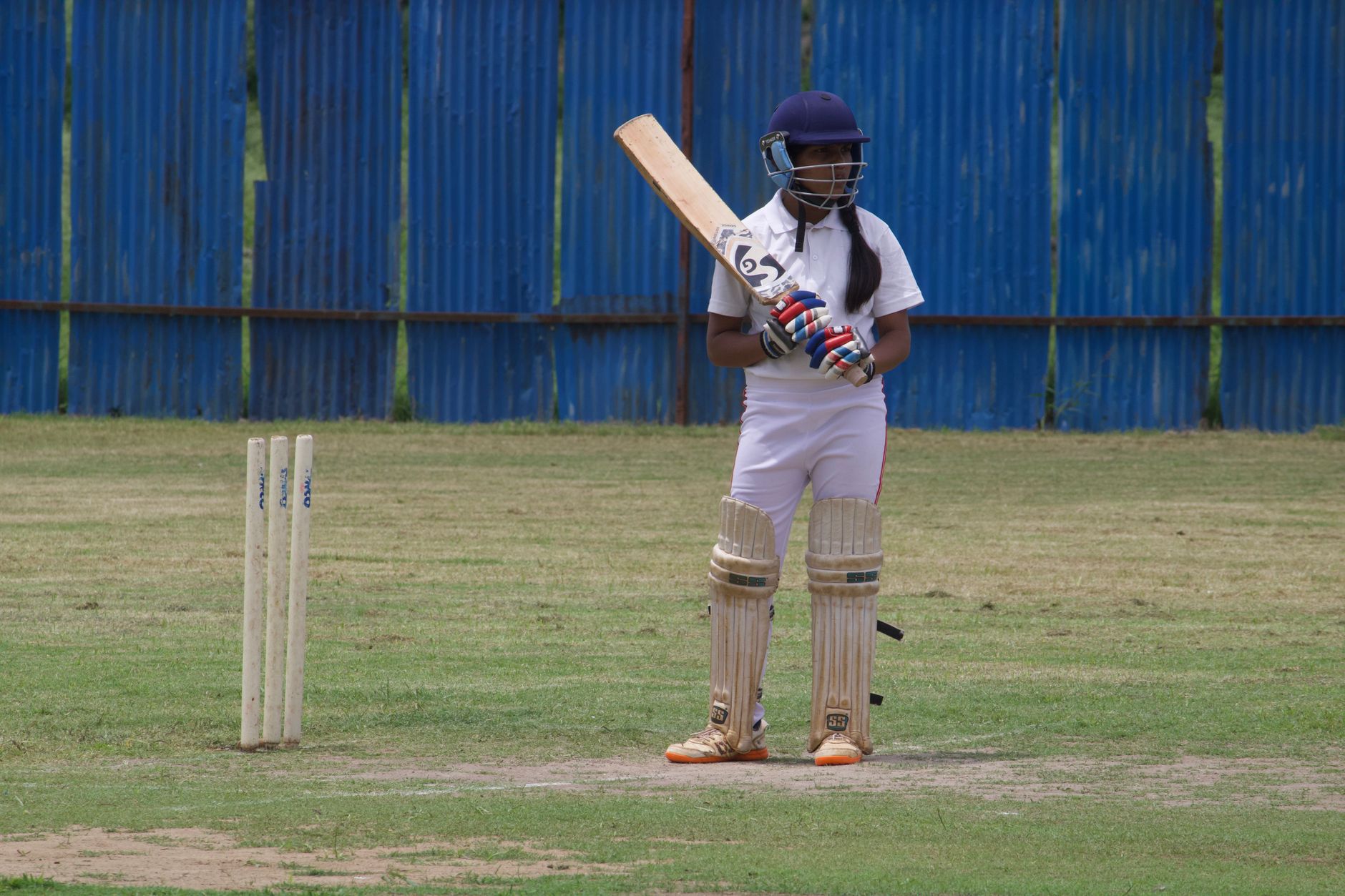
Photo: Sandeep Singh / Pexels
India Women's Cricket Faces a Win-or-Bust World Cup Finish
On a grey Manchester evening, India's women had everything lined up for a storybook night. Their captain was walking out for her 200th Twenty20 international, a number no cricketer on the planet had ever reached. Old Trafford, the very ground where she debuted 17 years ago, was waiting to applaud. And then South Africa rather rudely rewrote the script. India lost by six wickets, and suddenly India women cricket is the most talked-about subject on the sports pages for an uncomfortable reason: the Women in Blue now have no margin for error.
This was India's first defeat of the 2026 ICC Women's T20 World Cup, being played across England from 12 June to 5 July. Two wins had made them look like genuine title contenders. One bad night has turned the back half of their group stage into a pair of finals.
The night that turned at Old Trafford
India batted first and never quite got going, limping to 158 for 7 in their 20 overs. Shafali Verma's 31 was the top score, but no one kicked on. On a true surface, it felt 25 short.
South Africa made it look exactly that. Marizanne Kapp, who had already taken two wickets with the ball, walked in and produced an old-fashioned match-winning innings, finishing unbeaten on 81 off 45 balls. She and her partners knocked off the target at 161 for 4 with five balls to spare. Young left-arm spinner Shree Charani kept India in it with 3 for 24, but the catching let the side down and the chase rarely looked in doubt once Kapp settled.
Kapp was the obvious player of the match. For India, it was the kind of all-round defeat that stings: outbatted, outbowled in the back ten, and a couple of chances grassed in the field.
Harmanpreet's 200, and the milestone that deserved better
Lost in the disappointment was a genuinely historic moment. Harmanpreet Kaur, now 37, became the first cricketer ever — in men's or women's cricket — to play 200 T20Is. She also led India for the 200th time across formats, another first for an Indian.
There is a neat symmetry to it. Harmanpreet played her very first T20I in Manchester, and her 200th came at the same city's most famous ground nearly two decades later. Going into the game she had 4,123 T20I runs at an average of just over 30, with 17 fifties and that unforgettable hundred. Teammates lined up to praise her durability; Smriti Mandhana spoke about how much physical pain she has pushed through to keep going.
Milestones, though, don't win matches. Harmanpreet would happily have swapped the headlines for two points, and she will know India's batting, hers included, has to fire in the games that matter most.
Where the group actually stands
The format is unforgiving by design. Twelve teams are split into two groups of six. Each side plays five group games, and only the top two from each group reach the semi-finals. There is no Super 8 cushion as in the men's event — you go straight from the group to the last four.
Here is the Group 1 picture after India's loss:
- Australia — top of the group on 6 points after three commanding wins, with a frighteningly good net run rate.
- India, South Africa and Bangladesh — all level on 4 points, separated by net run rate.
- India sit second largely thanks to a healthy net run rate built on those two early thrashings.
The maths is brutal but clear. India have two games left, against Bangladesh on 25 June in Manchester and Australia on 28 June at Lord's. Win both and they are through, no calculators required. Slip up once and they are at the mercy of other results and run-rate swings.
How India got here: two wins worth remembering
It is worth recalling that India started this tournament looking like one of the favourites.
In the opener they beat Pakistan by 64 runs, riding Smriti Mandhana's 68 off 44 balls before Deepti Sharma ran through the middle order with a five-wicket haul. It was the sort of complete performance that sets a campaign's tone.
Then came the demolition of the Netherlands at Headingley. India piled up 209 for 5 and won by 95 runs, with Mandhana and Shafali Verma both scoring heavily and Shree Charani picking up a four-wicket haul. Two games, two statements.
That is what makes the South Africa result so jarring. This is not a team short of firepower. It is a team that picked the wrong night to have an off day.
Mandhana's purple patch is the one constant
If there is a reason for Indian fans to stay calm, her name is Smriti Mandhana. She has been the batter of the tournament for India, opening with back-to-back fifties and timing the ball as well as anyone in the competition.
Against the Netherlands she added a slice of history of her own, becoming the first player in T20I history — men's or women's — to hit 600 boundaries. Her tally of World Cup half-centuries also moved past the marks held by Harmanpreet and Mithali Raj. When Mandhana is set, India's totals look completely different.
The worry is the support. The middle order stalled badly against South Africa, and India will want Jemimah Rodrigues, Harmanpreet and the lower order to give Mandhana and Shafali more company. India also reshuffled their attack, bringing in Arundhati Reddy, a sign the management is hunting for the right balance with the big games approaching.
Why fans can't look away
Few sides generate the emotion that India's women do right now, and this run captures why. There is a beloved captain hitting a once-in-a-generation milestone. There is a batter rewriting record books almost every week. There is a tournament where one defeat flips a team from cruising to clinging on.
The Bangladesh game on 25 June now carries real weight. On paper India should win comfortably — but "on paper" is exactly what they said before the South Africa match. Win it, and the 28 June clash with Australia becomes a heavyweight occasion, possibly with a semi-final on the line for both. The semi-finals are scheduled for 30 June and 2 July at The Oval, with the final at Lord's on 5 July.
India have the talent to be standing at Lord's at the end of it. After Old Trafford, they no longer have the luxury of a single slip. That tension — gifted team, zero room for error — is precisely why the whole country is watching.


