Photo: Avinash reddy Kosna / Pexels
FASTag Annual Pass: Is the ₹3,075 Toll Pass Worth It?
If you drive the same stretch of national highway week after week, the FASTag Annual Pass is probably the most quietly useful thing the government has done for your fuel-and-toll budget in years. For a one-time fee — now ₹3,075 after a small revision from the launch price of ₹3,000 — a private car owner can cross national-highway toll plazas up to 200 times in a year without a single per-trip deduction. But the pass comes with a trip-counting rule that quietly decides whether it's a steal or a waste. Here's the honest math.
What the FASTag Annual Pass actually is
The FASTag Annual Pass launched on 15 August 2025 and is best understood as a prepaid bundle, not a new sticker. You keep your existing FASTag; the pass simply rides on top of it for the validity period. During that window, eligible toll crossings are settled against your pass instead of your FASTag wallet, so no per-trip user fee is deducted at the barrier.
The headline terms are simple: the pass is valid for one year from activation or 200 trips, whichever comes first. Hit either limit and the tag silently goes back to behaving like an ordinary FASTag, deducting toll the usual way. There's no auto-renewal — you decide whether to buy another year.
Crucially, this is a national-highway product. It applies only at fee plazas on National Highways and National Expressways managed by NHAI and MoRTH. That single line is where most disappointment comes from, so it deserves its own section below.

Who is eligible — and who is not
The pass is strictly for private, non-commercial vehicles: cars, jeeps and vans registered for personal use. That's the entire eligible universe.
- Eligible: privately registered car, jeep or van with an active FASTag.
- Not eligible: any commercial vehicle, taxis on commercial plates, trucks, buses and goods carriers.
The enforcement here is unusually blunt. If the pass is used on a vehicle classed as commercial, it is deactivated immediately and without notice, and you don't get the fee back. The pass is also locked to one vehicle — it's tied to your Vehicle Registration Number (VRN) and the FASTag on that car, and cannot be shifted to a second car in the household. If you own two cars and both clock highway miles, you need two passes.
The trip-counting trap nobody reads
This is the rule that changes everything, and it's worth slowing down for. A "trip" is not a journey — it's a plaza event.
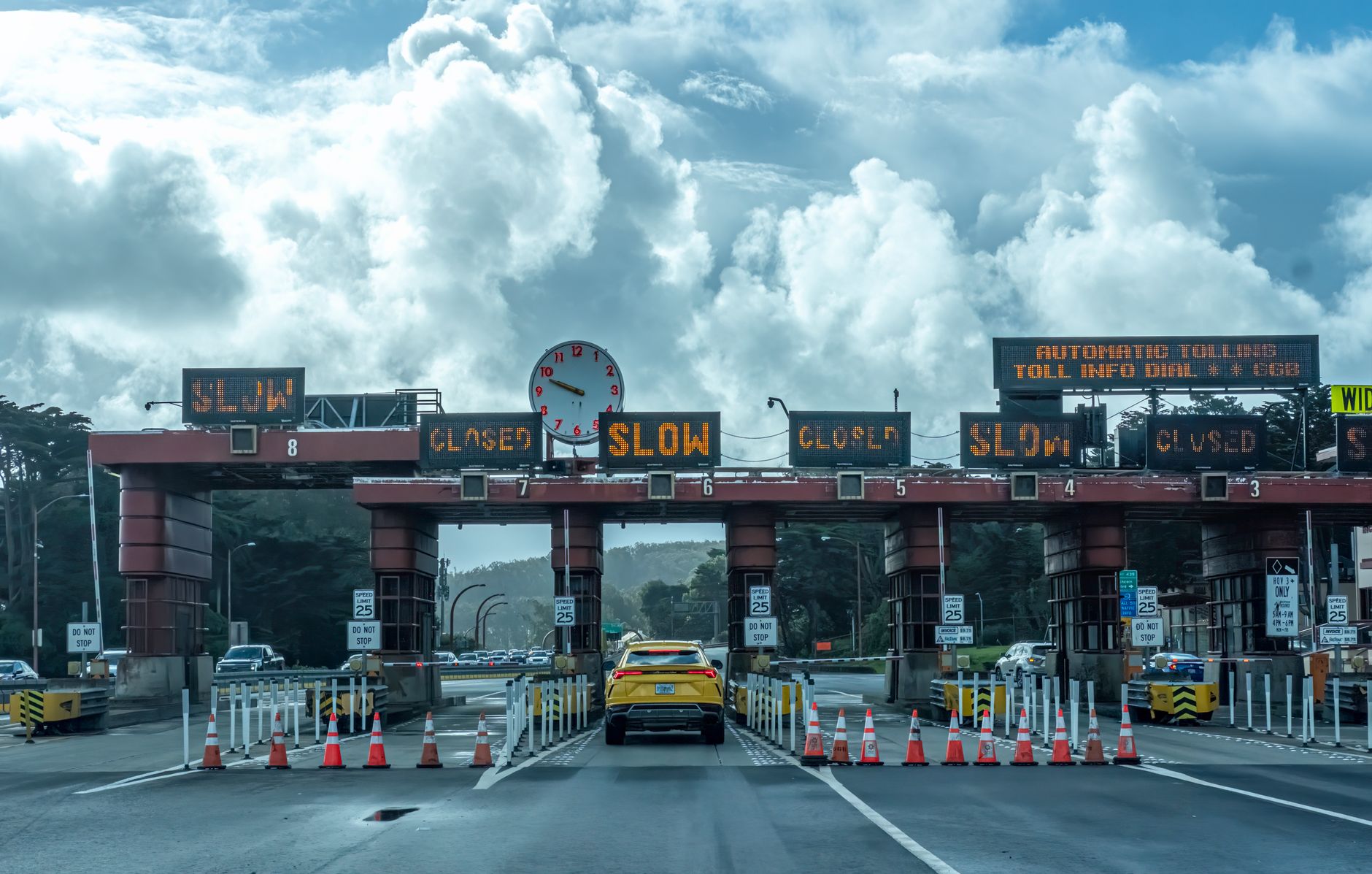
At the common point-based (single-point) toll plazas, every crossing of the barrier counts as one trip. So driving out and coming back through the same plaza is two trips, not one. At closed (entry-exit) tolling systems, where you tap in at one point and pay on exit based on distance, one complete entry-and-exit pair is treated as a single trip.
Now run the numbers. Suppose you commute daily through one point-based plaza and back — that's two trips a day. At roughly 22 working days a month, you'd burn about 44 trips a month, exhausting all 200 in well under five months. The one-year validity becomes irrelevant; the trip cap is your real ceiling. For that commuter, the pass is still excellent value, but it behaves like a four-to-five-month product, not a twelve-month one.
Contrast that with a weekend traveller who does, say, two or three highway round trips a month. They might use 60–70 trips across the full year and let the pass expire on time rather than on count. Different driver, completely different value calculation — same pass.
The break-even math: is ₹3,075 worth it?
Strip it down and the pass is just a bulk discount. Divide ₹3,075 by 200 and you get an effective cost of roughly ₹15.4 per trip. So the pass pays for itself the moment your average national-highway toll crossing costs more than about ₹15 — which, frankly, it almost always does. Most NH plaza crossings for a car run from several tens of rupees into the low hundreds.
A quick way to decide:
- Count your real plaza crossings. Be honest about trips, not journeys — remember round trips double on point-based plazas.
- Estimate your normal yearly toll. Multiply your typical crossing fee by expected crossings.
- Compare to ₹3,075. If your projected annual NH toll comfortably exceeds it, buy the pass. If you barely touch national highways, skip it.
The sweet spot is the regular intercity commuter and the highway-heavy weekend driver. The people for whom it rarely makes sense are those who mostly drive within cities, on state highways, or on private expressways — because the pass simply won't apply there.
Where it works — and the routes it won't cover
This is the limitation that catches people out. The Annual Pass is valid only at plazas operated under NHAI/MoRTH. It does not cover:
- State highway toll plazas run by state governments.
- City and municipal tolls or bridge tolls run by local bodies.
- Privately operated expressways and concessions managed outside the NHAI fee structure.
So before assuming a marquee route is covered, check who actually collects the toll on it. Some expressways and bridges are run by state agencies or private concessionaires, and at those barriers your pass does nothing — your FASTag wallet gets debited as normal. The good news is that on a covered route, the system handles the switch automatically; you don't tap anything different at the lane.
How to activate it, step by step
Activation is deliberately low-friction and entirely online. There's no paperwork at a counter.
- Open the Rajmargyatra app (NHAI's official highway app) or go to the NHAI website.
- Find the Annual Pass option and enter your vehicle registration number and FASTag details.
- Confirm that your existing FASTag is active and correctly linked to the vehicle.
- Pay the ₹3,075 fee online.
- Wait for activation — the pass typically goes live within about two hours after payment and verification.
A few practical cautions. Make sure your FASTag is KYC-compliant and not blacklisted before you pay, or activation can stall. Keep your vehicle class correctly recorded as private; a misclassification is exactly what triggers the no-notice deactivation. And note the date you activate — that's the clock that starts your one-year window.
The bigger picture: where tolling is heading
The Annual Pass is also a signpost. India is moving — gradually and with plenty of trials — toward GNSS-based, distance-linked tolling, where satellites track how far you actually drive on a tolled corridor and charge accordingly, eventually reducing the need to stop at barriers at all. A flat-fee annual pass fits neatly into that direction of travel: predictable cost for the user, less queueing at plazas, more digital settlement behind the scenes.
For now, the pass is a pragmatic middle step. It won't suit everyone, and the trip-counting rule means you should treat the 200-trip cap — not the one-year label — as the number that matters for heavy users. But for the millions of Indians who live with a national-highway plaza between home and work, ₹3,075 to make that barrier disappear for a few hundred crossings is one of the easier financial calls on the road this year. Do the trip count, check that your route is genuinely NHAI-run, and decide with the math in front of you.