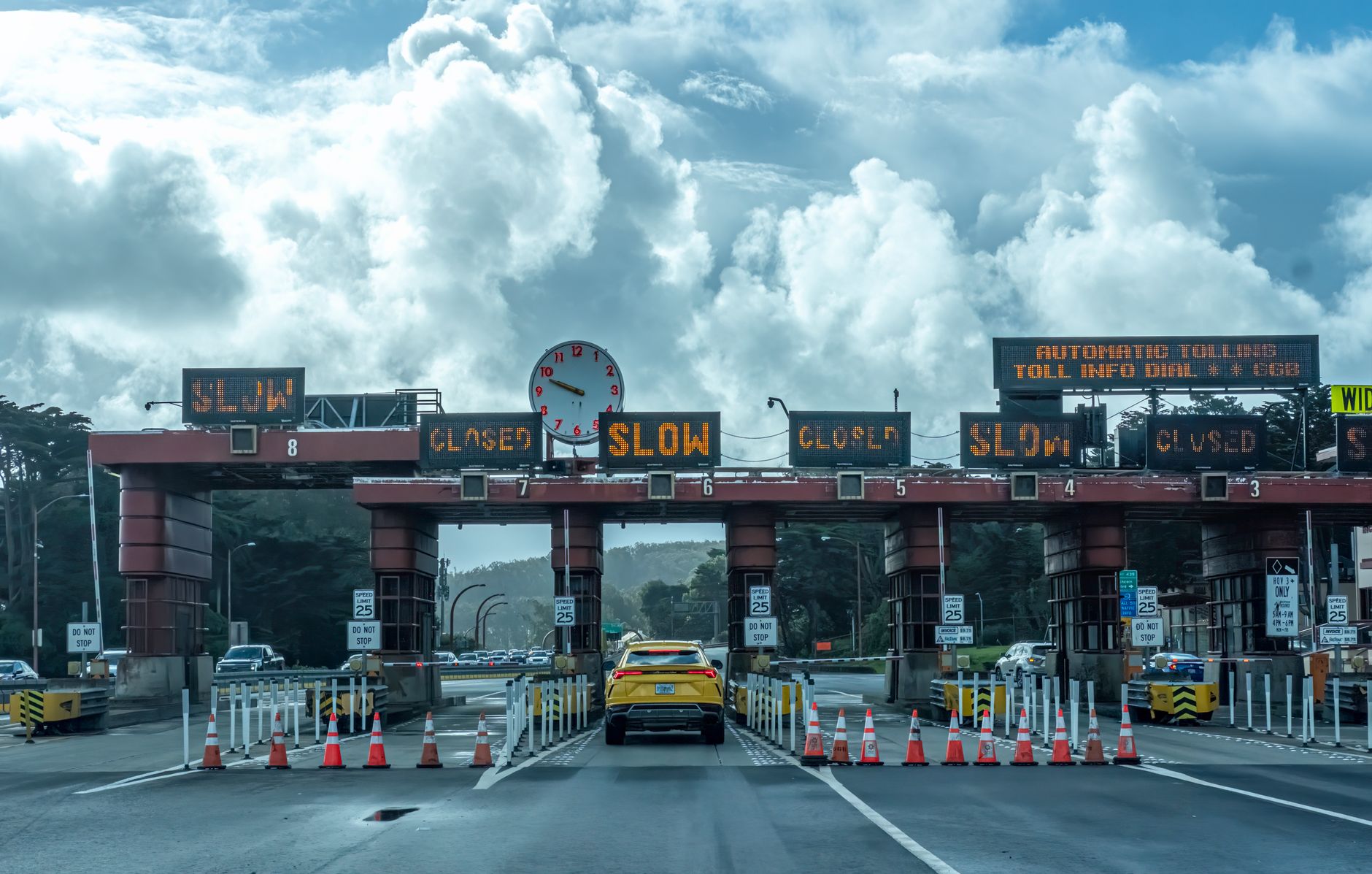
Photo: David McElwee / Pexels
Toll by the Kilometre: How India's Satellite Tolls Will Work
India is preparing to swap the toll booth for the satellite. Instead of stopping at a plaza and paying a fixed amount, a system built on the Global Navigation Satellite System (GNSS) will track how far your vehicle actually travels on a highway and bill you for those kilometres alone. The Ministry of Road Transport and Highways has already amended the National Highway Fee Rules to allow it, and the National Highways Authority of India has invited global interest to build it. If it works as planned, the long queue at the toll gate becomes a relic.
This is a bigger shift than it sounds. FASTag changed how you pay; GNSS tolling changes what you pay for. The principle moves from a flat fee per plaza to a true pay-per-use charge, the way an electricity meter bills units rather than charging a fixed slab for walking into the house.

What GNSS tolling actually is
GNSS is the umbrella term for satellite positioning networks. It includes the American GPS, but India's version leans on NavIC, the country's own regional navigation constellation. The idea is simple: your vehicle constantly knows where it is, and a back-end system matches that path against the map of tolled highway stretches. When you enter a chargeable section, the meter starts; when you exit, it stops.
There are no physical barriers in the final picture. In their place sit virtual gantries — invisible checkpoints defined by GPS coordinates rather than concrete and steel. Cross one, and the software notes the entry and exit points to compute distance. The toll is then pulled from your linked account automatically, with no need to slow down.
The On-Board Unit is the new sticker
For this to function, every vehicle needs a device that can talk to satellites and report its position. That device is the On-Board Unit (OBU). Think of it as the successor to the FASTag windscreen sticker, except it does far more than reflect a radio signal — it receives location data and communicates with the tolling network.
Here's the sequence in plain terms:
- The OBU tracks the vehicle's position using NavIC and GPS signals.
- As you drive a tolled stretch, it logs the distance covered between virtual entry and exit points.
- The system calculates the fare based on that distance and your vehicle class.
- The amount is deducted from your wallet, settled through the existing electronic toll plumbing.
Commercial vehicles get a head start because many already carry Vehicle Location Tracking (VLT) devices, mandated for safety. Trucks, buses and vehicles carrying hazardous goods are the natural first wave, since the hardware and the habit are already there.
Why this is being done at all
The headline benefit is time. Toll plazas are chokepoints, and the minutes lost idling in line add up to real fuel burn and frozen logistics costs across the freight economy. Remove the gate, and traffic flows without interruption.
There are quieter wins too. A system without booths costs less to build and maintain — no land for sprawling plazas, no rows of lanes, no RFID readers to service. Satellite-based charging doesn't care about rain, fog or a dirty sticker that won't scan. And because the charge is tied to distance, it is arguably fairer: a driver who exits after five kilometres no longer pays the same as one who rides the full stretch. The technology can also extend tolling logic to roads that were never economical to gate.
The hybrid years come first
Nobody is flipping a switch overnight. The realistic path is a hybrid model where GNSS tolling and FASTag run side by side for a long transition. Early stretches will keep RFID-based FASTag lanes while equipped vehicles are charged by satellite, both drawing on the same payment account. That dual setup matters, because a country with crores of vehicles cannot retrofit OBUs in one go.
For private cars, expect a gradual pull-in once the commercial fleet proves the system at scale. The big practical question for ordinary owners is the device: who supplies the OBU, who pays for it, and whether it comes pre-fitted in new cars or as a retrofit. None of that is fully settled, so it pays to watch official announcements rather than rumours.
One feature worth tracking is a proposed daily free distance allowance — figures around 20 kilometres have been floated — meant to protect people who use a short tolled stretch for a daily commute. If adopted, it would mean you only start paying after crossing that buffer each day, sparing routine local trips from being nickel-and-dimed.
The catch nobody should skip
A system that knows where every vehicle is, all the time, raises an obvious worry: privacy. Continuous location tracking is the engine of GNSS tolling, and how that data is stored, who can access it, and how long it is retained will decide whether the public trusts it. The honest answer today is that the safeguards are still being defined, and that is exactly the part citizens should scrutinise.
Accuracy is the other open front. Satellite positioning can drift in dense urban canyons, tunnels and under flyovers, and a few metres of error could put a vehicle on the wrong side of a virtual boundary. The system needs robust ways to handle disputed charges, signal gaps and the inevitable wrong deduction, ideally with an easy refund path rather than a phone-tree ordeal.
What a driver should do now
There is no action required today, and that itself is the most useful thing to know — ignore any message demanding you buy an OBU or pay a fee right now. Keep your FASTag active and your KYC current, because the same payment account will carry over into the hybrid phase. When buying a new vehicle in the next couple of years, ask the dealer whether an OBU is fitted or planned, and keep your contact details updated with your tag issuer so account alerts reach you.
The quiet revolution here is conceptual. India is moving from charging you for the act of passing a gate to charging you for the road you actually use. Get the privacy rules and the dispute mechanism right, and the toll plaza — that great equaliser of impatience — could simply fade from the windscreen view.