Hai Jawani Toh Ishq Hona Hai: Inside the Viral Title Track
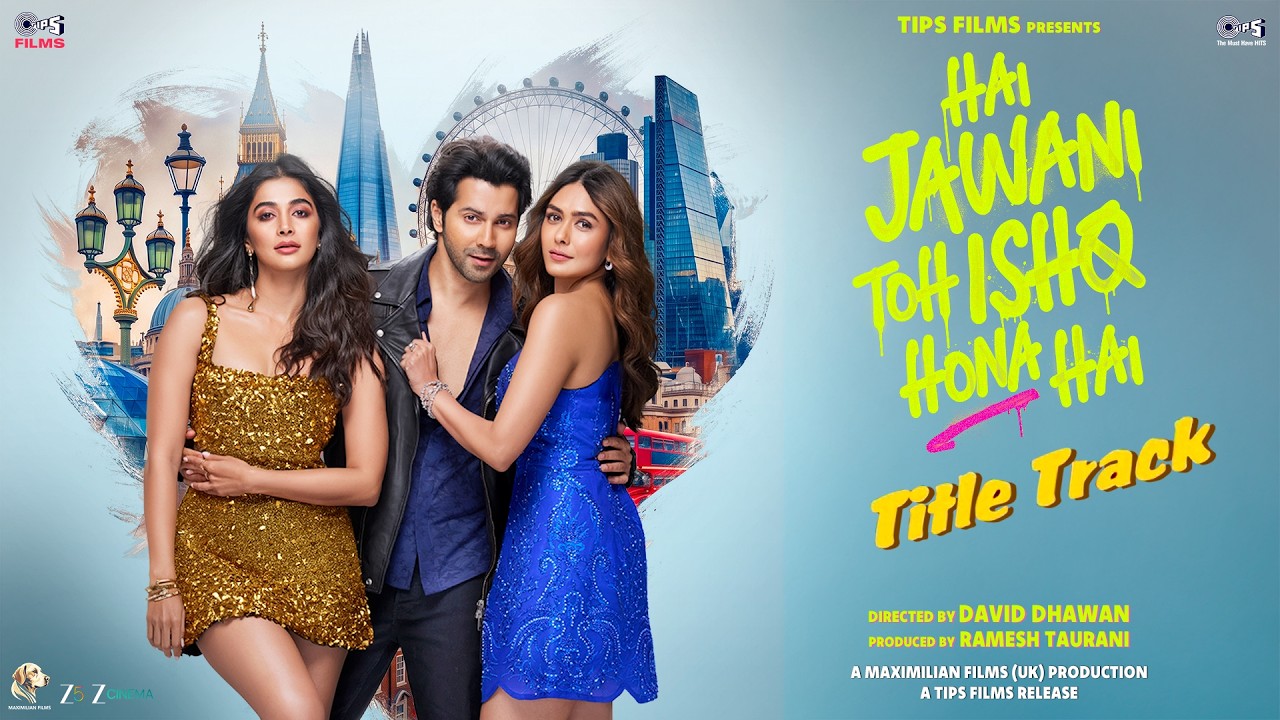
A new Hindi film song has muscled its way to the top of India's trending charts, and it is doing it the old-fashioned way: with a big, unapologetically romantic title track. "Hai Jawani Toh Ishq Hona Hai" pairs Varun Dhawan with Mrunal Thakur and Pooja Hegde, sets them to an Anu Malik tune, and dares the audience to resist a hook that feels beamed in from 1996. Going by the comment threads and the share counts, most viewers are not resisting at all.
The number arrives credited to a familiar assembly line of Hindi film pop. Anu Malik handles the composition, Sameer Anjaan writes the words, and the singing duo Javed-Mohsin are among the voices on the title track. That combination is not an accident. It is a signal, aimed squarely at listeners who grew up on cassette-era love songs and have been quietly waiting for someone to make them again.
A song built to be a moment, not a track
The first thing to understand about this launch is that the song is the campaign. In current Hindi cinema, a title track is rarely just music sitting inside a film. It is the opening salvo of a months-long marketing run, dropped weeks or months ahead of release so it can marinate on YouTube, Instagram reels and streaming playlists before a single ticket is sold.
That is exactly the playbook here. By front-loading a high-recall, hummable title track, the makers buy themselves a recurring presence in the feed. Every reel set to the hook is free advertising. Every dance cover extends the shelf life. The film itself can still be far away, but the song keeps the title in circulation, which is the whole point.
This is why a music video, rather than a trailer, is often the first official piece of a project to go wide. Trailers reveal plot and risk spoiling. A song reveals mood, faces and chemistry, and asks for nothing but a tap of the play button.
Why the 90s sound is doing the heavy lifting
Strip away the star wattage and the real engine of this track is nostalgia. The title phrase itself — youth means falling in love — is pure 90s Bollywood philosophy, the kind of sweeping, uncomplicated romanticism that defined the decade's biggest hits. Anu Malik, whose career peaked in precisely that era, is arguably the most fitting composer alive to recreate it.
There is a reason studios keep reaching backward. The audience that controls family movie outings today came of age in the 1990s and early 2000s. A sound that triggers their teenage memories is not a creative indulgence; it is a targeting strategy. The same instinct is driving the wider re-release boom in theatres and the streaming-era revival of old soundtracks.
A few things make a track like this travel:
- A simple, repeatable hook that a non-Hindi speaker can still hum after one listen.
- Clear melody over heavy production, so it survives a phone speaker and a noisy reel.
- Lyrics built around one big emotion rather than clever wordplay, which is Sameer Anjaan's lifelong strength.
- Recognisable faces in soft, dreamy frames, the visual shorthand for romance that needs no subtitles.
None of this is cynical, exactly. It is craft tuned for the platform. The 90s formula works on reels because reels reward instant emotional payoff, and few things deliver that faster than a chorus you already feel like you know.
The star arithmetic: a trio, not a couple
The casting is its own talking point. Putting Varun Dhawan at the centre with both Mrunal Thakur and Pooja Hegde suggests a romance with more than two corners, and audiences have noticed. Whether the film is a genuine love triangle or simply an ensemble, the optics of three leading names in one frame multiply the song's reach across separate fanbases.
Varun Dhawan is a deliberate choice for this kind of throwback. His career has leaned repeatedly on dance numbers, family entertainers and affectionate nods to his father David Dhawan's brand of crowd-pleasing cinema. He is, in marketing terms, a safe vessel for nostalgia.
Mrunal Thakur arrives with growing pan-India credibility after a run of well-received roles, while Pooja Hegde brings a large South-and-Hindi following. Each star drags a distinct audience to the same comment section. The result is a launch that trends not because one fandom is loud, but because three of them collide.
What the public reaction actually says
The online response has split along predictable but revealing lines. A large chunk of viewers are simply delighted to hear an Anu Malik melody again, and they are saying so warmly. For them the track scratches an itch that recent, more electronic Hindi film music has left unscratched.
A second group is more sceptical, reading the retro packaging as a sign that Hindi cinema is recycling rather than inventing. The phrase "same old formula" recurs in the criticism. Both reactions, it is worth noting, drive the algorithm equally well; debate is engagement, and engagement is reach.
There is also the usual reel ecosystem forming around the song almost in real time — dance attempts, couple videos, lip-sync clips. That user-generated layer matters more than the official view count, because it is the part marketers cannot buy directly. When ordinary users adopt a track as a template, the song stops being an advertisement and becomes a small piece of internet culture.
It is worth being plain about what remains unconfirmed. Beyond the song, its credited team and its three leads, hard details about the film — its full plot, the director, a firm release date — are not something to assume from a title track alone. Anything circulating on that front should be treated as speculation until the makers confirm it.
The bigger play behind one catchy song
This launch is a neat case study in how Hindi films are sold in 2026. The economics push everything toward the song-first model. Theatre footfalls are unpredictable, streaming windows have compressed, and the surest way to manufacture pre-release awareness is a track that lives in people's phones for weeks.
A strong title track does three jobs at once:
- It establishes tone — here, that the film is a romance, broad and emotional, not edgy or dark.
- It seeds the title into everyday conversation so the name is familiar long before release.
- It builds a reusable asset the makers can re-cut into teasers, lyric videos and reel sounds for months.
The risk is equally real. A song that overshadows its film can raise expectations the movie cannot meet, and a nostalgia hook can read as derivative if the finished product offers nothing new. Plenty of films have ridden a hit single into a disappointing opening weekend.
What likely comes next
Expect the makers to follow the standard sequence: more singles spaced out to keep the title trending, a slow reveal of the film's premise, and eventually a teaser or trailer timed to the strongest of the songs. If the love-triangle reading holds, the marketing will almost certainly lean into the Varun-Mrunal-Pooja dynamic, because three-way romance sells itself in stills.
For now, the takeaway is simpler. A retro title track, a veteran composer and a trio of bankable stars have combined into one of the week's most-watched clips, and they have done it by trusting an old idea: that a good Hindi love song, sung straight and hooked hard, still travels further than almost anything else online. Whether the film earns the affection the song is borrowing is the question that will not be answered for a while yet.