Photo: Vikash Singh / Pexels
How to Stargaze at Hanle, India's First Dark Sky Reserve
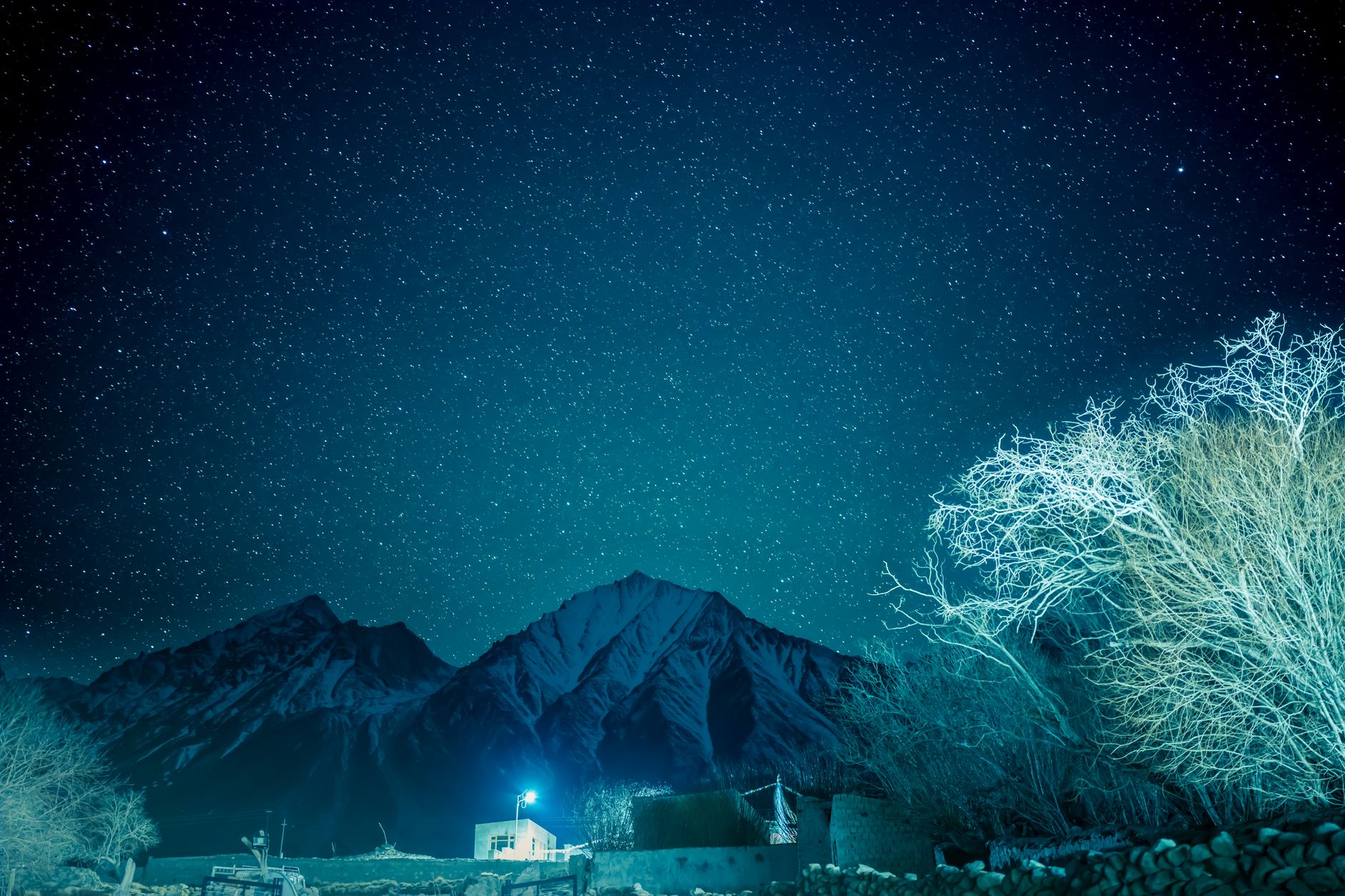
If you have only ever seen a smudge of stars through city haze, the sky above Hanle will feel like a different planet. This high-altitude village in eastern Ladakh is home to the Hanle Dark Sky Reserve, India's first officially notified dark sky preserve, where the Milky Way is bright enough to cast a faint shadow and the stars don't twinkle so much as burn. For amateur astronomers and curious travellers, it is the closest thing the country has to a pilgrimage site for the night sky.
The reserve was notified in 2022 around the Indian Astronomical Observatory, run by the Indian Institute of Astrophysics, and it has quietly become one of the most sought-after astro-tourism spots in Asia. But getting there and actually making the most of those skies takes planning. This is a guide to doing it right.
Why Hanle's sky is special
Three things have to line up for a truly dark sky: altitude, dryness and distance from artificial light. Hanle has all three in abundance. The village sits at roughly 4,500 metres in the cold desert of Changthang, where the air is thin, bone-dry and almost completely free of dust and water vapour. Less atmosphere overhead means less of the blurring that makes stars shimmer, and almost no moisture means the sky stays transparent night after night.
Light pollution, the curse of every Indian metro, is essentially absent here. The nearest large town is hours away, and the handful of villages in the reserve have switched to shielded, warm-toned lighting to protect the darkness. On the Bortle scale, which rates night-sky darkness from 1 (pristine) to 9 (inner city), Hanle ranks a Class 1 to 2 — the kind of sky a stargazer in Delhi or Mumbai will simply never experience at home.
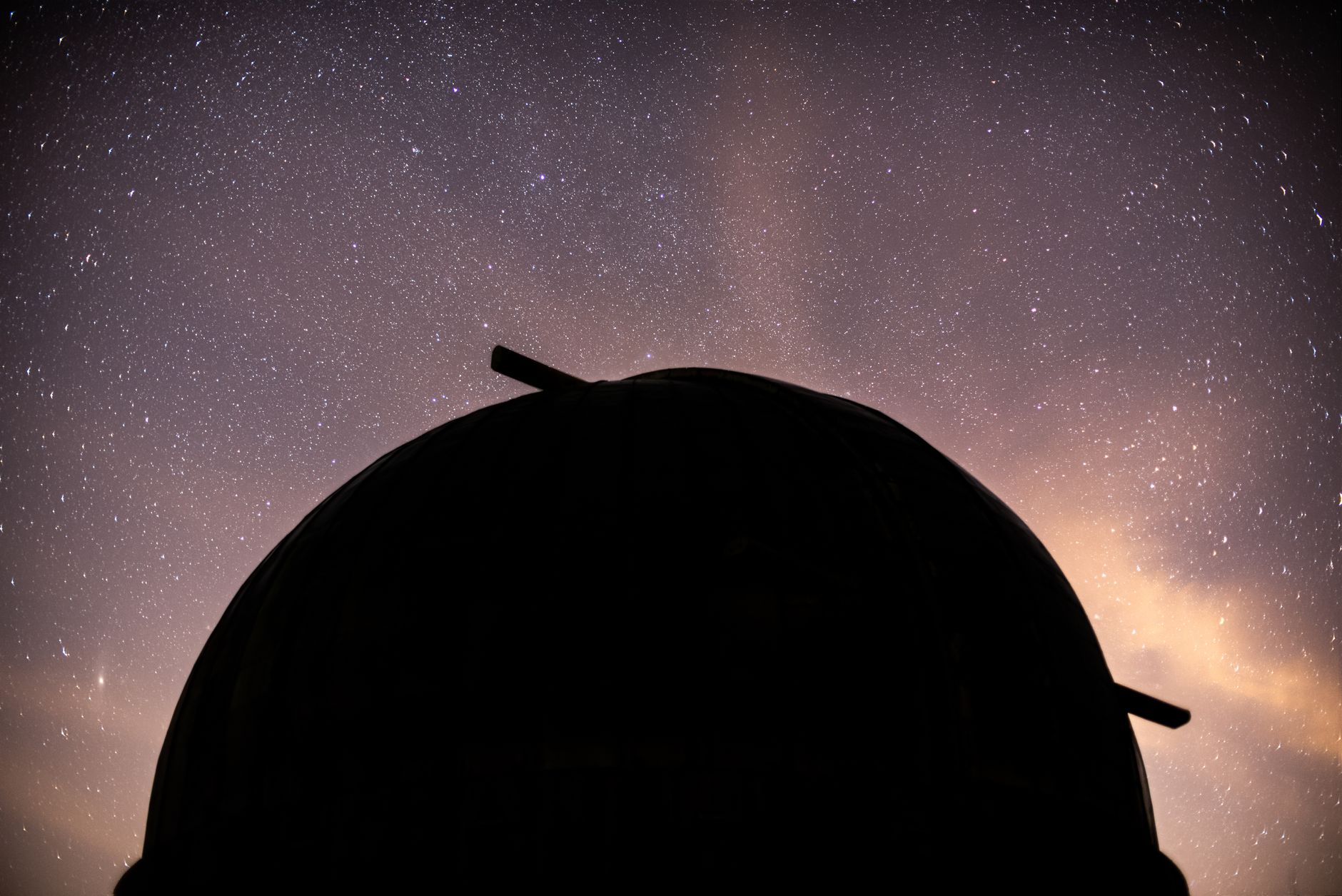
The observatory itself is a serious scientific facility. It hosts the 2-metre Himalayan Chandra Telescope and the MACE gamma-ray telescope, among the highest-altitude instruments of their kind in the world. You can't peer through the research telescopes, but their presence is a guarantee of just how good the conditions are.
When to go, and when not to
Timing matters more than almost anything else. Get the season wrong and you'll be staring at a frozen, snowbound road; get the moon phase wrong and the brightest sky on earth will look ordinary.
- Best months: roughly April to October, when roads are open and nights are cold but survivable. Late autumn often brings the steadiest, clearest air.
- Winter (November to March): technically the darkest, driest skies of all, but temperatures plunge below -30°C and access becomes treacherous. Only for the well-prepared and well-guided.
- Moon phase: plan your visit around the new moon. Even at Hanle, a full moon floods the sky with light and drowns out the Milky Way. Aim for the few nights on either side of the new moon for the inky-black backdrop that makes faint objects pop.
Check a lunar calendar before you book anything. A trip built around a beautiful new-moon week is worth far more than one timed only for convenient flights.
The permits you actually need
Hanle is close to the India-China border, which means it falls in a protected, restricted zone. You cannot simply drive up.
Indian citizens need an Inner Line Permit (ILP), which is straightforward to arrange either through the online Ladakh permit portal or at the Deputy Commissioner's office in Leh. Carry multiple photocopies, because checkpoints along the way will want them. Foreign nationals have historically faced tighter restrictions in this sector, so anyone travelling on a foreign passport should confirm the current rules well in advance rather than assume access.
Build the permit into your itinerary. Most travellers base themselves in Leh first, sort the paperwork, acclimatise, and only then head out to Hanle.
Altitude is the part people underestimate
Hanle is higher than almost any hill station in India, and the thin air is not a detail to brush aside. Acute mountain sickness is a genuine risk, and it doesn't care how fit you are. The single most important rule is to acclimatise gradually — spend at least two nights in Leh (itself at about 3,500 metres) before going higher.
A few practical habits make a real difference:
- Climb slowly. Don't rush from the airport straight to high villages.
- Hydrate constantly and skip alcohol for the first couple of days.
- Watch for warning signs — persistent headache, nausea, breathlessness at rest — and descend if they worsen.
- Talk to a doctor beforehand about medication like acetazolamide if you're prone to altitude trouble.
Stargazing means standing still outdoors for hours in deep cold, exactly when the body is already working hard on less oxygen. Respect that combination.
The homestay astronomers who changed Hanle
The best part of Hanle isn't just the sky — it's the people who'll show it to you. When the reserve was created, the observatory trained local residents, many of them women, as Astronomy Ambassadors and equipped them with telescopes. These families now run telescope-equipped homestays, turning what could have been a closed scientific outpost into a community-run tourism model.
Booking one of these homestays does two things. It supports the village economy directly, and it gets you a guided session with someone who knows exactly where the Andromeda galaxy, the Orion Nebula or Saturn's rings will be on a given night. A trained host with a decent telescope will show you far more than you'd ever find fumbling alone in the dark.
If you're serious about deep-sky viewing, this is the route to take rather than relying on naked-eye gazing alone.
What to pack and how to shoot it
The cold is the enemy of every plan here. Dress in heavy thermal layers, pack a windproof outer shell, and bring far better gloves and socks than you think you need. A red-light torch is essential — white light destroys your night vision and ruins everyone else's view, while red preserves the eye's dark adaptation.
For anyone hoping to photograph the Milky Way:
- Use a camera with manual mode and a wide, fast lens (something around f/2.8 or wider).
- Mount it on a sturdy tripod and use a remote or timer to avoid shake.
- Start with high ISO, a wide aperture and exposures of roughly 15–25 seconds, then adjust.
- Carry spare batteries kept warm in an inner pocket; cold drains them fast.
Give your eyes a full 20–30 minutes to adjust to the dark before judging the sky, and resist checking a bright phone screen.
A model India could repeat
Hanle matters beyond tourism. It is proof that protecting darkness can be an economic asset, not a sacrifice — that a village can earn from its night sky while keeping it pristine. As light pollution spreads across the country, the reserve is a template for how science, conservation and community income can reinforce one another.
For the traveller, the takeaway is simpler. Plan around the new moon, sort your permits early, give your body time to adjust to the altitude, and book a homestay run by one of the local astronomers. Do that, and one clear night at Hanle will recalibrate what you thought a sky could look like.