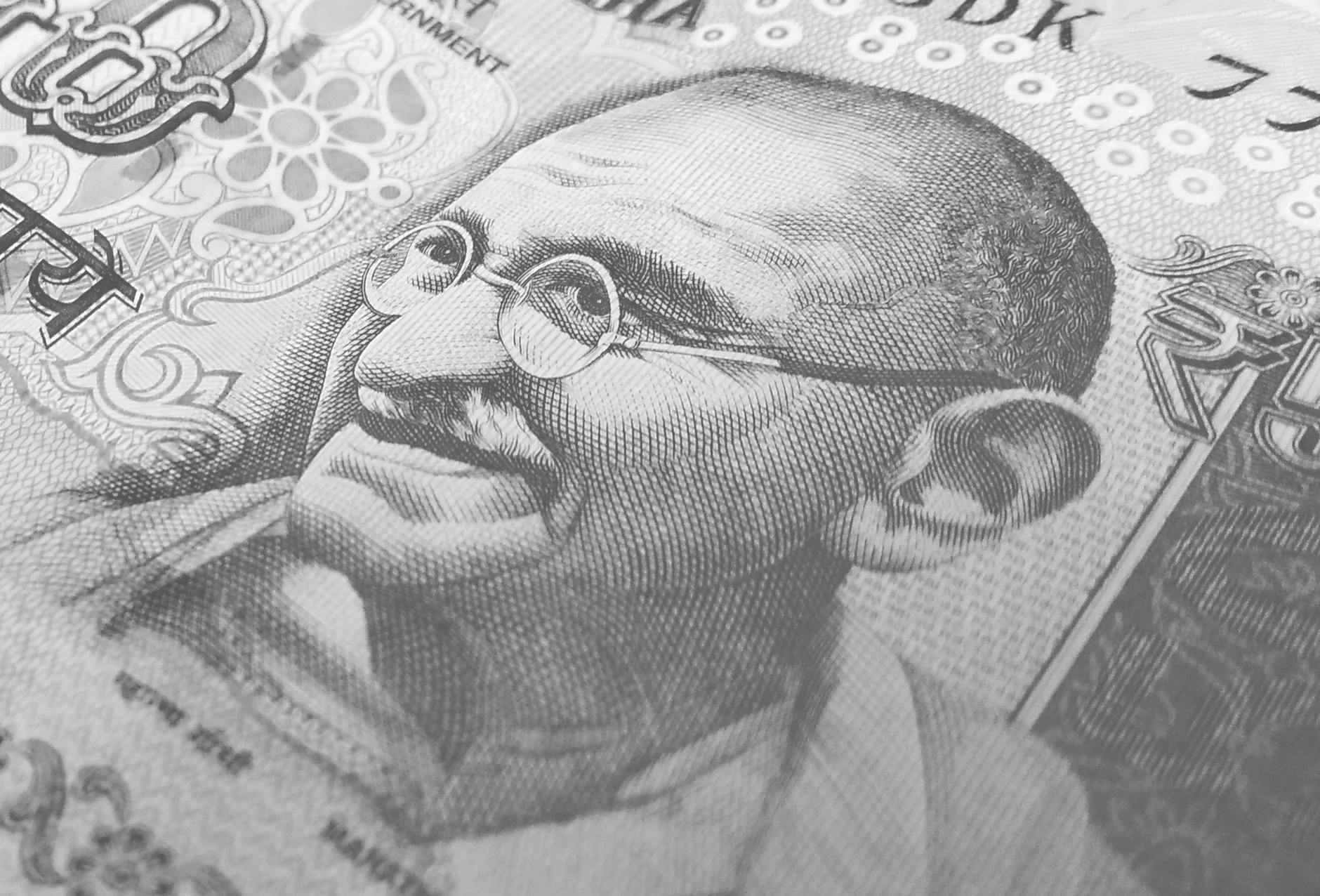
Photo: Pixabay / Pexels
India's FDI Paradox: Why Foreign Money Is Quietly Leaving
On paper, India is still a magnet for foreign capital. Record sums are flowing in, the country remains one of the fastest-growing large economies, and global investors keep listing it among their favourite long-term bets. Yet beneath that headline, a quieter and more unsettling story is unfolding — and it sits at the heart of why the rupee keeps hitting new lows. India's net FDI has thinned to almost nothing, even as gross inflows swell. Economists have started calling it the FDI paradox: money keeps coming in the front door while even more slips out the back.

The Headline That Hides the Real Story
Gross foreign direct investment into India rose roughly 13% over the twelve months ending January 2026, climbing to about $90.8 billion from $80.3 billion a year earlier, according to analysis of Reserve Bank of India data by Morgan Stanley. Strip out repatriated capital and the picture looks even healthier: fresh, productive inflows hit a three-year high.
The twist lies in what happens after the money arrives. Net FDI — what is left once you subtract profits and capital that foreign firms send home, plus the money Indian companies invest abroad — fell to just $0.5 billion on the same twelve-month basis. That is near an all-time low. In other words, for every fresh dollar entering the country, almost an equal dollar is leaving. The engine is running hard, but the tank is barely filling.
This matters because gross and net FDI tell two very different stories. Gross inflows flatter the brochure; net inflows are what actually finance the economy and steady the currency. When the gap between them widens this dramatically, it signals that India is increasingly recycling capital rather than absorbing it.

Two Forces Draining the Tank
The shortfall in net FDI is being driven by two distinct trends, and understanding both is key to grasping the paradox.
The first is repatriation — foreign investors taking profits and capital out. This figure has stayed above $50 billion for the second straight year. Much of it is not panic; it is maturity. India's startup and private-equity ecosystem has aged, and a busy pipeline of deals, IPO exits and buyouts means early backers are finally cashing in. When a private-equity fund that entered in 2017 sells its stake at a handsome gain, that exit shows up as money leaving the country, even though it reflects a successful investment.
The second force is outward FDI — Indian companies investing overseas. That number has surged to roughly $35.8 billion, having multiplied about 2.6 times in just two years. Indian conglomerates, IT majors and ambitious mid-caps are buying assets, building capacity and chasing customers abroad, frequently routing capital through low-tax hubs such as Singapore, Mauritius and the UAE. It is, in one sense, a coming-of-age moment: India is now a meaningful exporter of capital, not merely a recipient.
A Year of Negative Months
The monthly data lays the trend bare. Net FDI has been negative since around August 2025, and of the thirteen months between January 2025 and January 2026, eight recorded net outflows. December 2025 was especially stark: net FDI came in at roughly minus $1.61 billion, a fourth consecutive monthly outflow. In that single month, repatriation hit about $7.45 billion — close to 40% higher than a year earlier — while outward investment by Indian firms rose around 30% to $2.74 billion.
This is not a one-off blip tied to a single quarter or a single mega-deal. It has hardened into a pattern, which is precisely what worries analysts. A bad month can be dismissed; a year of them reshapes how economists model India's external accounts.
Why This Squeezes the Rupee
The most immediate casualty of weak net FDI is the currency. The rupee recently sank to a record low near 96.96 to the US dollar, and the FDI story is a structural reason why.
Think of net FDI as the slow, sticky, reliable money that helps cover India's trade deficit — the country imports far more than it exports, especially crude oil. When that dependable cushion shrinks to near zero, India must lean more heavily on hot, volatile portfolio flows from foreign institutional investors who buy and sell stocks and bonds at the first hint of trouble. That dependence is dangerous in 2026, a year in which foreign investors have already pulled record sums out of Indian equities amid high US bond yields and geopolitical jitters.
Morgan Stanley flagged exactly this risk: persistently weak net FDI raises reliance on fickle portfolio capital, which can strain the currency and India's broader external balance. So the FDI paradox is not an abstract accounting curiosity. It removes a shock absorber at the very moment the rupee most needs one.
Not All Bad News
It would be a mistake to read the falling net figure as simple decline. Several of the forces behind it are signs of strength, not weakness.
Gross inflows excluding repatriation jumped nearly 38% year-on-year to a three-year high, meaning genuinely fresh, productive capital — for factories, infrastructure and greenfield projects — is still pouring in. Foreign companies continue to expand here. Heavy repatriation partly reflects a healthy exit market that rewards early investors and, in turn, encourages the next wave of funding. And the boom in outward investment shows Indian firms scaling into global champions rather than staying boxed inside the domestic market.
The concern is less about direction than about cushioning. A maturing economy that both attracts and deploys capital globally is doing many things right. But it also loses some of the easy, automatic financing that a younger, capital-hungry India once enjoyed. The training wheels are coming off.
What Comes Next
Forecasters expect gross FDI to stay robust, supported by India's growth story, supply-chain shifts away from China and large greenfield commitments. Net FDI, however, is likely to remain subdued in the near term, dragged by an active deal pipeline, continued private-equity exits and rising overseas investment by Indian companies.
For policymakers, that raises the stakes for everything that builds confidence in long-term capital: stable tax rules, smoother regulation and a credible currency. The Reserve Bank's June policy commentary, the path of crude oil prices and the strength of the monsoon will all shape sentiment in the coming weeks. For ordinary investors, the lesson is subtler but useful — headlines about record FDI inflows can be misleading, and the net number deserves far more attention than it usually gets.
India is no longer just a destination for the world's money. It has become a participant in the global flow of capital, sending its own abroad even as it draws investment in. That is a milestone worth celebrating. But it also means the comfortable era of effortless net inflows is fading — and the rupee is the first to feel the chill.
Source: business-standard.com


