Drone Attack on Kuwait Airport: What the Viral Clip Shows
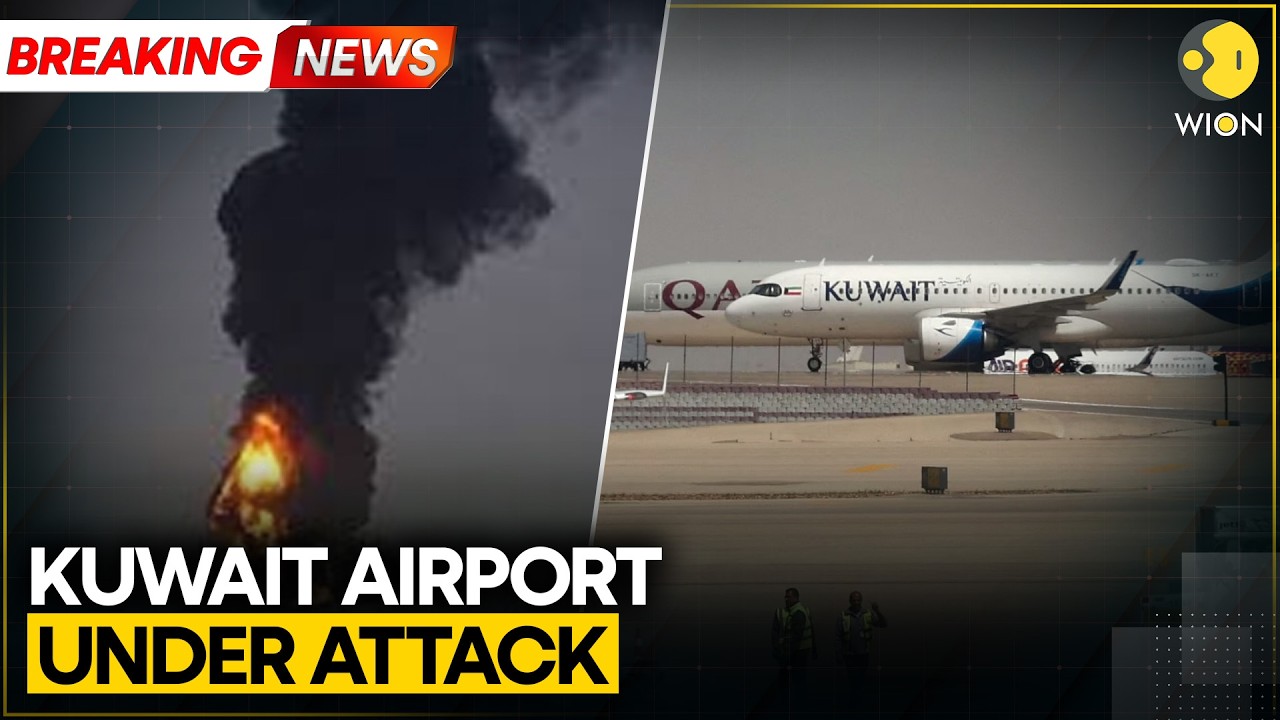
A short, alarming video is racing across YouTube and social feeds: a breaking-news segment claiming an Iran drone attack targeted Kuwait's international airport, leaving "several wounded." The clip carries the urgent music, red banners and on-screen alerts that signal a major escalation in the Gulf — and that packaging is exactly why it is spreading so fast. Before anyone treats it as settled fact, it is worth slowing down and separating what such footage actually shows from what it merely asserts.
This report is not a frame-by-frame narration of the embedded clip. Instead, it looks at what is genuinely known, what remains unverified, and why a single uncorroborated video about Kuwait can ripple all the way to households in Kerala, Tamil Nadu and Telangana.
What the clip claims — and what is actually confirmed
The video presents a familiar breaking-news structure: a headline asserting a drone strike, a claim of casualties, and an implied attacker. Crucially, the most explosive elements — that the weapon was an Iranian drone, that the target was the airport, and that there were "several wounded" — are precisely the parts that demand independent confirmation.
In fast-moving conflict reporting, three things routinely get ahead of the facts:
- Attribution — who launched it. Early reports often guess the perpetrator before any forensic or official evidence exists.
- Casualty counts — numbers tend to swing wildly in the first hours and are frequently revised.
- Location precision — "near" an airport can quietly become "on" an airport as a story is retold.
Until Kuwaiti authorities, recognised wire agencies and aviation regulators independently corroborate the specifics, the responsible reading is that an alleged incident is being reported, not that a confirmed attack has occurred. Stating that plainly is not downplaying anything; it is basic accuracy.
Why this particular clip is blowing up
The word Kuwait paired with drone attack is combustible for a reason. The Gulf has lived through years of tension involving drones and missiles, and audiences are primed to believe the next escalation is always imminent. A thumbnail promising a strike on a civilian airport hits every anxiety at once: war, air travel, and oil.
There is also the engagement machine. Dramatic geopolitical clips reward speed over caution, and a headline that says "Iran Strikes Kuwait" will out-click a measured one that says "reports of an unconfirmed incident." That asymmetry is structural — sober corrections almost never travel as far as the original alarm.
Finally, Kuwait is a sensitive node. It borders Iraq and sits across the Gulf from Iran, hosts foreign military facilities, and is a critical energy exporter. Any hint of its airspace being violated carries outsized symbolic weight, which makes it irresistible content.
The Kuwait–Iran context most viewers miss
Kuwait and Iran are neighbours with a complicated but largely diplomacy-first relationship. Unlike some Gulf states that have openly clashed with Tehran, Kuwait has historically positioned itself as a mediator and has worked to keep channels open even during regional crises. That track record is part of why a direct, deliberate Iranian strike on Kuwait would be such a dramatic departure — and why it should not be assumed casually.
Kuwait's security posture is also shaped by memory. The country was invaded and occupied in 1990, an experience that left it acutely protective of its sovereignty and airspace, and deeply invested in international guarantees of its security. Any credible threat to its territory triggers immediate, high-level responses rather than silence.
It is equally important to remember the wider backdrop: the Gulf is dense with drones, air-defence systems and overlapping conflicts. Stray munitions, intercepted projectiles, misidentified objects and even accidents have all been mistaken for deliberate attacks before. A loud bang and smoke near an airport can have several explanations, only one of which is a hostile strike.
Why an India-first audience should care
For Indian readers this is not a distant story. Kuwait is home to one of the largest Indian expatriate communities anywhere, with workers spread across construction, oil and gas, healthcare, domestic work, retail and white-collar services. Families across India depend on the salaries and remittances flowing back from the Gulf.
That is why even an unconfirmed report can cause real anxiety in Indian homes. The practical stakes include:
- Flight disruption — any airport incident, real or precautionary, can mean diversions, cancellations and stranded passengers, hitting the busy India–Gulf air corridor.
- Worker safety — relatives immediately worry about loved ones living near affected areas.
- Remittances and jobs — prolonged instability in the Gulf can threaten livelihoods that millions of Indian families rely on.
- Oil prices — the Gulf is central to global energy supply, and India imports the bulk of its crude, so escalation fears can feed into fuel and inflation worries at home.
In past Gulf flashpoints, India's Ministry of External Affairs and its embassies have issued advisories, set up helplines and, when necessary, planned evacuations. Diaspora families have learned to watch official channels closely — and to be wary of panic spread by unverified clips.
How to read breaking-war footage without getting fooled
The single most useful skill during any conflict scare is disciplined verification. A few habits separate informed readers from those who amplify misinformation:
- Wait for multiple credible sources. One video, however dramatic, is not confirmation. Look for agreement across established outlets and official statements.
- Check the original date and origin. Old footage from other conflicts is constantly recycled with fresh, false captions.
- Distrust the thumbnail. Sensational stills and titles are designed for clicks, not accuracy.
- Separate claim from proof. Note when a report says "alleged," "reportedly" or "unconfirmed" — those words are doing important work.
- Follow the boring authorities. Aviation notices, airline advisories and government statements are far more reliable than viral edits.
None of this means dismissing the possibility that something genuinely happened. It means refusing to let a video do your fact-checking for you.
What may happen next
If the incident is real and confirmed, expect a fast, layered response: an official statement from Kuwaiti authorities, possible temporary airspace or airport restrictions, condemnations from regional and global capitals, and clarifications — or denials — regarding attribution. Aviation regulators would issue formal notices, and airlines serving the India–Gulf routes would adjust schedules accordingly.
If it turns out to be exaggerated, mislabelled or misattributed, the more likely arc is quieter: an official clarification, a downgrade of the casualty and attribution claims, and a slow fade as the viral wave moves on — often without the same audience ever seeing the correction.
Either way, the smart move for readers is the same. Track verified updates from official sources and established agencies, treat early casualty and attribution figures as provisional, and resist forwarding alarming clips until the facts catch up. In the Gulf, where a single rumour can move markets and frighten millions of families, patience and verification are not passivity — they are the responsible response.