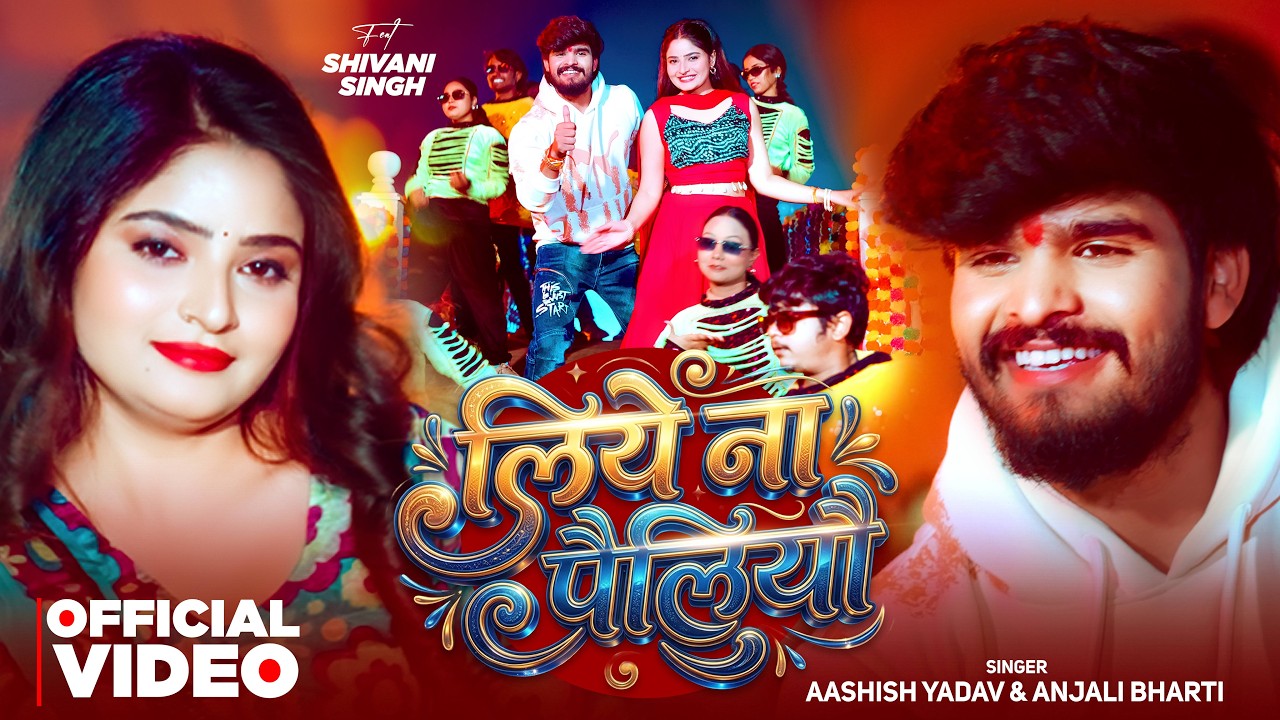
Liye Na Pailiyau: Why a 2026 Maghi Song Is Going Viral
A new seasonal folk number titled "Liye Na Pailiyau" — credited to singers Aashish Yadav and Anjali Bharti and marketed as a New Maghi Song 2026 — has been climbing YouTube's trending lists, the latest example of how India's regional-language music economy now moves faster and reaches deeper than most of Bollywood. The track is a textbook case of a genre that millions know intimately but national media rarely covers: the Maghi song, a festival-timed style built for the Bhojpuri-Magahi heartland of Bihar and eastern Uttar Pradesh.
If you are outside that belt, the title may read like gibberish. Inside it, the format is instantly familiar — a bright, danceable melody, a sticky repeated hook, a playful boy-girl exchange, and lyrics rooted in everyday rural and small-town life. What is genuinely worth understanding is not the single song but the machine behind it: how seasonal tracks like this are made, why they explode, and what their rise says about who controls popular music in India today.
What a "Maghi song" actually is
The word Maghi comes from Magh, the lunar month that straddles January and early February, and from Makar Sankranti, the harvest and solstice festival celebrated in mid-January. For decades, communities in Bihar, Jharkhand and eastern UP have marked this period with specific songs — devotional, romantic and celebratory — that flood local markets, weddings and now phones.
Maghi is best understood as a seasonal sub-genre rather than a fixed musical style. The same artists who cut Maghi numbers in winter will release Chhath songs in autumn, Holi songs in spring, and Bhakti (devotional) tracks year-round. The calendar, not the studio, sets the release schedule. A title like "Liye Na Pailiyau" — loosely, a lament about not getting or being able to afford something — fits the genre's habit of wrapping small, relatable emotions in an upbeat package.
Crucially, these are not film songs. They live almost entirely on YouTube and short-video apps, bypassing the traditional gatekeepers of radio, television and movie soundtracks.
Who is behind the song
The credited voices are Aashish Yadav and Anjali Bharti, names that sit within a vast and fast-churning ecosystem of regional performers. Unlike a handful of marquee Bhojpuri stars who cross over into acting and politics, most Maghi-era artists operate in a crowded mid-tier: prolific, locally beloved, and dependent on volume rather than a single blockbuster.
We are not in a position to verify the duo's full biographies, label deals or exact view counts, and readers should treat round numbers floating around social feeds with caution. What is observable is the release pattern: a song dropped under a festival banner, pushed through a regional music label's YouTube channel, and amplified by the platform's recommendation engine and by WhatsApp sharing.
This division of labour is standard. A typical regional release involves:
- A lyricist and composer who turn out tracks at speed, often reusing proven melodic templates.
- Singers like Yadav and Bharti who bring voice and local recognition.
- A music label or channel that handles recording, a low-cost video shoot, and distribution.
- Dancers and influencers who keep the song alive through Reels and Shorts after launch.
Why it is blowing up
The virality of a song like this is less about luck than about structure. Several forces stack up at once.
- Festival timing. Releasing under the Maghi/Sankranti banner taps a built-in audience actively searching for seasonal music.
- A short, repeatable hook. Maghi tracks are engineered for the 8-to-30-second loops that dominate Shorts and Reels, making them easy to reuse in user videos.
- Cheap data and smartphones. India's collapse in mobile-data prices over the last decade put video streaming in the hands of hundreds of millions of first-language Bhojpuri and Magahi speakers.
- Algorithmic tailwind. Once a regional track gains early traction, YouTube's recommendations push it to similar viewers, compounding reach quickly.
- WhatsApp distribution. Outside the algorithm entirely, songs spread through family and village groups, a layer national charts rarely measure.
The result is a familiar arc: a track can rack up enormous numbers within days, peak through the festival window, and then recede as the next seasonal batch arrives. Longevity is rare; velocity is the whole game.
The bigger story: India's hyperlocal music economy
The single most important context here is that regional-language music has decoupled from cinema. For most of the twentieth century, film soundtracks were how India got its hit songs. That monopoly has broken. Today, the largest and most active music economy in the country is hyperlocal, YouTube-native and built on languages that rarely feature in mainstream awards shows.
Bhojpuri alone is spoken by tens of millions across Bihar, eastern UP and a global migrant diaspora stretching to Mauritius, Fiji, the Caribbean and the Gulf. Add Magahi, Maithili and other eastern tongues, and you have an audience large enough to sustain thousands of full-time artists, dozens of labels, and a steady release calendar tied to the festival year.
This matters for a few reasons:
- It is a rare creative economy where non-metro, non-English talent sets the agenda and reaches global scale on its own terms.
- It demonstrates how YouTube became India's de facto music industry, especially for languages the formal industry long ignored.
- It blurs the line between musician and influencer, since survival depends as much on social reuse as on the original upload.
The criticisms and the defence
The genre is not without its critics. Detractors argue that a lot of seasonal output is formulaic — recycled beats, interchangeable melodies and lyrics that lean on innuendo or stock romantic complaints to grab attention. The sheer speed of production, they say, rewards quantity over craft, and the chase for clicks can flatten genuine folk traditions into a single commercial template.
The pushback is equally strong. Fans and many artists frame this music as authentic local culture that finally has a distribution channel of its own, free from Mumbai's tastes and budgets. A song in your mother tongue, about your festival, made by people from your region, carries a belonging that polished national pop cannot replicate. On this view, "Liye Na Pailiyau" is not disposable filler but a living folk form adapting to new tools.
Both things can be true at once: much of the output is repetitive, and the genre is still a meaningful cultural expression for an audience the mainstream long overlooked.
What happens next
For this specific track, the likely trajectory is the genre norm — a sharp climb, a festival-season peak, and a gradual fade as fresh seasonal releases crowd the feed. The real test of any breakout is whether it earns an afterlife in Reels and wedding playlists rather than a one-week spike.
The broader trend lines are clearer and more durable:
- Expect labels to keep flooding each festival window, betting that volume will surface the occasional runaway hit.
- Watch for AI-assisted production to lower costs further, intensifying both the output and the sameness.
- Look for successful regional artists to chase the proven crossover path — from YouTube numbers into live shows, acting, brand deals and sometimes politics.
- Anticipate growing scrutiny of royalties and fair pay, since many performers in this churn capture only a sliver of the value their songs generate.
Whether or not you ever hum "Liye Na Pailiyau," the song is a useful window into a quieter shift in Indian popular culture. The center of gravity in music is moving away from studios and metros toward seasonal, smartphone-first creators speaking directly to their own communities — and the rest of the country is only now starting to notice.