Lyndon Dykes' World Cup Presser Has Scotland Buzzing
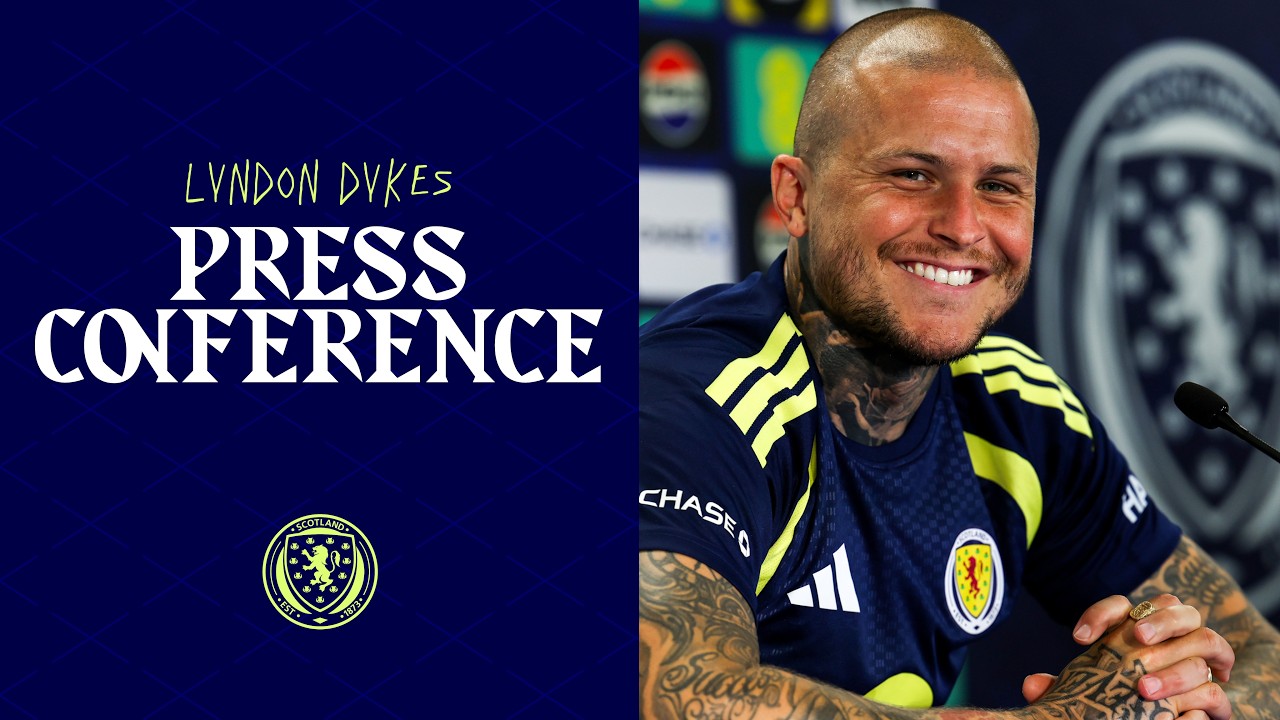
A six-minute clip of Lyndon Dykes sitting behind a row of branded microphones should not, on paper, be the kind of thing that travels around the world. Yet his 16 June 2026 press conference, billed around the 2026 FIFA World Cup, has been pulled apart, captioned and re-shared across football social media this week. The reason has less to do with anything sensational he said and more to do with what his presence at a World Cup represents for a country that waited a very long time to get back.
This is a story about a striker, an unusual passport journey, and a national team finally walking back onto the biggest stage. For Indian viewers scrolling past it, the appeal is the same thing that makes any good sports clip spread: a clear underdog, a human face, and a sense that something rare is happening.
Who Lyndon Dykes actually is
Dykes is a centre-forward who was born on Australia's Gold Coast and came up through lower-level Australian football before relocating to Scotland and breaking through in the Scottish leagues. He qualifies for the Scotland national team through family heritage rather than birthplace, and he made his international debut in 2020.
That split identity is part of why the clip resonates. He speaks with an accent that surprises people who assume a Scotland forward must have grown up in Glasgow or Aberdeen. Online, fans tend to either celebrate him as proof that national identity is more layered than a birth certificate, or argue about heritage call-ups in general. Neither side is new, but a World Cup turns up the volume on it.
Why this press conference is blowing up
A pre-tournament or matchday press conference is usually routine. Players field questions, offer careful answers, and nobody outside the room remembers it. What changes the maths here is context, and a few things stack up at once.
- Scarcity. Scotland have not been a regular World Cup fixture, so every official appearance carries weight.
- Personality. Dykes tends to answer plainly, and clips of athletes sounding like real people rather than media-trained robots travel well.
- The comeback subtext. His career has included a serious injury setback, which makes simply being fit and selected a storyline in itself.
- Algorithm timing. With the 2026 World Cup dominating feeds, even mid-tier content from participating squads gets a huge organic push.
It is worth being honest about one thing: a viral clip rarely needs a single dramatic line to take off. Sometimes it is a wry answer, a flash of nerves, or a quote that gets lifted out of context and recaptioned by a dozen accounts. Without narrating the video frame by frame, the safest read is that the moment landed because the audience was primed, not because of a scandal.
Scotland's long road back
The heart of the interest is national. Scotland's previous World Cup finals appearance was at France 1998, and the decades since have been a catalogue of near-misses, playoff heartbreak and qualifying campaigns that fell apart late. A generation of Scottish fans grew up watching the tournament purely as neutrals.
Reaching the 2026 finals, then, is not just another qualification. It reframes the entire mood around the squad. Players who would normally get modest attention suddenly become national figures, and a striker's press conference becomes appointment viewing for supporters starved of these moments. That emotional backlog is doing a lot of the work in making this clip spread.
The 48-team factor
The 2026 World Cup is the first to run with an expanded 48-team field, hosted across the United States, Canada and Mexico. The bigger bracket matters here because it widened the path for nations that previously sat just outside the cut.
For countries like Scotland, the expansion is double-edged. It improves the odds of qualifying, which fans love. It also invites the criticism that a larger field dilutes the competition and rewards teams that would have missed out under the old 32-team format. Expect that debate to follow every smaller nation through the tournament, and to surface in the comment sections under exactly these kinds of clips.
A comeback worth noting, carefully
Part of Dykes' appeal is resilience. His career has included an injury layoff serious enough to threaten his momentum at club and country level, the sort of setback that ends some players' international hopes entirely. The specifics of his fitness on any given matchday are best left to official team updates rather than speculation, but the broad arc is clear: getting to a World Cup at all, after a disruption like that, is an achievement.
That narrative is catnip for highlight channels. A grounded athlete, a recovery story, and a country's return all bundled into one talking head is far more shareable than a polished superstar saying nothing.
How Indian fans are watching
India has no team in the tournament, which paradoxically makes the audience here more open. Without a national side to back, Indian viewers gravitate toward narratives, and an unfashionable nation returning after 28 years is an easy story to adopt for a few weeks.
A practical note for that audience: the genuine broadcast and a licensed streaming platform hold the official FIFA rights in India, and that is where matches and verified clips belong. Unofficial YouTube re-streams of full games tend to vanish under copyright claims, can be unreliable mid-match, and occasionally route viewers toward sketchy sites. Press-conference clips like this one are usually fair game to watch and share, but full live coverage should come from the rights holder.
What happens next
The press conference itself will fade within days, as these things do. What it signals is more durable. Scotland are using the tournament to reset expectations, and individual players are being introduced to a global audience that may never have heard their names.
For Lyndon Dykes, the practical questions are simple ones: minutes, fitness and whether he features when it counts. For the wider Scottish project, the bigger test is whether a long-awaited return turns into a respectable campaign or another short trip home. Either way, the clip has already done its job. It reminded a lot of people that Scotland are back at the World Cup, and that alone was enough to make a routine media session worth watching.