The Wooden Eye Trick Behind Ragetti in Pirates of the Caribbean
A two-decade-old eye is suddenly trending again
A short clip asking about Mackenzie Crook's eyes in Pirates of the Caribbean has crawled back into people's feeds, and it has done something the franchise itself hasn't managed in years: it got a whole new audience curious about a tiny background detail. The question is simple. How did the skinny, ratty pirate with the wooden eye that kept slipping out of its socket actually work on screen? The answer is a small masterclass in how films faked things before everyone reached for a computer.
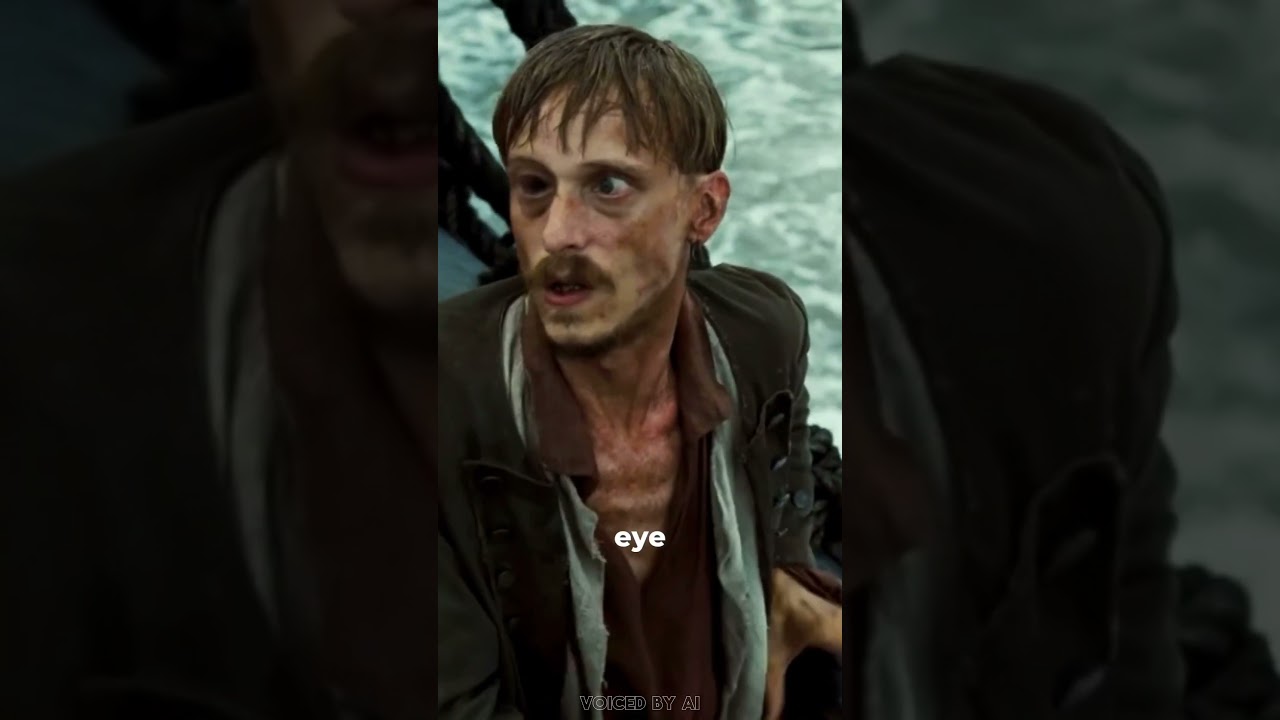
The character is Ragetti, played by British actor Mackenzie Crook. He's the lanky half of a comic double act with Pintel, the shorter, gruffer pirate played by Lee Arenberg. Across the first three films the pair bumble through curses, mutinies and a few genuinely funny scenes, and Ragetti's loose wooden eye is the running gag that ties them together. It rolls across decks, gets swallowed, gets fished out, and is the source of more squeamish reactions than almost anything else in a series full of skeletons and sea monsters.
What the eye actually is
Let's clear up the obvious thing first, because the viral framing teases a "secret" as if Crook himself has some unusual feature. He doesn't. The actor has two working eyes and normal sight. The wooden eye is Ragetti's, not Crook's, and it was built the way clever practical effects usually are: in layers, with each shot using whatever method looked best.
The core trick on set was a custom-painted contact lens. Rather than a normal tinted lens, this was a larger sclera-style lens designed to read as varnished wood, grain and all, sitting over Crook's eye. By his own account it was an uncomfortable thing to wear — the wooden-eye lens had no opening, so he was effectively blind on that side and lost his depth perception while shooting. Even so, it gave the camera a believable wooden eyeball in any wide or medium shot without slowing the production down. For tighter moments, the team could swap in a physical prop eye — a small carved or moulded ball that could be held, dropped or placed in a hand.
Then there is the part audiences remember most: the eye leaving the socket entirely, spinning away or being plucked out. Those beats lean on digital effects, because no contact lens can fly across a room. The strength of the gag is that it constantly crosses between methods. By the time you're laughing, you've stopped tracking whether you're looking at a lens, a prop or a render.
Why a small gag worked so well
Director Gore Verbinski's original trilogy is remembered for big set pieces, but it was unusually committed to practical, tactile detail. The cursed crew of the Black Pearl, Davy Jones's tentacled face, the rotting ships — much of it was grounded in physical make-up, animatronics and on-set rigs that were then enhanced rather than replaced. Ragetti's eye fits that philosophy perfectly. It's a gross-out joke that feels real because part of it genuinely was.
There's a reason this resonates now. A lot of the conversation around modern blockbusters is fatigue with weightless, fully computer-generated spectacle. When a clip resurfaces showing a 2003-era effect that still holds up, people respond to it as proof that practical effects age better. A painted contact lens has texture and lives in the same light as the actor's face. That's hard to fake from scratch, and viewers can feel the difference even if they can't name it.
The man behind Ragetti
Part of what makes the trend charming is that Mackenzie Crook has had one of the more interesting careers to come out of the franchise. Before the pirates, he was already beloved in Britain as the insufferable Gareth Keenan in the original UK version of The Office. After it, he wrote, directed and starred in Detectorists, a gentle, much-praised comedy about two metal-detecting friends that won him a devoted following and awards recognition.
That range matters to why the clip lands. People who only know him as the creepy pirate are surprised to learn he's also the man behind one of the warmest British sitcoms of the last decade. The eye becomes a doorway into a wider "oh, that's the same guy?" moment, which is exactly the kind of discovery that powers a comment section.
Crook has spoken over the years, in interviews and at fan events, about how physically odd it was to perform with the lens and the prosthetic look, and how the eye became the character's calling card. He returned to play Ragetti across all three of the original films, and the role remains one of the most recognisable supporting turns in the series.
How the clip caught fire
Viral movie trivia tends to follow a pattern, and this one ticks every box:
- It asks a question in the title, which is bait for curiosity and for comments correcting or confirming.
- It revisits a massively familiar franchise that crosses generations, so parents and teenagers both have a stake.
- It reveals a "how did they do that" answer that most casual fans never knew.
- It celebrates old-school craft at a moment when audiences are loudly nostalgic for it.
The reaction has split into a few camps. Some viewers are delighted by the practical-effects breakdown and tag friends who never noticed the eye was a gag at all. Others use it to relitigate the franchise — arguing the first film is a near-perfect adventure and the sequels overreached. A smaller group simply discovers Crook's other work for the first time. None of it is controversy. It's the friendly, low-stakes kind of virality that older films generate when a single detail gets isolated and shared.
The bigger picture for a fading franchise
This matters more than a nostalgia hit because the Pirates of the Caribbean series is at a crossroads. The films grossed billions worldwide, but the franchise has been in limbo since Dead Men Tell No Tales in 2017, with reboots, spin-offs and recasting rumours floating around for years without a confirmed path forward. Whenever a piece of the original films trends, studios notice the appetite that's still there.
The affection on display in these clips is for the first trilogy specifically — the chemistry of the ensemble, the practical craft, the sense that the world was physically built. Ragetti's eye is a tiny ambassador for all of that. It's a reminder that the series was at its best when it trusted real props, real costumes and committed character actors playing weirdos in the background.
For Indian fans wanting to revisit it, the films have been available through Disney+ Hotstar, now folded into JioHotstar, where the trilogy has long been a comfort-watch staple. Re-watch culture is strong here, and a trending clip is often all it takes to send a 20-year-old film back up the most-watched lists for a weekend.
What happens next
Don't expect a grand reveal beyond what the films and their makers have already shared; the "secret" is craft, not mystery. What's more likely is a fresh wave of behind-the-scenes interest, with fans digging up old interviews, effects breakdowns and Crook's reflections on the role. That, in turn, keeps the franchise warm in the cultural memory while the studio decides what to do with it.
The lasting takeaway is the quiet one. A painted lens, a carved prop and a few digital touches gave a minor pirate one of the most memorable visual quirks in modern blockbuster history. Two decades on, people aren't asking about the explosions or the sword fights. They're asking about a single eye that wouldn't stay put — and that's the surest sign the craft worked.