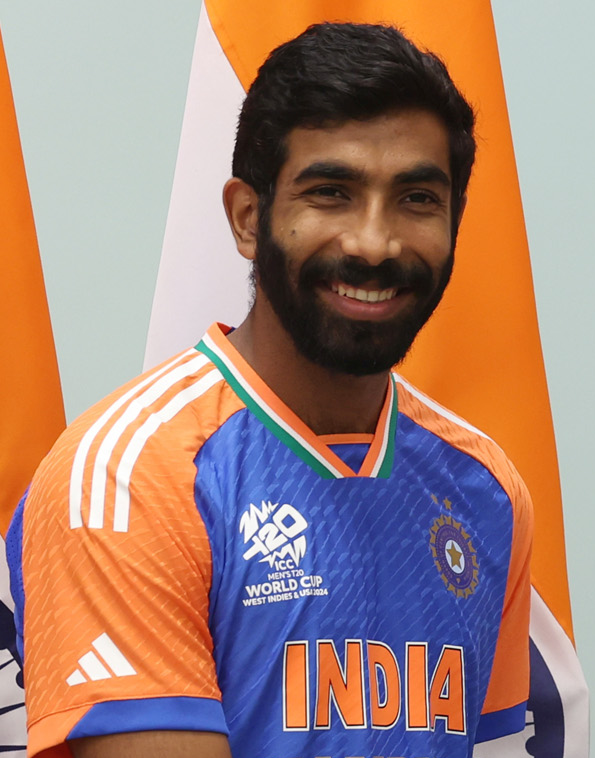
Photo: RIGI · CC BY 3.0 / Wikimedia Commons
Person of the Day: MS Dhoni, From a Railway Platform to Cricket Royalty
He once punched railway tickets on a platform in West Bengal. Two decades later, the same hands lifted the 2011 World Cup and finished the final with one of the most replayed shots in Indian sport. The arc of MS Dhoni — born in Ranchi, raised far from any cricket academy or selectorial spotlight — is one of the great outsider stories in the game, and it makes him a natural choice for Person of the Day.
Dhoni belongs to East India's roster of self-made achievers. He had no famous mentor, no metropolitan club pedigree, no early national pathway. What he had was an unhurried temperament and an unusual ability to keep his head while everything around him sped up. That single quality, more than any cover drive, defined a career that reshaped how India thinks about leadership under pressure.
A goalkeeper who picked up the gloves
Dhoni grew up playing football and was a goalkeeper for his school team before a coach pushed him toward wicketkeeping. The switch stuck. He played age-group cricket for Bihar and made his first-class debut around 1999, but recognition was slow and the money was thinner still.
To support himself, he took a steady job as a Travelling Ticket Examiner with Indian Railways, stationed at Kharagpur from roughly 2001 to 2003. Colleagues from that period remember a young man torn between a secure government posting and a long-shot sporting dream. He eventually walked away from the railways to chase cricket full time — a gamble that looks obvious now and looked reckless then.
His breakthrough came through the India A and East Zone circuit, where his clean, fearless hitting was impossible to ignore. Selectors who valued textbook technique had to make room for a player who simply hit the ball harder and further than the rest.
The arrival nobody could script
Dhoni made his ODI debut on 23 December 2004 against Bangladesh, and it began with a run-out duck. The flop did nothing to dent the selectors' faith, and the patience paid off almost immediately.
In 2005 came the innings that announced him: a blistering 148 against Pakistan in Visakhapatnam, followed later that year by an unbeaten 183 against Sri Lanka in Jaipur — still one of the highest scores by a wicketkeeper in one-day cricket. Long hair flying, helmet sometimes off, he batted like a man with nothing to lose because, in a sense, he had nothing to fall back on.
What marked him out was not just power but calm. He absorbed pressure rather than reflecting it, a trait that would soon make him captaincy material far earlier than anyone expected.
Three ICC trophies, one cool head
In 2007, a young and largely untested India side travelled to South Africa for the first T20 World Cup with Dhoni as a surprise captain. They won it, sealing the title in a nerve-shredding final against Pakistan, and a leader was born overnight.
The defining night arrived four years later. On 2 April 2011 at the Wankhede Stadium, Dhoni promoted himself up the order in the World Cup final, walked in with the chase wobbling, and built a match-winning innings of an unbeaten 91. He finished it with a soaring six, ending India's 28-year wait for the trophy on home soil. Then came the 2013 Champions Trophy in England, completing a clean sweep.
That trio of titles gives Dhoni a record nobody else holds:
- 2007 ICC T20 World Cup — captain of the inaugural champions.
- 2011 ICC Cricket World Cup — first home World Cup win for India.
- 2013 ICC Champions Trophy — the third and final piece.
He remains the only captain to have won all three major ICC white-ball tournaments. Under his watch, India also climbed to the No. 1 Test ranking for the first time in 2009, proving his leadership translated across formats.
The numbers behind 'Captain Cool'
Strip away the trophies and the raw record is still formidable. Across formats, Dhoni scored more than 17,000 international runs, passed 10,000 ODI runs at an average above 50, and stands among the most prolific wicketkeepers the game has seen with 634 catches and 195 stumpings.
He led India in 332 internationals, including a remarkable 200 ODIs as captain. His lightning stumpings became a signature — the ball gone almost before opponents realised their back foot had lifted. Teammates nicknamed him 'Captain Cool', and the tag stuck because it was simply accurate.
His on-field gifts were matched by honours off it. Dhoni received the Padma Shri in 2009 and the Padma Bhushan in 2018, along with the country's top sporting award, and he was conferred an honorary rank of Lieutenant Colonel in the Territorial Army's Parachute Regiment.
The yellow jersey and a quiet farewell
Dhoni announced his retirement from international cricket in August 2020, choosing a low-key social-media post over any farewell tour — entirely in character for a man who rarely sought the spotlight.
Yet his playing story did not end there. As captain of Chennai Super Kings, he has lifted a record-equalling five IPL titles (2010, 2011, 2018, 2021 and 2023) and holds the record for most matches as an IPL captain. The bond between Dhoni and Chennai's crowds is one of the most striking in Indian sport; rival stadiums often turn yellow when he walks out to bat.
Going into the 2026 season, CSK retained him under the league's uncapped-player rule, with the franchise signalling a shift toward a mentor-and-finisher role. Whatever the season holds, his standing inside the dressing room is secure.
A second innings in business
Off the field, Dhoni has quietly built one of the most diverse portfolios among Indian athletes. He owns a meaningful stake in the activewear and lifestyle label SEVEN, runs the SportsFit gym chain, and set up Dhoni Entertainment, which produced the CSK documentary Roar of the Lion.
He has also turned investor and brand backer for a clutch of new-age companies, including the drone maker Garuda Aerospace, electric-cycle firm EMotorad, small-business fintech Khatabook and plant-based food venture Shaka Harry. His sporting interests extend beyond cricket too, with a co-ownership stake in the football club Chennaiyin FC.
The common thread is the same instinct that defined his batting: spot value early, stay patient, and back the long game. From a railway platform in Kharagpur to boardrooms and stadiums across the country, Dhoni's rise is proof that calm, conviction and a willingness to bet on yourself can carry you further than any pedigree. His example continues to inspire small-town players who believe the absence of a head start is not the end of the story.