Matteo Arnaldi's Roland-Garros Interview Goes Viral: Why It Hit
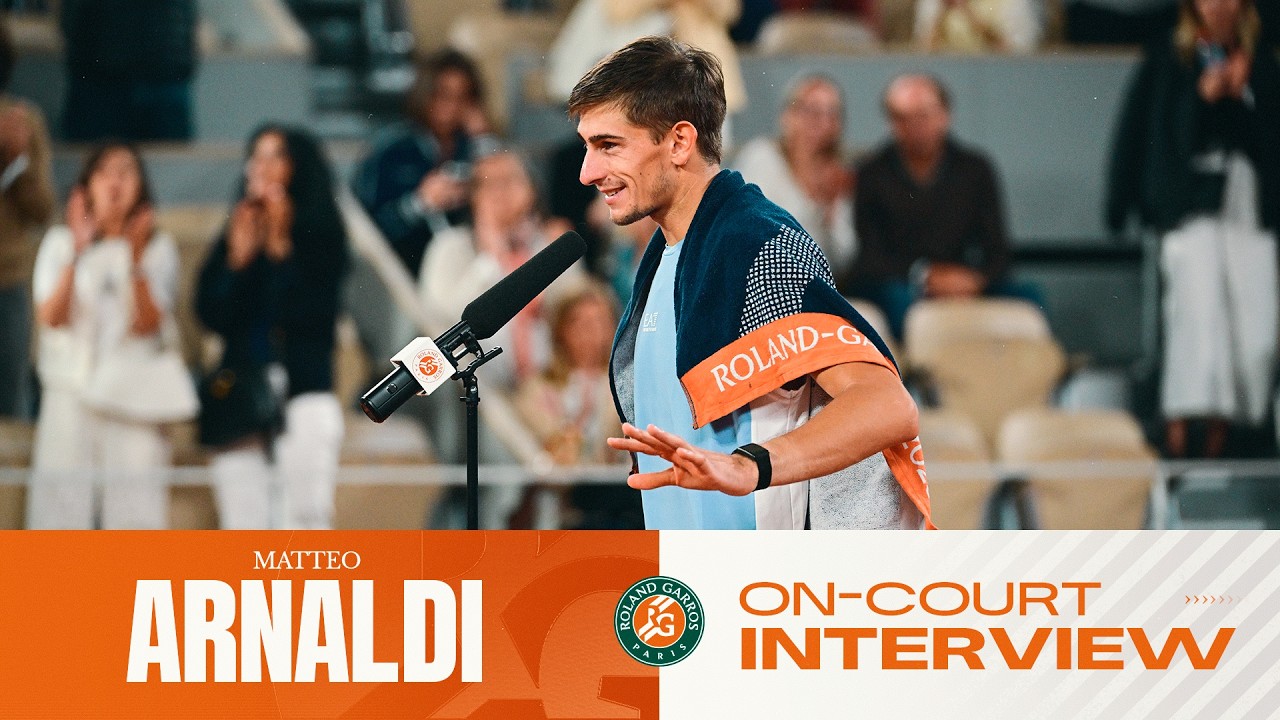
A short clip of Matteo Arnaldi speaking into a microphone on the red clay of Roland-Garros 2026 has done what hours of polished highlight reels often cannot: it has crossed over from tennis Twitter into the wider internet, pulling in viewers who could not name a single player's forehand grip. The on-court interview, filmed moments after his quarterfinal, is being shared, clipped and reacted to across YouTube and social platforms — and the reason says as much about how sport spreads online as it does about the player himself.
This is the kind of moment that increasingly defines a tournament's digital footprint. The match matters, but it is the raw, unscripted seconds afterwards — a breathless answer, a grin at the crowd, a switch between languages — that travel furthest. For an Indian audience tuning in across odd hours, that 90-second clip is often the first introduction to a name they will hear all fortnight.
Who Matteo Arnaldi actually is
Matteo Arnaldi is a professional tennis player from Sanremo on the Italian Riviera, and one of a cluster of young Italians who have steadily forced their way up the ATP rankings. He is not yet a household name in the mould of the very top seeds, which is precisely why a deep run at a Grand Slam draws fresh eyes — audiences love discovering a player rather than being told to admire an established star.
Arnaldi's game is built for the dirt. He is a patient, physical baseliner who is comfortable in long rallies, the sort of profile that tends to thrive over best-of-five sets on slow clay. Reaching the business end of Roland-Garros is the kind of result that can reshape a season, and the on-court chat captures him at exactly that hinge point — a player whose stock is suddenly rising.
A word of caution on detail: the exact scoreline, his opponent and the precise wording of what he said in the interview are best confirmed against official tournament records. What is clear from the clip's spread is the moment — a young Italian, on a show court, savouring one of the biggest results of his life.
Why this clip is blowing up
On-court interviews are engineered for virality, even if nobody plans it that way. Consider what makes them work:
- Raw timing. The player speaks seconds after the final point, before the adrenaline fades — emotion is unfiltered and real.
- Stakes you can feel. A Grand Slam quarterfinal is a genuine career milestone, so the joy or relief reads instantly, even to non-fans.
- Crowd chemistry. Paris's clay-court crowds are famously passionate, and the back-and-forth between player and stands often produces the best lines.
- Language and charm. Italian players frequently switch between English, French and Italian, and that effort to connect with an international crowd lands warmly online.
- Length. At a minute or two, the clip is perfectly sized for the algorithms that reward short, complete, replayable moments.
Put those together and you get a piece of content that outruns the match itself. Many of the people now watching Arnaldi's interview were not watching the tennis live — and that is the whole point of how modern sport recruits new fans.
Italy's astonishing tennis surge
Arnaldi's moment does not exist in isolation. It is one more data point in what has become the most striking story in men's tennis: Italy's golden generation. For a country that historically punched below its weight in men's singles, the present depth is remarkable, headlined by world-beaters and backed by a broad supporting cast of players capable of damage at any event.
Names like Jannik Sinner, Lorenzo Musetti and Flavio Cobolli sit alongside Arnaldi in a peer group that pushes one another forward. This kind of clustered success is rarely an accident; it usually reflects years of investment in coaching, junior pathways and a winning culture where each breakthrough makes the next one feel achievable.
For neutral viewers, the upshot is a deep bench of compelling Italians at every major. When one of them goes on a run and then delivers a charming, emotional interview, the wider "Italy is taking over tennis" narrative gives the clip extra lift — it feels like part of a bigger story, not a one-off.
The Roland-Garros pressure cooker
There is a specific reason clay-court breakthroughs hit so hard. Roland-Garros is widely regarded as the most physically punishing of the four Slams. The surface is slow, points are long, and matches can stretch deep into the afternoon, rewarding stamina, court craft and mental resilience over raw power.
That makes a quarterfinal here a particularly hard-earned prize. A player who reaches the last eight has typically survived a fortnight of gruelling, multi-hour battles, which is why the relief and emotion in these interviews can feel so genuine. The crowd knows it too, and that shared understanding is part of why the atmosphere translates so well to video.
For the player, the rewards are concrete as well as emotional: a substantial jump in ranking points, a healthy prize-money bump, and the kind of name recognition that changes how future draws and sponsors treat you. A single fortnight can move a career to a new tier.
What an Indian fan should know
For readers in India, the practical questions are usually the same: who is this person, and how do I watch? Here is the quick orientation:
- The event. Roland-Garros, the French Open, runs in Paris in the European late-spring window, which means matches often play out in the Indian evening and night — convenient for prime-time viewing.
- The player to track. Keep an eye on the cluster of Italians; Arnaldi is the latest to break through, but the depth means there is almost always an Italian deep in the draw.
- How to watch safely. Use licensed broadcasters and official streaming in India rather than unofficial "free" re-streams. Pirated YouTube feeds are not only illegal but a common vector for scams and malware.
Indian tennis fandom has broadened well beyond the doubles heroes of the past, and clips like this are a big reason why. A viral interview is a low-commitment entry point: you watch a minute, you like the guy, and suddenly you are checking when he plays next.
What happens next
The immediate question is sporting: can Arnaldi convert this run into something even bigger, or does the clip become the high-water mark of a memorable fortnight? Either outcome is meaningful. A semi-final would supercharge the attention; an exit still leaves him with a career-best result and a fast-growing fan base.
The longer-term story is about momentum. Each viral moment makes the next sponsor conversation easier, the next crowd louder, the next young Italian more believable as a future star. That is how a golden generation sustains itself — not just through trophies, but through these small, shareable scenes that keep pulling new people in.
For now, the takeaway is simple. A patient clay-courter from the Italian Riviera played the match of his life, said a few honest words into a microphone, and accidentally became one of the most-watched faces of Roland-Garros 2026. In modern sport, that combination — substance plus a sharable human moment — is exactly how stars are made.