'Mere Haal Par' and the Rise of the 'Arijit Singh Vibe' Sad Song
A quiet piano, a cracked-voice opening line, a title that translates to roughly on my condition — and suddenly millions of people are pressing repeat. 'Mere Haal Par' by Aarzoo Khaan, billed as an emotional Hindi sad song with an 'Arijit Singh Vibe,' is the latest entry in one of YouTube India's most reliable money-makers: the new-artist heartbreak ballad. The clip itself does the emotional heavy lifting, but the more interesting story sits underneath it — why a single, unhurried sad song from a relatively unknown name can outrun big-label releases, and what the 'Arijit Singh vibe' label has quietly become in 2026.
What 'Mere Haal Par' Actually Is
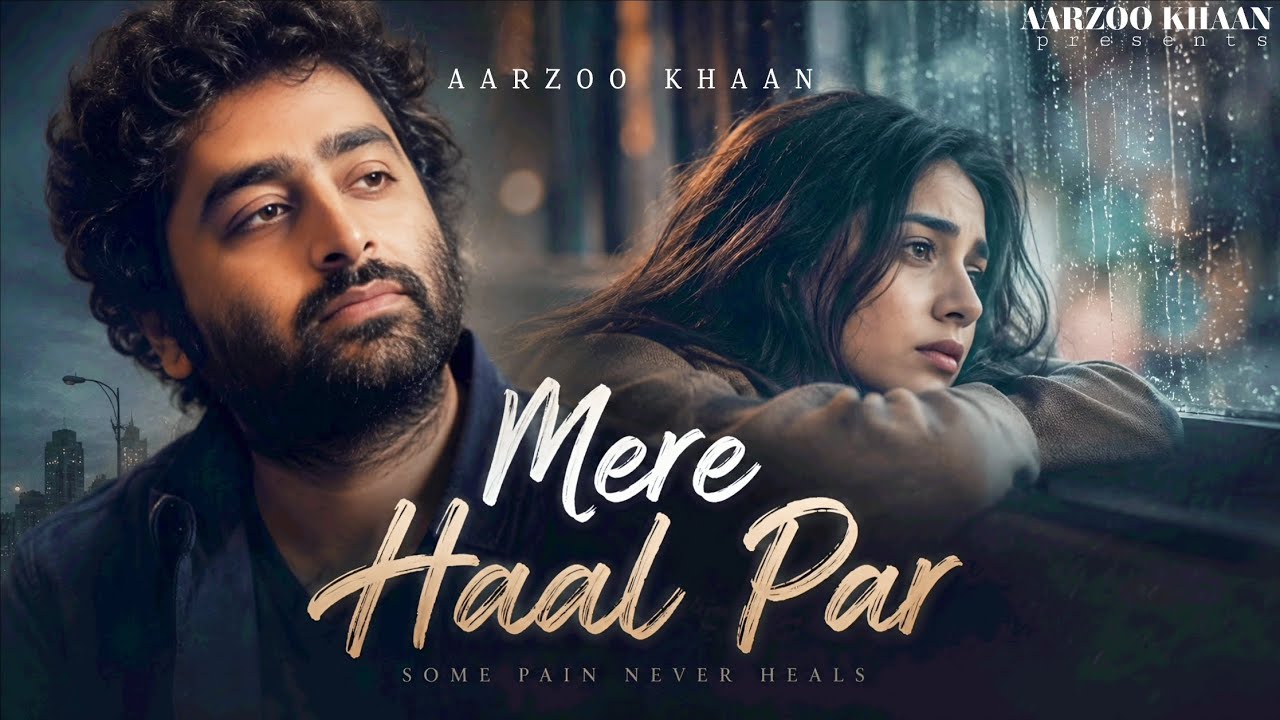
Strip away the hype and the song is exactly what it says on the thumbnail: a slow, melancholic Hindi ballad built around heartbreak, longing and self-pity in the most cathartic sense. The arrangement leans on familiar building blocks — a soft instrumental bed, restrained percussion, and a vocal that aims for the breathy, aching delivery audiences associate with modern Bollywood sad songs.
What matters is not novelty but familiarity. Listeners are not coming for a surprise; they are coming for a feeling they already know how to have. The title phrase works as a refrain you can hum after one listen, and that single repeatable hook is the engine of the whole thing.
It is worth stating plainly: beyond the release itself, verified information about Aarzoo Khaan is thin. Much of what circulates online is fan speculation. We are reporting on a song that is trending, not endorsing claims about the artist's background, and readers should treat unconfirmed biographical details — including viral assertions about age, origin or even whether every vocal is unassisted — with healthy skepticism.
Why the 'Arijit Singh Vibe' Tag Is Doing the Heavy Lifting
Here is the part most listeners scroll past: the words 'Arijit Singh Vibe' in the title are not a comparison so much as a search strategy. Arijit Singh is, by a wide margin, among India's most-streamed voices, and 'Arijit Singh sad song' is one of the most typed music queries in the country. Attaching that phrase to a new track is a way of standing in the slipstream of that demand.
This is now a recognised pattern across independent uploads. Smaller artists routinely frame their releases with phrases like:
- 'Arijit Singh vibe' or 'Arijit Singh type'
- 'Lofi' and 'slowed + reverb'
- 'New sad song 2026' with the year front-loaded
- 'Emotional', 'breakup' and 'heart-touching'
Each phrase is a keyword aimed at a specific craving. None of them promise that Arijit Singh is involved — and he is not. The 'vibe' framing is a description of mood and singing texture, a shorthand for if you like that kind of song, you'll like this. It is clever, it is legal, and it is everywhere.
Why Sad Songs Win on YouTube
The dominance of the heartbreak ballad is not an accident of taste; it is a structural fit with how people use the platform. Sad songs are emotionally sticky, and stickiness is exactly what recommendation algorithms reward.
Three forces compound:
- Repeat listening. A breakup song gets played on loop in a way a peppy dance number rarely does. High watch-time and replays signal quality to the system, which then pushes the track to more people.
- Short-form spillover. A 15-second emotional snippet is perfect raw material for Shorts, Instagram reels and WhatsApp status videos. Each clip becomes free advertising that funnels viewers back to the full song.
- Low barrier, high ceiling. A sad ballad needs a strong melody and an aching voice far more than an expensive video, so the production cost is modest while the upside is enormous.
Put together, this is why a moody, low-budget single can quietly out-perform marketing-heavy releases. The format is engineered, almost by nature, for virality.
The Authenticity Question Nobody Can Ignore in 2026
There is a newer, sharper edge to all this. As soundalike vocals and AI-assisted music tools have become cheap and accessible, a section of listeners now reflexively asks of any polished unknown: is this even real? Comment sections on emotional uploads increasingly debate whether a voice is a human newcomer, a trained soundalike, or a machine.
To be clear, there is no confirmation that 'Mere Haal Par' is AI-generated, and it would be unfair to assume so simply because the artist is unfamiliar. But the very fact that the question now hangs over every viral sad song is part of the story. India's new rules around labelling synthetic and AI-altered media are pushing toward disclosure, yet the music corner of the internet remains a grey zone where listeners are often left to guess.
The honest position is the cautious one: enjoy the song on its own terms, and treat any unverified claim — that it is fully human, or that it is secretly synthetic — as exactly that, unverified. What is undeniable is that trust has become a live issue in a way it simply was not a few years ago.
The Public Reaction: Catharsis Meets Cynicism
The response splits, predictably, into two camps. One side embraces the track at face value: comments thanking the singer, tagging exes, and describing the song as a soundtrack to a bad week. For these listeners, the appeal is pure emotional release, and questions of pedigree are beside the point.
The other side is more guarded, poking at the 'Arijit Singh vibe' framing as borrowed shine and wondering aloud about originality. This tension — sincere catharsis on one hand, internet cynicism on the other — is itself a sign of how crowded the space has become. When dozens of near-identical sad songs drop every week, audiences start scrutinising not just the music but the marketing around it.
Why It Matters for Independent Music
For an aspiring singer, a song like this represents the cheapest viable path to an audience in India today. No label, no radio, no film placement — just a strong hook, the right keywords, and the platform's machinery doing the distribution. When it works, it can launch a career overnight.
But the same dynamics that make the first hit possible make the second one brutally hard. The market is saturated, the 'vibe' tags are commoditised, and audience attention resets almost instantly. A one-off viral ballad is far easier to achieve than a sustainable musical identity — and the gap between the two is where most newcomers stall.
There is also a slow-burning debate about what this does to the craft. If the surest route to streams is to sound like an existing superstar, the incentive tilts toward imitation over originality. That is great for instant discovery and worrying for long-term creativity, and the industry has not resolved the tension.
What Happens Next
In the immediate term, expect the usual lifecycle: a wave of reels and shorts, a clutch of 'slowed + reverb' and lofi edits, and a rash of soundalike uploads chasing the same keywords. If 'Mere Haal Par' has real legs, a follow-up single will test whether Aarzoo Khaan is a genuine new voice or a single lucky upload.
The bigger arc is about the format itself. As AI tools, labelling rules and listener skepticism all mature together, the emotional Hindi sad song will keep printing views — but the audience will get steadily better at asking who, and what, is really behind the voice. For now, 'Mere Haal Par' is doing precisely what a viral heartbreak ballad is built to do: meeting millions of people exactly where it hurts, one repeat at a time.