Photo: Francesco Ungaro / Pexels
NASA Watched an Iceberg Reveal Antarctica's Hidden World
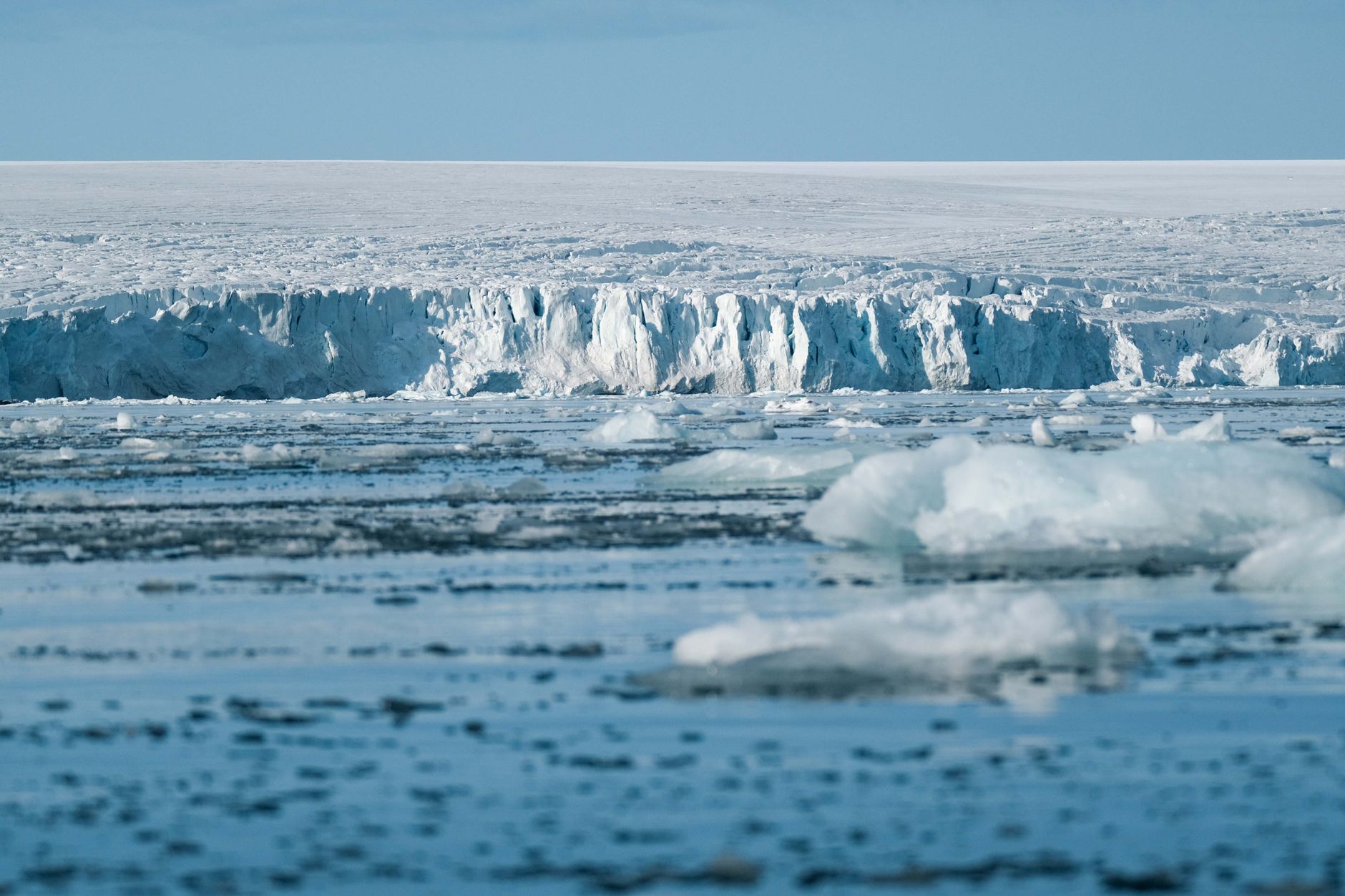
On 13 January 2025, a slab of ice the size of a city tore away from Antarctica and drifted into the sea. Nobody was standing on it. No camera crew was waiting. But when scientists rushed a ship to the spot it had left behind, they found something that reset what researchers thought was possible: a thriving hidden world of sea life that had been sealed in darkness, under the ice, for centuries.
The iceberg has an unglamorous name, A-84, and it broke off the George VI Ice Shelf on the Antarctic Peninsula. What made it extraordinary was not the calving itself, which happens often, but the timing and the response. A research vessel was close enough to change course and reach the freshly uncovered seabed within days, before the deep ocean had a chance to reorganise itself.

The iceberg that pulled back the curtain
When A-84 floated free, it exposed roughly 510 square kilometres of seafloor that no sunlight, and no human instrument, had ever touched. For context, that patch of ocean floor had been capped by ice about 150 metres thick. Imagine a ceiling of frozen water taller than a 40-storey building pressing down on the dark water below, then suddenly gone.
Most people would assume that whatever lived in that sealed-off, lightless, food-starved water would be sparse at best. A few microbes, maybe. The reality was the opposite, and that is the part of this story worth sending to a friend.

A garden in the dark
A team aboard the Schmidt Ocean Institute research vessel R/V Falkor (too) spent about eight days surveying the exposed seabed with a deep-diving robot. Instead of a barren plain, they found a crowded, almost decorative ecosystem clinging to the rock.
Among what the robot's cameras recorded:
- Sponges and corals, some large and slow-growing, hinting that this community is old
- Icefish, sea spiders and octopuses moving across the seabed
- A giant phantom jellyfish, a deep-sea drifter that can reach about a metre across with trailing arms several metres long
- Krill, squid, anemones, brittle stars and other invertebrates
The survey reached depths of up to 1,300 metres, with animals documented across a wide band of the water column. Crucially, researchers suspect that several of the creatures filmed are species new to science, not yet named or catalogued anywhere.
The obvious question is how anything thrives there at all. With no sunlight, there is no photosynthesis to anchor a food chain. The leading explanation is that ocean currents quietly ferry nutrients beneath the ice shelf, feeding life in a place where, by every intuitive measure, life should not flourish.
How NASA spotted it from orbit
This is where NASA enters the picture. The breakaway was large enough to be tracked from space, and satellite imagery available through NASA Worldview captured the iceberg's departure, helping pin down when A-84 actually let go. Those orbital views turn a remote, almost invisible event in one of Earth's loneliest regions into something scientists can date and measure precisely.
That marriage of satellites and ships is the quiet hero here. A spacecraft notices a giant crack opening in the ice. A vessel races in. A robot dives. The result is a glimpse of an ecosystem no human had any way of seeing a generation ago.
A second hidden world, this one made of rock
The ocean floor is only half the story of Antarctica's concealed landscapes. In June 2026, a separate international team reported a different kind of hidden world, this one buried deep beneath the ice itself.
Writing in Nature Geoscience, researchers described what they called the East Antarctic Fan-shaped Basin Province, a continent-scale network of giant basins hiding under ice that exceeds three kilometres in thickness in places. The study, with contributors including Dr Egidio Armadillo of the University of Genoa and Dr Guy Paxman of Durham University, found that several long-known features, including the basin that holds Lake Vostok, the largest known subglacial lake on Earth, are actually parts of one vast linked structure.
It builds on a wave of recent mapping that has redrawn the rock beneath the ice. A high-resolution map released earlier in 2026 revealed a rugged subglacial terrain of canyons and roughly 72,000 hills, more than double earlier estimates. The shape of that buried bedrock still steers how ice flows across the continent today, which is exactly why it matters far beyond geology.
Why Antarctica matters far beyond the ice
Antarctica can feel like another planet, but its plumbing is wired straight into everyone's coastline. The way ice slides toward the sea depends heavily on the hidden valleys, basins and ridges underneath it. Map that landscape wrong, and projections of future sea level rise are built on sand.
The discoveries cut in two directions. The subglacial basins help scientists judge which slabs of the Antarctic Ice Sheet are most vulnerable to a warming ocean. The seafloor ecosystem warns that life can hide in places nobody thought to protect, raising the stakes when ice shelves collapse faster and expose more seabed. A continent with no permanent human population is, in a real sense, shaping the future of cities thousands of kilometres away.
India's stake in the frozen continent
For readers in India, this is not a distant spectator sport. India runs an active Antarctic programme through the National Centre for Polar and Ocean Research (NCPOR), under the Ministry of Earth Sciences. Two stations fly the Indian flag on the ice: Maitri, set up in 1989 in the Schirmacher Oasis, and Bharati, commissioned in 2012 some 3,000 km to the east.
Maitri has long outlived its original design life, and a modern replacement, Maitri II, is being built to take over. That continued presence gives Indian scientists a front-row seat to the same ice shelves, currents and seabeds now yielding these discoveries, and a direct interest in what melting ice means for a country with a long, densely populated coastline.
What scientists want to find next
The immediate prize is the catalogue of unfamiliar creatures from beneath A-84. Confirming new species takes painstaking lab work, and that process is underway. Researchers also want to know how old this sealed community really is, since slow-growing sponges and corals can hint at centuries of undisturbed life.
The bigger goal is to treat each calving event as a fleeting window. Ice shelves are losing mass, and every large iceberg that breaks away briefly unveils ground no one has studied. Pair that with sharper maps of the rock below, and Antarctica is slowly giving up secrets it kept frozen for thousands of years. The next iceberg could open another door, and this time, scientists intend to be ready.