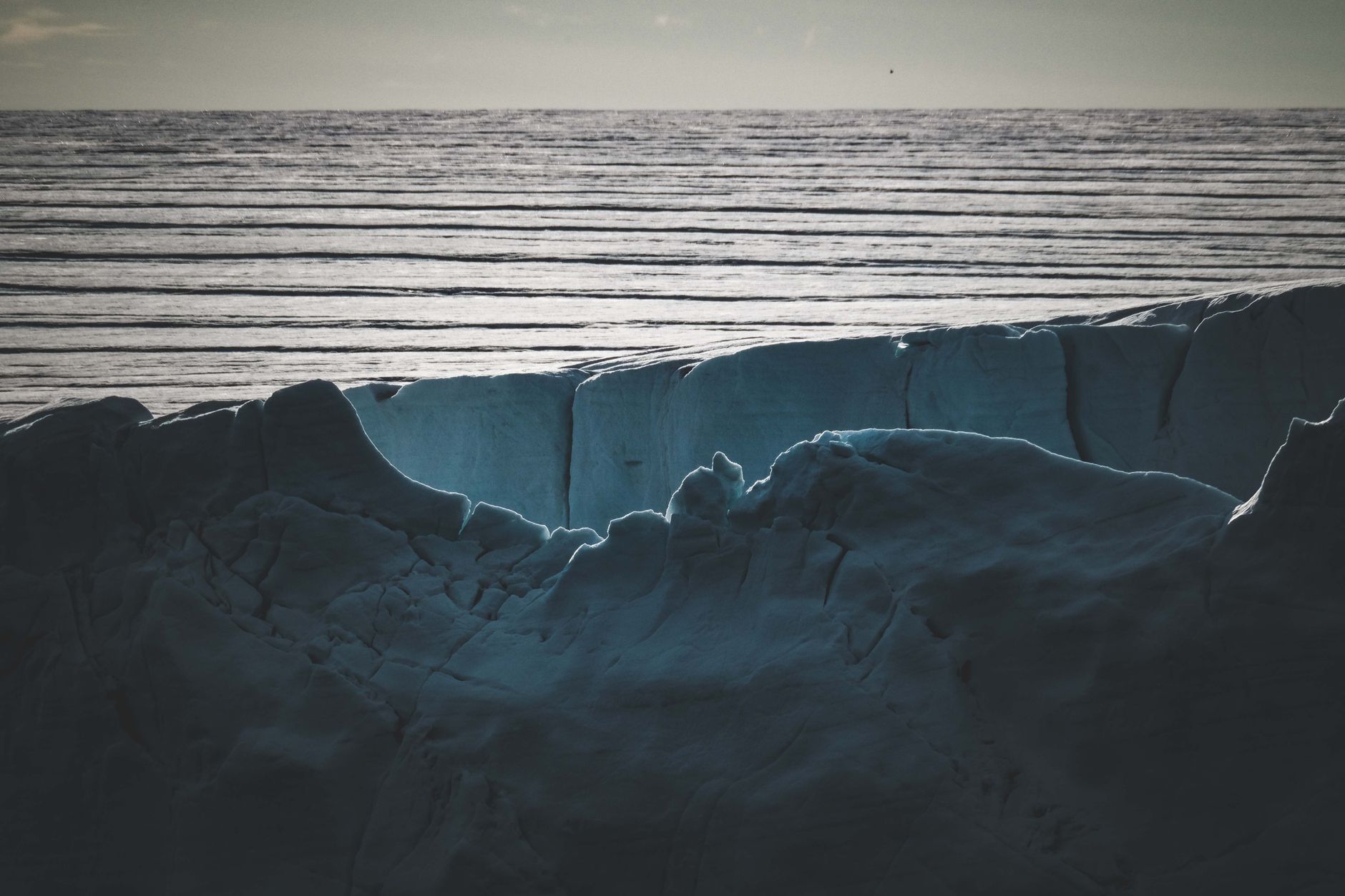
Photo: Francesco Ungaro / Pexels
The Bloop: A 1997 Ocean Sound Louder Than Any Whale
In the summer of 1997, a network of underwater microphones strung across the Pacific Ocean picked up something no one could explain. A single sound, low and rising, was loud enough to register on sensors more than 5,000 kilometres apart. Nothing known to science was supposed to be that loud underwater. Scientists gave it a plain, almost comic name that stuck: The Bloop.
For years it sat in a strange limbo between marine biology and internet legend. Some wondered, only half-joking, whether the ocean was hiding an animal far larger than a blue whale. The truth, when it finally arrived, was in its own way more astonishing than any monster.
A sound that crossed an ocean
The recording came from the U.S. National Oceanic and Atmospheric Administration (NOAA) and its Equatorial Pacific Ocean autonomous hydrophone array — a string of deep-sea listening posts originally set up to monitor undersea volcanoes and seismic activity. The technology itself traces back to Cold War systems built to track submarines, later handed to scientists to eavesdrop on the planet's quietest places.
What made The Bloop remarkable was not just that it was heard, but how widely. The signal was an ultra-low-frequency, high-amplitude pulse that swept upward in pitch over about a minute. Because it was detected on multiple far-flung instruments, researchers could triangulate roughly where it came from: a desolate stretch of the South Pacific, near coordinates around 50°S, 100°W, west of the southern tip of South America. This is some of the emptiest water on Earth, hundreds of kilometres from any shipping lane or coast.
The sound's frequency was so low that it sits below the range of comfortable human hearing. To study it, the audio is typically sped up many times over before anyone can actually "hear" it — and only then does it become the now-famous rising gulp that earned its nickname.

Louder than the loudest animal alive
Here is the detail that turned a technical curiosity into a global talking point. The blue whale is the loudest animal on the planet, producing calls of roughly 188 decibels that can travel something like 1,000 miles through the deep sound channels of the sea. That alone is extraordinary.
The Bloop blew past it. The signal was powerful enough to be picked up across a span more than three times the reach of a whale's call. If you assumed — as a few early observers briefly did — that an animal had made it, you were forced into an uncomfortable place: the creature would have to be considerably bigger and louder than the largest animal that has ever lived. No such animal has ever been found. The deep ocean is vast and poorly mapped, but a beast outshouting a blue whale would be very hard to hide.
That tension is exactly why the story spread. It paired a verified, official recording with a question science could not immediately answer.
The Cthulhu coincidence
The myth got an unexpected boost from fiction. The rough location of The Bloop fell in the same lonely quarter of the South Pacific that the horror writer H.P. Lovecraft chose for R'lyeh, the sunken city where his monstrous deity Cthulhu lies sleeping. Lovecraft's 1920s story placed that city at southern Pacific coordinates not far from where The Bloop seemed to originate.
It is, of course, pure coincidence. Lovecraft picked a remote ocean spot precisely because it felt unreachable and unknowable, and The Bloop happened to come from the same kind of nowhere. But the overlap was irresistible. The detail circulated through forums, documentaries and "unexplained mysteries" lists for more than a decade, keeping the sea-monster idea alive long after scientists had moved on.
What scientists actually concluded
The people who recorded The Bloop never thought a creature made it. Researchers at NOAA's acoustics program, including oceanographers who spent careers listening to the Southern Ocean, kept comparing The Bloop's audio fingerprint — its spectrogram — with other sounds they were collecting. Over the years the pattern became familiar.
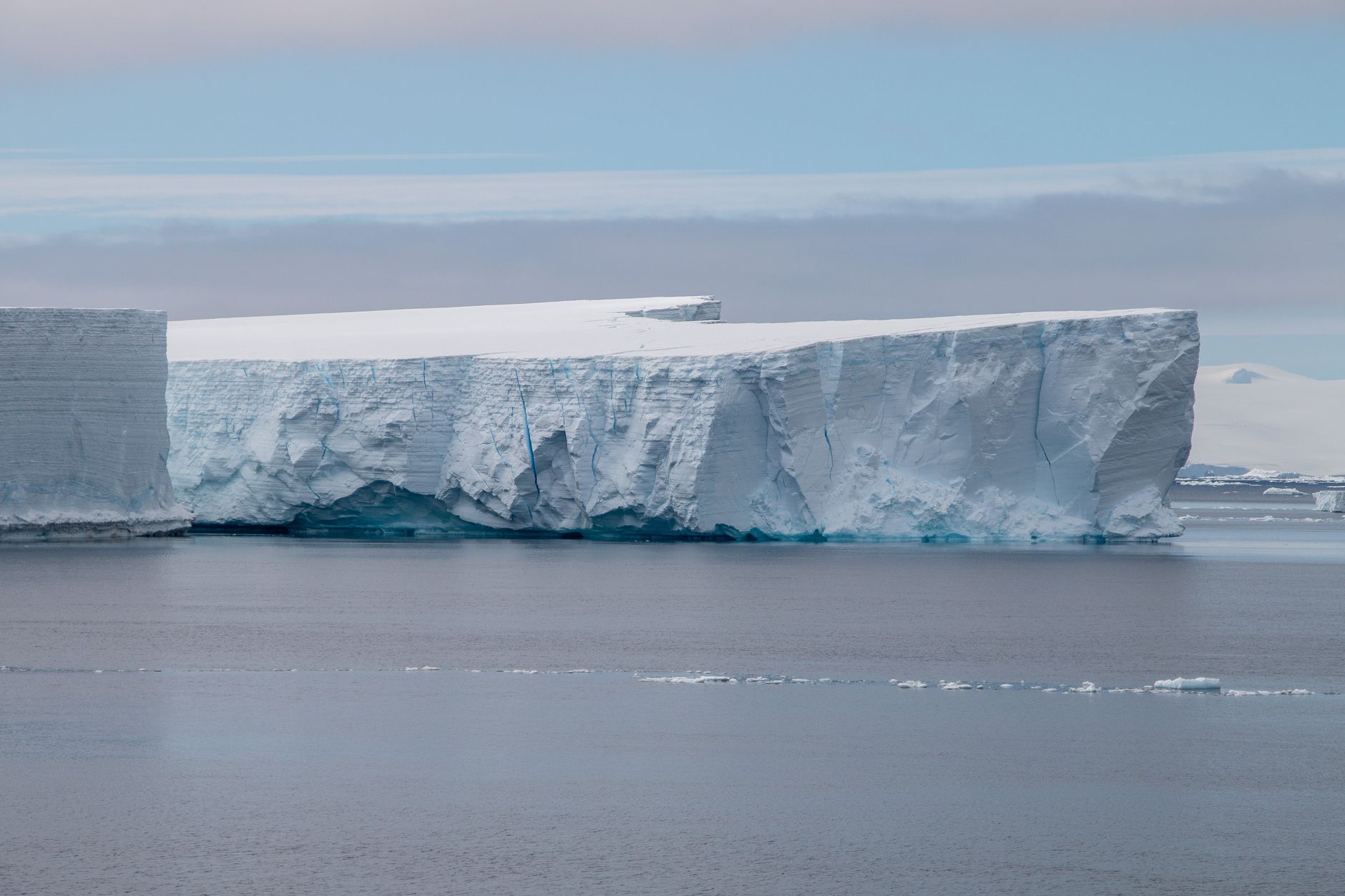
The verdict, made official by NOAA around 2012, was this: The Bloop was an icequake. It was the sound of an enormous mass of ice cracking, fracturing and breaking apart in the Antarctic, what scientists call a non-tectonic cryoseism.
Ice makes far more noise than most people imagine. Consider what a glacier the size of a small country can do:
- Calving — when a huge slab splits off the front of a glacier or ice shelf and crashes into the sea.
- Seabed gouging — when a drifting iceberg's underside scrapes and grinds along the ocean floor.
- Fracturing — when internal stress finally snaps a block of ice apart, releasing a burst of energy.
Any of these can send a low, broadband groan radiating through the water for thousands of kilometres. A single large calving event can even register as a genuine glacial earthquake. The Bloop, it turned out, was a planet-scale crack — not a voice, but a breaking.
How they proved it
The explanation was not a guess. In the years after 1997, NOAA deployed hydrophones in the Scotia Sea, the rough waters between South America and Antarctica, specifically to listen to ice. They recorded numerous icequakes whose spectrograms looked strikingly like The Bloop.
The clincher came when researchers used these signals to acoustically track a real, named iceberg — A53a — as it disintegrated near South Georgia Island in early 2008. Here was a documented chunk of ice, visible and identifiable, producing the same kind of rising, powerful sound that had once been blamed on a hypothetical monster. The mystery sound had a mundane, repeatable, entirely natural cause.
That also explained another oddity. The Bloop was heard several times during the summer of 1997 and then never again in that form. An animal might call for years. A specific iceberg breaks apart once, and then it is gone.
Why this story still matters
It would be easy to file The Bloop under "solved, move on." But the episode is a small masterclass in how science actually works, and why patience beats panic.
First, it shows the value of long-term listening. The instruments that caught The Bloop were never built to find monsters; they were quietly monitoring volcanoes and earthquakes, and the discovery was almost a by-product. Many of the ocean's biggest surprises arrive that way, in the margins of some other project.
Second, it is a reminder that "we don't know yet" is not the same as "it must be something supernatural." For roughly fifteen years The Bloop had no firm answer, and the gap filled with whales, monsters and a sleeping sea god. The real explanation needed more data, more recordings and a matching event — not a leap of imagination.
Third, there is a sobering modern twist. The same Antarctic and Southern Ocean ice that produced The Bloop is exactly what climate scientists now watch closely. Icequakes, calving and the slow break-up of ice shelves are not just curiosities; they are signals about a warming planet. The instruments that once chased a phantom are today part of how we keep track of a very real and accelerating change at the bottom of the world.
The Bloop never was a creature from the deep. It was the sound of the Antarctic itself, splitting apart loudly enough to be heard halfway across the largest ocean on Earth. Somehow, that is the better story.