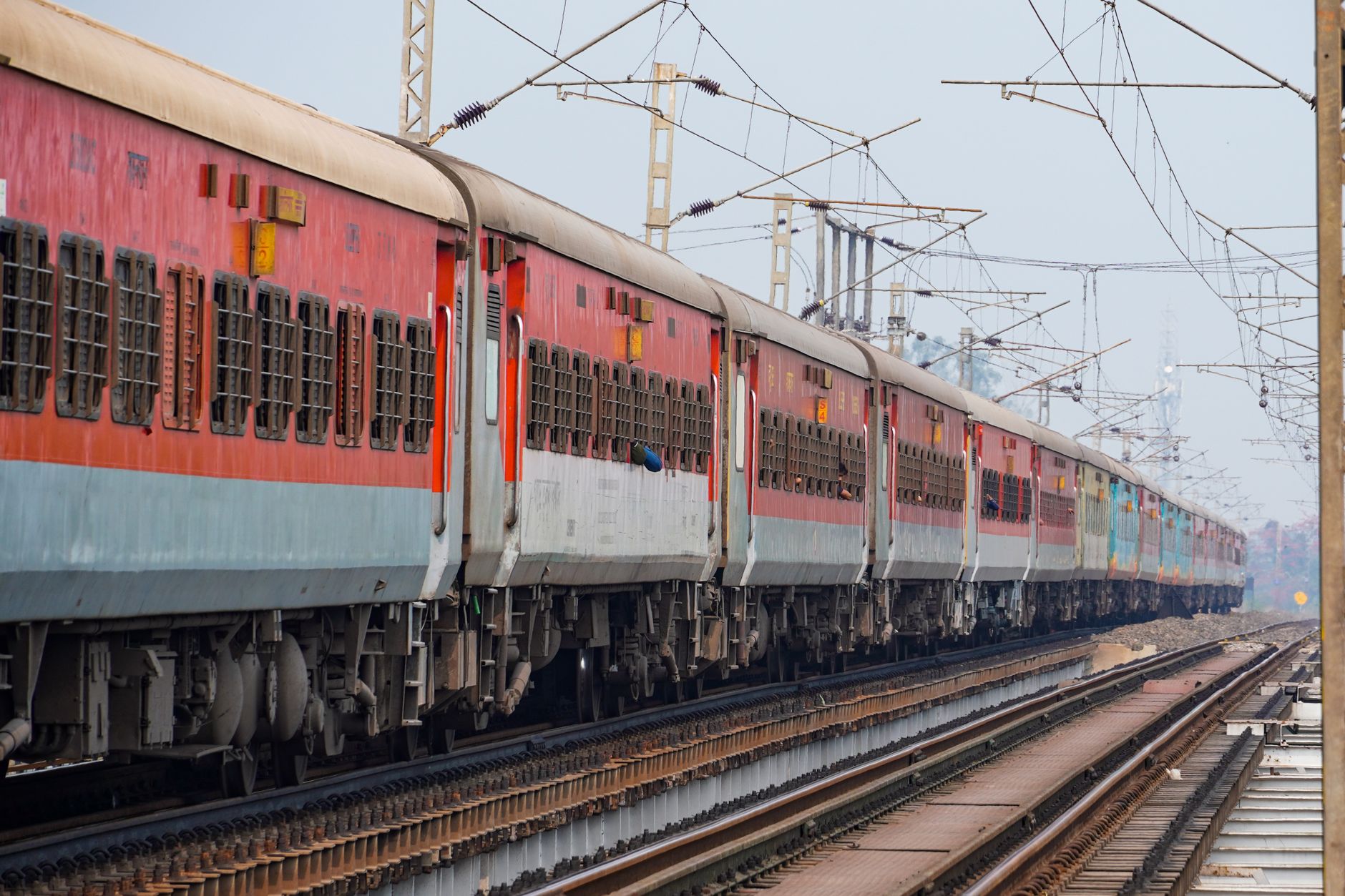
Photo: Sayeed Chowdhury / Pexels
Why India Runs on a Single Time Zone
Stretch a ruler across India and you cover almost 30 degrees of longitude. The sun reaches Arunachal Pradesh nearly two hours before it touches Gujarat. Yet a clerk in Kohima and a clerk in Kutch start their day on the exact same number. That oddity, one time zone for a country 3,000 km wide, is not an accident of geography. It is the leftover of a colonial decision, a railway compromise and a quiet refusal to let go of local pride.

Three cities, three clocks
For most of the nineteenth century, India had no single time at all. Each major city set its clocks by its own noon, the moment the sun stood highest overhead. That worked fine when news travelled at the speed of a horse. It stopped working the day the railway and the telegraph arrived.
The two big presidency capitals drifted furthest apart. Calcutta ran on roughly GMT+5:53, while Bombay sat near GMT+4:51. That left the two cities just over an hour out of step with each other. A train timetable that made sense in one city was nonsense in the other, and a telegraph operator could send a message that appeared to arrive before it was sent.
Into this mess stepped a third option. In 1802, the astronomer John Goldingham had fixed a reference time at the Madras Observatory. Because Madras lay neatly between Bombay and Calcutta, the railways quietly adopted it as a workable middle ground. Generations of station masters knew it simply as Railway Time.
How the clock got standardised
The wider world was wrestling with the same problem. The 1884 International Meridian Conference in Washington carved the globe into standard time zones built around Greenwich. India, awkwardly, fell across the line between two of them, which is precisely why a single national clock had to be a deliberate choice rather than a natural fit.
That choice was made by the colonial government. In 1905, Viceroy Lord Curzon announced that Indian time would be anchored to the meridian at 82°30′ East, which passes near Mirzapur in present-day Uttar Pradesh. Set five and a half hours ahead of Greenwich, this became Indian Standard Time, formally adopted on 1 January 1906. Railway Time, and the patchwork of city clocks, were meant to fade away.
The half-hour offset, UTC+5:30, is the reason India is one of only a handful of countries whose clocks sit thirty minutes out of step with the rest of the world. It is not eccentricity. It simply reflects where that reference meridian happens to fall.
Bombay refused to switch
Standardisation on paper is one thing. Getting a proud city to reset its watches is another. Bombay, in particular, dug in.
For the merchants and mill owners of the city, keeping Bombay Time became a small, stubborn act of independence from a clock dictated by Calcutta and the colonial centre. Municipal clocks and a famous gun signal kept the old time alive long after the rest of the country had moved on. The city held out until 1955, nearly half a century after IST officially arrived.
Calcutta was not far behind in its reluctance, keeping its own local time going until 1948. The lesson buried in these dates is quietly political: a time zone is never only about the sun. It is about who gets to decide the rhythm of everyone else's day.
The tea gardens that never gave in
There is one corner of India where a rival clock survives to this day, openly and without apology. Walk into a tea estate in Assam and the working day may begin and end a full hour ahead of the official time on your phone.
This is Chai Bagan Time, or Tea Garden Time, set roughly one hour ahead of IST. British planters introduced it for a hard-headed reason: in the far east of the country the sun rises absurdly early, and shifting the workday forward let them squeeze more daylight out of the pickers. Long after the planters left, the estates kept the habit because it simply matched the local sunrise better than Delhi's clock ever could.
That is the heart of the whole problem. In the northeast, summer dawns can break around 4 a.m. and the light can drain away by mid-afternoon. Children walk to school in broad daylight that has been ticking away unused for hours, and offices burn lights in the evening when the sun has already set.
The case for a second clock
This daylight mismatch is not just a grumble. In 2018, scientists at the CSIR National Physical Laboratory, the very body that keeps India's official time, published a detailed argument for splitting the country into two zones.
Their proposal was specific:
- IST-I at the current UTC+5:30, covering most of the country.
- IST-II at UTC+6:30, for the northeastern states.
- A demarcation line near 89°52′ East, running close to the West Bengal–Assam border, chosen partly because so few railway lines cross it.
The pitch was practical, not romantic. By aligning working hours with actual daylight in the northeast, the study estimated India could save on the order of 20 million units of electricity a year, while giving millions of people evenings that match their sunsets. Assam's leaders have raised the demand for decades.
Why the clock probably won't split
Despite the maths, successive central governments have said no, and their reasons are worth taking seriously.
The loudest fear is the railways. When two zones meet, every train crossing the line has to reset its clock, and a single missed adjustment on a busy track is a recipe for collision. There is also the softer worry that a country still knitting together its many regions should not hand any of them a literally different time, a daily reminder of difference.
So India keeps its single clock, a compromise first struck for colonial trains and never seriously undone. It is inefficient, a little unfair to the east, and oddly beautiful in its insistence that a farmer in Rajasthan and a fisherman in Manipur share the same stroke of noon, whatever the sun happens to be doing overhead.
The next time your phone reads 5:30 off from London, remember it is not a quirk of the network. It is a line drawn near a small town in Uttar Pradesh more than a century ago, and a decision the country has chosen, again and again, not to redraw.