
Photo: Ana Morales / Pexels
Net Metering vs Gross Metering: Rooftop Solar's Real Catch
If you are about to put solar panels on your roof, the single line in your contract that decides your real savings is not the panel brand or the inverter — it is the metering type. Net metering vs gross metering sounds like paperwork, but it quietly determines whether your surplus electricity earns you the full retail rate or a fraction of it. Get it wrong and a perfectly good system can take years longer to pay for itself.
Under the PM Surya Ghar Muft Bijli Yojana, millions of Indian households are now installing rooftop solar with a central subsidy. Yet most buyers spend hours comparing panel wattage and almost none understanding how the meter on their wall will count the units. This guide fixes that.
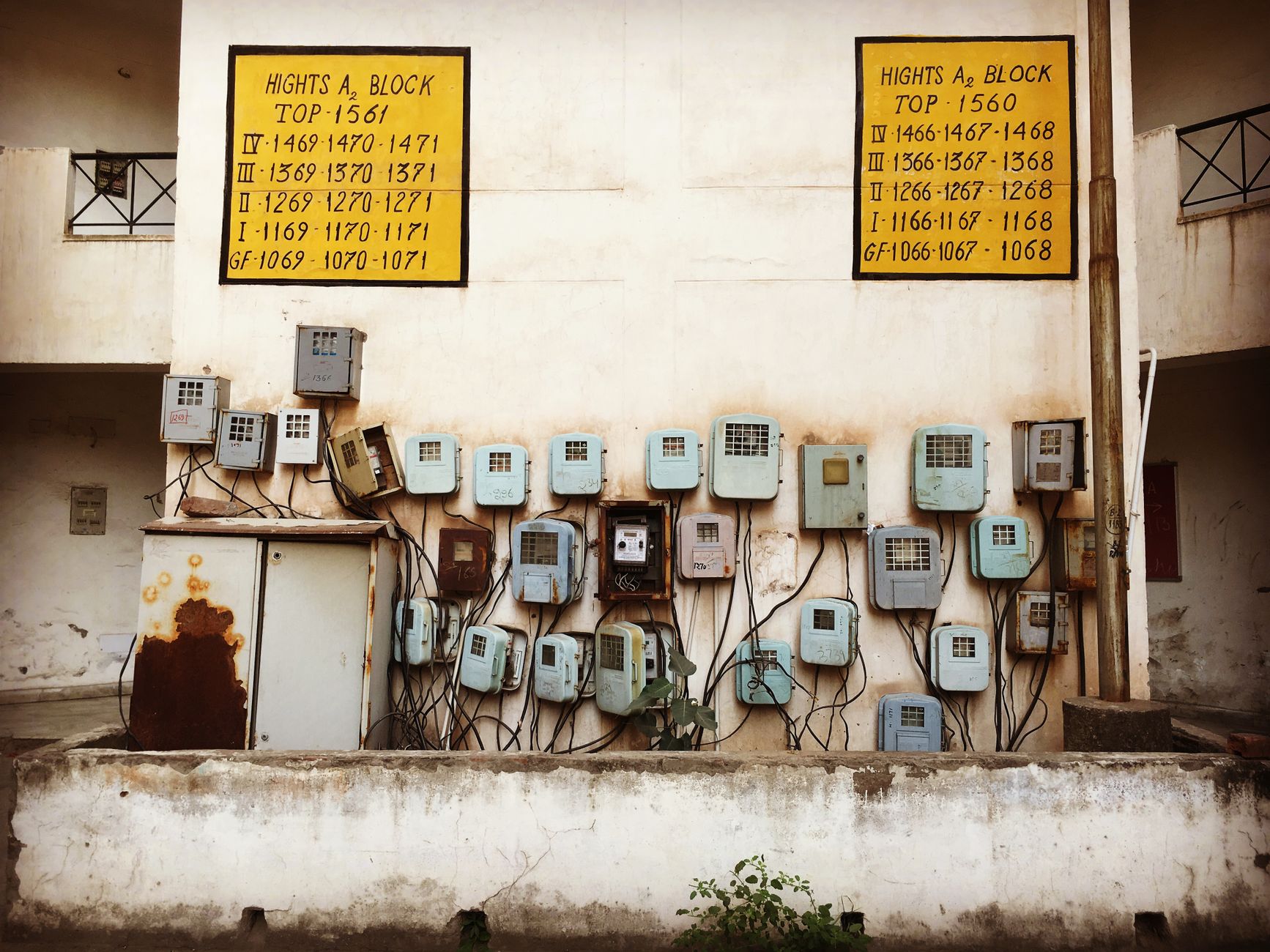
What the meter actually does
A rooftop solar system makes the most power in the middle of the day, often more than your home uses at that moment. The surplus flows out to the grid. In the evening, when the sun is gone, you pull power back from the grid. The metering arrangement is simply the rulebook for how that two-way flow is priced.
There are three arrangements you will run into in India, and the difference between them is money:
- Net metering: A bi-directional meter records both what you import and what you export. At the end of the billing cycle you pay only for the net units consumed. Every exported unit cancels out an imported unit at the same retail tariff.
- Gross metering: A separate meter sends all your generation to the grid at a fixed feed-in tariff, while you buy all your consumption back at the normal retail tariff. You never directly use your own power.
- Net billing (net feed-in): A hybrid. You consume your own solar first for free, and only the surplus is exported — but that surplus is paid at a lower feed-in rate, not the retail rate.

Net metering vs gross metering: a worked example
Say your retail electricity tariff is around ₹8 per unit and your discom's feed-in or export rate is about ₹3 per unit (rates vary widely by state, so treat these as illustrative). Imagine your panels generate 400 units in a month and your home uses 400 units, but the timing doesn't perfectly match.
Under net metering, if you export 200 surplus daytime units and import 200 evening units, they cancel out one-for-one. Your energy bill for those units is effectively zero. You are using the grid as a free battery.
Under gross metering, all 400 generated units are sold at ₹3 = ₹1,200, while you buy all 400 consumed units at ₹8 = ₹3,200. Net outflow: ₹2,000. You generated as much as you used and still paid a hefty bill.
That gap — roughly the spread between the retail and feed-in rates — is why net metering is almost always the better deal for a home. Gross metering only makes sense if the feed-in tariff is unusually generous, which for residential consumers it rarely is.
Why net billing is the option to watch
Here is the twist most buyers miss. Pure net metering is so favourable to consumers that many state regulators have been quietly capping or replacing it. Some states limit one-for-one net metering to smaller systems (often up to around 10 kW for homes) and push larger ones onto net billing, where exports earn a lower rate.
For a typical household this is not a disaster — you still consume your own power for free during the day. But it changes how you should size the system. Under net billing, every unit you export instead of using yourself is worth far less. The smart move shifts from "generate as much as possible" to "generate roughly what you can use in daylight."
The practical lesson: don't oversize a rooftop system hoping to bank huge credits. If your state runs net billing, an oversized array dumps cheap power onto the grid while you keep buying expensive evening power.
Where the PM Surya Ghar subsidy fits in
The PM Surya Ghar scheme, launched in early 2024, is built around net metering and offers a central financial assistance designed to cover a big chunk of a small home system. The subsidy structure is tiered and capped:
- ₹30,000 per kW for the first 2 kW.
- An additional ₹18,000 for the third kW.
- A maximum of ₹78,000 for any system of 3 kW or above.
So a 3 kW system gets the full ₹78,000, and going bigger than 3 kW earns no extra central subsidy — though many states add their own top-up. You can absolutely install a 5 kW or 10 kW system; you just won't get subsidy beyond the 3 kW cap.
Net metering under the scheme is generally available up to your sanctioned load (subject to your state's ceiling). That sanctioned load — not your roof area — is often the real limit on how big a grid-connected system you can register.
How to read your quote before you sign
Installers quote panel size and price loudly and metering terms quietly. Flip that. Before you sign:
- Ask which metering type applies in your state and DISCOM for your system size — net metering, net billing, or gross — and get it in writing.
- Confirm the export/feed-in rate if it isn't pure net metering. A low feed-in rate changes your payback maths completely.
- Match size to daytime use. If most of your consumption is at night, a smaller system plus shifting some loads (washing machine, water pump, EV charging) to daytime often beats a giant array.
- Check the sanctioned-load ceiling. You may need to apply to raise your sanctioned load before a larger system can be approved.
- Verify the subsidy claim path. Apply through the official national portal and ensure your installer is empanelled with your discom, or the subsidy can stall.
What comes next for rooftop owners
The direction of travel is clear: as rooftop solar scales, regulators want to protect the grid's finances, so generous one-for-one net metering is slowly tightening while net billing spreads. Battery storage will eventually change the calculus again — storing your own midday surplus to use at night sidesteps the feed-in rate entirely — but for most homes today batteries are still too expensive to be worth it.
Until storage gets cheaper, the winning strategy is unglamorous: right-size your system, lock in net metering if your state still offers it, and shift consumption into daylight hours. The panels on the roof get all the attention. The meter on the wall is where the savings are actually decided.