Court Backs UK's Palestine Action Terror Ban: What It Means
A video of riot police picking demonstrators off the pavement of central London, one by one, for holding cardboard signs has spread far beyond Britain this week. The reason it stings is the wording on those signs. People are being detained under terrorism law for expressing support for Palestine Action, and a UK court has just confirmed that the government was within its rights to make that possible.
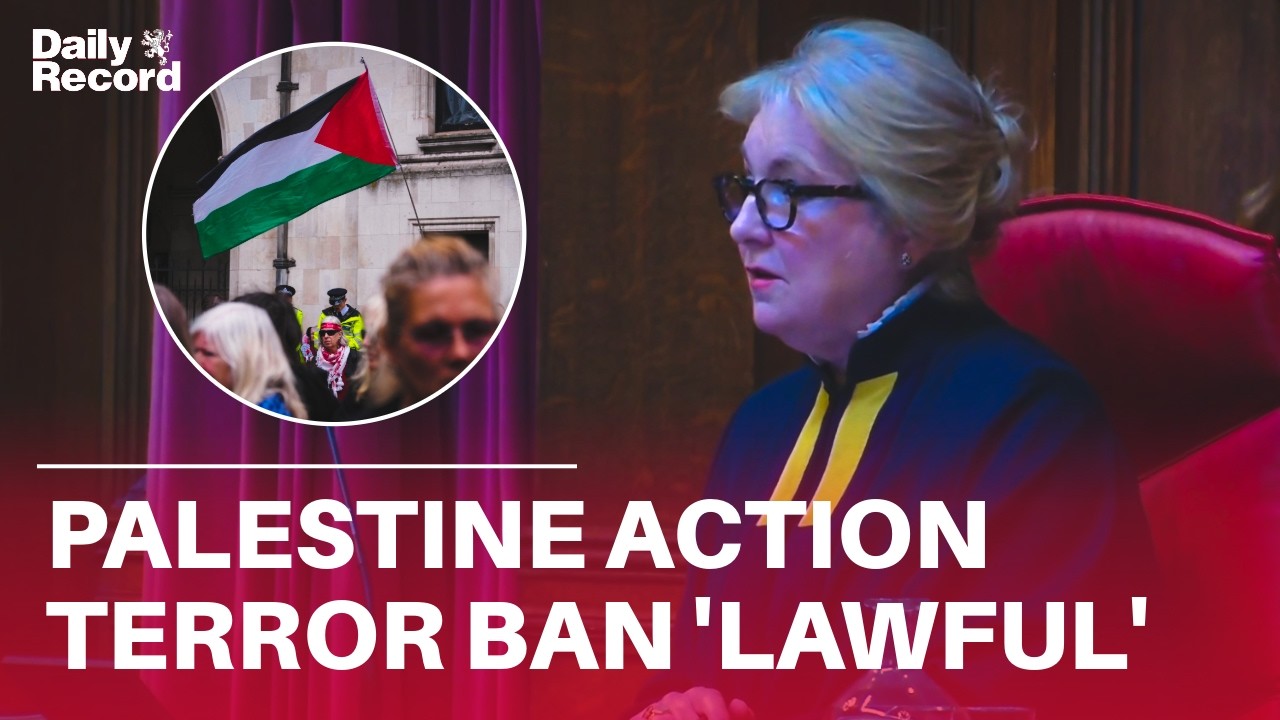
The Court of Appeal ruled that the decision to ban Palestine Action as a terrorist organisation was lawful. For the activists who hoped the judges would unpick the ban, it is a heavy blow. For the Home Office, it is vindication of one of the most contested uses of counter-terrorism powers in recent British history.
What the court actually decided
The judges were not asked whether banning a protest group is wise, popular or proportionate in a moral sense. They were asked a narrower legal question: did the Home Secretary act within her powers, and was the process lawful. On that, they sided with the government.
This matters because critics had argued the ban was an abuse of legislation designed for armed networks that kill people, not for activists who spray paint and break windows. The court's answer, in effect, was that the law as written gives ministers wide discretion, and that property damage can fall inside the statutory definition of terrorism when it is serious and politically motivated.
The ruling does not close the matter. A fuller challenge can still grind on, and the group's lawyers are widely expected to seek permission to take the fight to the UK Supreme Court. But for now the proscription stands, with all its consequences.
How a protest group ended up on a terror list
Palestine Action made its name through confrontational direct action, frequently targeting factories and offices linked to the arms trade, especially firms it accused of supplying Israel's military. Red paint, blocked entrances and occupied rooftops became its signature.
The turning point came when activists got onto RAF Brize Norton, a Royal Air Force base, and damaged military aircraft, reportedly spraying them with paint. The breach of a high-security site embarrassed the government and shifted the conversation from vandalism to national security overnight.
Within weeks the Home Secretary moved to proscribe the group under the Terrorism Act 2000, placing it in the same legal category as organisations like the Islamic State and Al-Qaeda. Parliament approved the order. From that moment, the offence was no longer trespass or criminal damage. It was terrorism.
Why a paint attack triggers a 14-year sentence
This is the part many readers find hard to believe, so it is worth being precise. Under British law, terrorism is not defined only as violence against people. The definition stretches to serious damage to property and the use or threat of action designed to influence the government or intimidate the public for a political, religious or ideological cause.
Once a group is proscribed, a long list of acts become crimes in their own right:
- Being a member, or claiming to be one
- Inviting or expressing support for the group
- Arranging meetings in its name
- Wearing or displaying clothing or items that arouse suspicion of support
The maximum penalty for some of these offences runs to 14 years in prison. That is why a person holding a handmade placard can, in theory, face the machinery built for bomb plotters. The act itself looks trivial. The legal classification is not.
The arrests that fuelled the outrage
What turned this into a viral story rather than a dry legal dispute was the policing. At a series of demonstrations, hundreds of people have been arrested, many of them older, many holding signs that simply named the banned group. Footage of pensioners being carried away by officers has done more to spread the controversy than any press release could.
Supporters frame it as deliberate mass civil disobedience. People are showing up precisely to test the line, daring the state to arrest grandparents and clergy for a few words on cardboard. Each arrest becomes a clip, each clip another argument that the law has overreached.
The government's case is that the rule of law cannot bend because a tactic is sympathetic. If a group meets the legal definition, ministers argue, refusing to act would gut the very idea of consistent enforcement. Both sides, in other words, think the videos prove their point.
A clash between protest and security law
Strip away the specifics and this is an old argument in a new costume. Where does legitimate protest end and criminality begin, and who gets to draw that line. Civil liberties groups warn that using terrorism powers against a domestic campaign group sets a precedent that could later be aimed at climate activists, strikers or any movement a future government dislikes.
The co-founder Huda Ammori, who has driven the legal challenge, has cast the ban as an attack on the right to dissent rather than on any genuine security threat. Her argument is that conflating spray paint with terrorism cheapens the word and chills ordinary people who fear that attending a march could now ruin their lives.
The counter-argument is straightforward. Breaking into a military base and damaging defence aircraft is not a normal protest, and a state is entitled to treat coordinated attacks on national infrastructure as a security matter. The court did not rule on which view is morally right. It ruled that the law permits the government to choose.
Why this should interest readers in India
This is a British case, but the underlying tension will feel familiar to anyone who follows Indian public life. India has its own long-running debates over sedition charges, the UAPA and the question of when laws built for terrorism get used against activists, students and journalists. The vocabulary differs. The dilemma is identical.
The British episode is a live demonstration of how elastic security law can be once it exists on the books. A statute written with one threat in mind can, years later, be applied to a target nobody originally imagined. That is the warning civil liberties campaigners everywhere draw from it, and it is why the ruling is being watched well beyond the UK.
There is also a diaspora angle. Britain has a large Indian-origin population, and protests over Gaza have drawn supporters from many communities. A law that criminalises displays of support for a named group inevitably touches people who never set foot near an arms factory, simply because they turned up to a demonstration with the wrong words on a sign.
What happens next
The immediate effect is that the ban remains in force and police can keep making arrests. Expect more set-piece demonstrations designed to flood the courts and keep the issue visible, and expect the government to insist it will not be pressured into reversing a lawful decision.
The longer game is in the courts. The defeated side can seek to escalate to the Supreme Court, and a separate, fuller judicial review may yet test the substance of the ban rather than just the process. Cases of this kind can run for years, with each stage generating fresh headlines.
Whatever the final legal outcome, the precedent is already set in the public mind. Britain has shown that a protest network can be placed in the same legal bracket as armed terrorist groups, and that a court will let it stand. For governments tempted by similar tools, and for activists who fear them, that is the lesson worth remembering.