Peddi Review Goes Viral: The Ram Charan Hype, Decoded
A single YouTube video titled around a Peddi review has become one of the most-clicked Telugu entertainment uploads of the week, and the reason says as much about fan culture as it does about the film itself. Long before most people have actually seen the movie, the Peddi review has turned into a search-engine magnet — a sign of just how hungry audiences are for the first verdict on Ram Charan's next big release.
The clip in question comes from a regional review channel and is being shared furiously across WhatsApp groups, X threads and fan pages. What makes it interesting is not necessarily what the reviewer says, but the speed and scale at which a review for a single star's film can detonate online. For an India-first audience that increasingly decides its weekend plans on YouTube, this is a story worth unpacking.
Why a Peddi review is blowing up
The short answer is Ram Charan. After the massive global footprint of RRR and the more divisive reception of his Shankar-directed political drama Game Changer, every move the actor makes is scrutinised. Peddi is positioned as his big swing back to a rooted, emotional film, and fans want to know early whether it lands.
Three forces are stacking on top of each other here:
- Star power. A Ram Charan title commands one of the largest organised fan bases in Indian cinema, and those communities aggressively amplify anything that signals a hit.
- Curiosity about the creative team. Buchi Babu Sana, who broke out with the raw love story Uppena, is directing only his second feature, and pairing him with AR Rahman raises expectations sky-high.
- The review economy. Telugu film YouTube is a hyper-competitive arena where channels race to post the earliest "verdict," because the first review on a hot title can pull lakhs of views in hours.
When all three collide, a single upload can outpace far bigger national news in trending charts — at least within the regional bubble.
What Peddi actually is
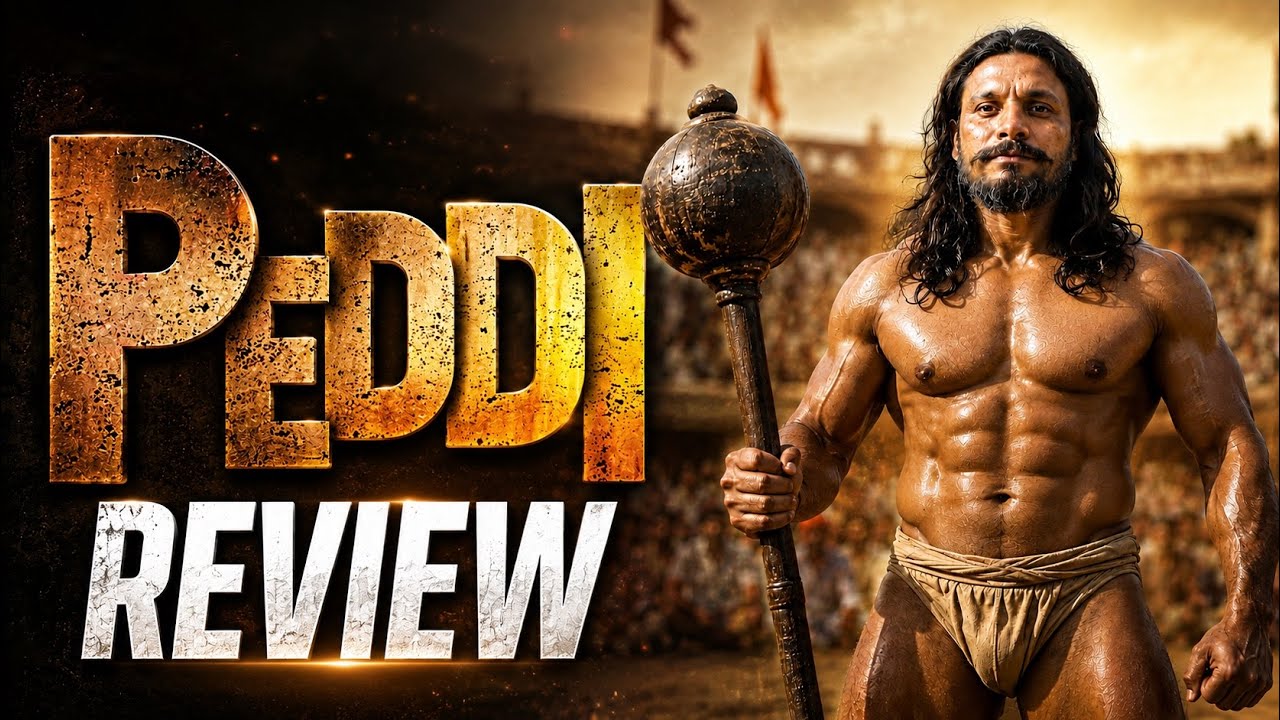
Peddi is a Telugu period drama with a rural, sporting backdrop, widely reported to revolve around cricket and themes of caste, dignity and small-town ambition. It marks a deliberate tonal shift for Ram Charan toward a grittier, earthier register than his recent mass and political outings.
The project carries genuine pedigree. Buchi Babu Sana is known for emotionally heavy, conflict-driven storytelling, and the involvement of AR Rahman as composer instantly elevates a film's prestige and music-launch buzz. The ensemble has been reported to include prominent names from both Telugu and Hindi cinema, broadening its appeal beyond the home market.
A promotional first glimpse released earlier set the tone — dusty fields, a defiant hero, a period texture — and that footage is part of why anticipation has built to this pitch. It is important to be precise, though: much of what circulates online about the plot remains studio-managed teaser material rather than a full picture of the film.
A word of caution on early ratings
Here is the part readers genuinely need. A viral "review" is not the same thing as a verified verdict, and it pays to read these clips critically.
- Timing matters. If a review surfaces well before official press previews or wide release, its claims cannot be independently confirmed, and you should treat them as unverified.
- Incentives matter. The Telugu and wider Indian film ecosystem has long faced allegations of paid promotion and orchestrated "positive talk." Some channels are independent; others are not transparent about arrangements. Neither you nor I can audit a star rating.
- Fan bias cuts both ways. Rival fan armies sometimes flood a film with praise or trash it on principle, distorting comment sections and early sentiment.
- A number is not an argument. A "3.5/5" tells you nothing about whether the film suits your taste; the reasoning underneath is what counts.
None of this means the trending Peddi review is dishonest — it simply means a smart viewer waits for multiple, independent voices before drawing conclusions. When a film is genuinely good, the consensus tends to hold up across many reviewers, not just one viral clip.
The Telugu review machine, explained
To understand why one upload can dominate, you have to understand the machinery behind it. Telugu cinema has built one of the most developed online movie review cultures in the country, arguably rivalling Tamil and Hindi in intensity.
Review channels operate almost like a live sport on a big release day. They chase the earliest possible upload, lean on punchy thumbnails and catchphrases, and frame their verdict for maximum shareability. For a tentpole star film, a strong opening review can mean a windfall of views and ad revenue, which is precisely why the competition is so fierce.
This ecosystem now meaningfully influences box-office behaviour. A wave of early positive "talk" can pull undecided audiences into theatres for the crucial first weekend, while a negative consensus can dent collections fast. Studios know this, which is why pre-release buzz, music, and the timing of previews are managed so carefully.
For Ram Charan specifically, that machine is running at full tilt because the stakes are high. After Game Changer split opinion, Peddi is being read as a course-correction — and the review discourse around it carries extra weight.
The public reaction
The response online has been split along familiar lines. Hardcore fans are treating the trending review as early validation and using it to rally hype, sharing screenshots of the most flattering lines. More cautious cinephiles are pushing back, pointing out that no single clip should decide a film's fate and urging others to wait for the full release window.
There is also a meta-conversation happening: a fatigue with the sheer volume of "reviews" that appear within minutes of a film surfacing. Many viewers now openly question how anyone can deliver a considered verdict that quickly, and that scepticism is, in a way, healthy. The audience is getting more media-literate even as the content gets noisier.
What is not in doubt is the engagement. The video's comment threads have become a microcosm of Telugu film Twitter — equal parts celebration, suspicion and rival-fan sparring.
Why this matters beyond one film
The Peddi review moment is a useful lens on how Indians now consume cinema. The theatrical decision has moved upstream — from the lobby to the phone screen, hours or days before a ticket is booked. A viral review is no longer commentary after the fact; it is part of the marketing and discovery funnel itself.
That shift has real consequences. It rewards speed over depth, concentrates influence in a handful of large channels, and makes star films even more front-loaded, where the first day or two can make or break the run. It also raises ongoing questions about disclosure and trust that the industry has yet to fully resolve.
For audiences, the practical takeaway is simple: enjoy the buzz, but don't outsource your judgement to a thumbnail and a star rating.
What comes next
The immediate future is predictable in shape, if not in outcome. Expect a flood of competing reviews, reaction videos and "day-one" verdicts to follow the trending clip, with the genuine consensus on Peddi only becoming clear once a broad set of independent voices weighs in around its release.
The real tests will be the established markers fans actually watch: word-of-mouth after the opening shows, the staying power of the AR Rahman soundtrack, and whether the film holds up at the box office beyond its first weekend. For Ram Charan and Buchi Babu Sana, a strong, sustained reception would reframe the actor's recent run and cement the director as a major force.
Until then, the smart move is patience. The trending review is a fascinating snapshot of how hype is manufactured and consumed in 2026 — but the only review that ultimately matters is the one you form in your own seat, lights down, film rolling.