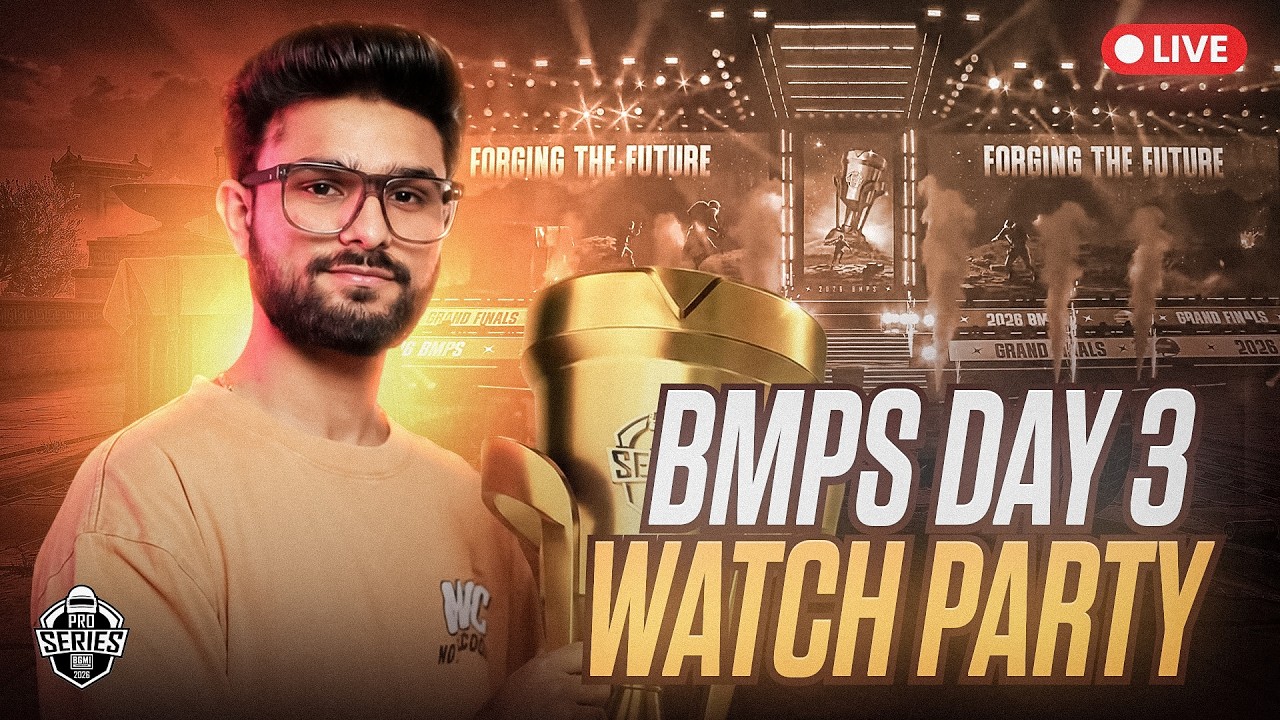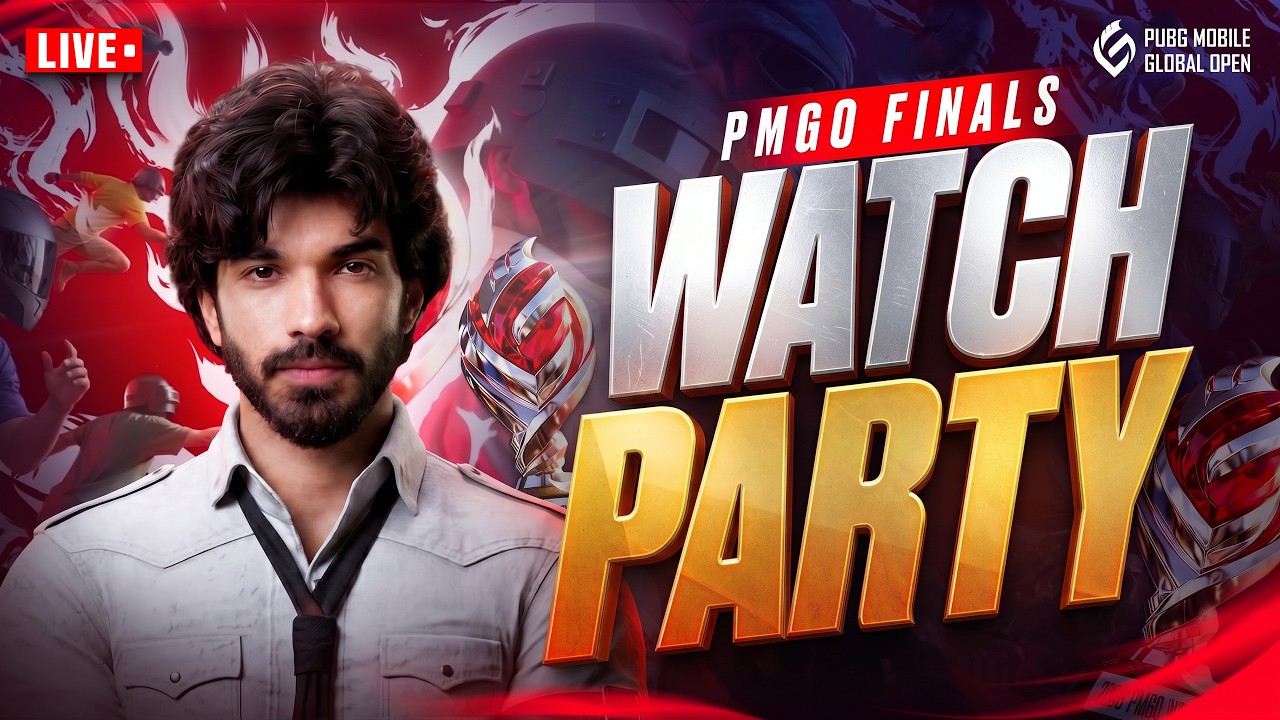
PMGO Grand Finals Watchparty With Snax: Why It's Viral
When the 2026 PMGO Grand Finals rolled into its second day, the biggest spike in Indian viewership did not land on the official broadcast at all. It landed on a creator channel, where Snax — caster, ex-pro and one of the most familiar faces of Indian mobile esports — hosted a live watchparty that climbed straight into YouTube's trending feed. The clip everyone is sharing is not a clutch or a chicken dinner. It is a man on a webcam losing his mind in real time, and an audience that would rather watch the match with him than alone.
That distinction is the whole story. The PMGO Grand Finals is a high-stakes international PUBG Mobile event, but in India the conversation around it is increasingly happening one screen removed — through reaction, banter and a shared chat box. The watchparty is now arguably the main event for a huge slice of the audience.
What the trending stream actually is
To be precise about what is going viral: this is a co-stream, not the tournament feed. Snax pulls up the live match, watches alongside thousands of viewers, and reacts — groaning at a thrown fight, hyping a wipe, roasting a rotation, and reading chat as it scrolls. The official production handles the polished caster desk, the stats overlays and the in-game observers. The watchparty handles everything the official feed deliberately leaves out: the emotion, the bias, the inside jokes.
PMGO — the PUBG Mobile Global Open — is one of the international competitive events in the PUBG Mobile circuit run under Krafton and Level Infinite's esports umbrella. A Grand Finals is the closing stage where qualified teams play out a series of maps, with placement points and kills stacking across a match day to decide the title. "Day 2" simply means the second block of those finals matches.
Because specific scores, prize splits and final standings shift across the event, the durable point is not the leaderboard. It is that an Indian creator's living-room reaction out-trended the official stream in cultural reach.
Why this is blowing up
A few forces are stacking on top of each other.
- Personality beats production. A clean broadcast is informative but emotionally flat. Snax supplies the swings — disbelief, celebration, the "did you SEE that" energy — that a neutral feed cannot.
- Community, live. A watchparty is a place to be, not just something to watch. The chat is half the entertainment, and being there as it happens feels like an event.
- Familiarity. Snax carries years of credibility from the early PUBG Mobile and BGMI era. Long-time fans trust his read on a fight more than a stranger's.
- Algorithmic tailwind. Long live sessions rack up watch-time, and big watch-time is exactly what YouTube's recommendation system rewards, pushing the stream into more feeds.
The result is a feedback loop: more viewers make the chat livelier, the livelier chat makes the stream more fun, and the fun keeps people parked for hours.
The India twist nobody outside gets
Here is the context that makes the Indian watchparty scene genuinely unusual. The global build of PUBG Mobile has been unavailable in India since 2020, when the government blocked it among a wave of apps. The domestic replacement, BGMI (Battlegrounds Mobile India), is what Indian players actually grind and what the home esports scene is built on.
So when a global event like PMGO runs, most Indian fans cannot — and do not — play the title being contested. What they can do is watch. That separation matters and is worth stating plainly: following an international broadcast or a creator's reaction to it is not the same as playing a blocked app. The watchparty becomes the bridge between a banned global game and a passionate Indian audience that still cares deeply about top-tier competition.
This is why co-streaming hits differently in India than in markets where fans simply play the same game they watch. Here, the creator is not just a commentator — he is the access point.
The quiet economics of a watchparty
Watchparties look casual. The business underneath is not.
- Watch-time at scale. A single Grand Finals day can run for many hours. A creator who holds tens of thousands of concurrent viewers across that window banks enormous cumulative watch-time, which feeds ad revenue and channel growth.
- Direct monetisation. Super Chats, memberships and channel perks turn a live audience into income the creator keeps a share of, independent of any tournament deal.
- Audience capture. Every big watchparty converts casual viewers into subscribers who return for the creator's regular content, making the event a discovery funnel.
- Low cost, high output. The creator produces hours of trending content without flying to a venue or building a studio set. The official organiser carries the production cost; the co-streamer adds a layer on top.
For a creator economy where consistency is brutal, an event watchparty is a rare combination of cheap to make and large to land. That is exactly why so many Indian gaming channels now treat the esports calendar as their own programming schedule.
The tension under the surface
The model is not frictionless. Co-streaming sits on a fault line the global esports industry is still negotiating.
On one side, watchparties expand reach. They pull casual fans toward a tournament they might never have opened, and they keep a regional audience engaged with a global product. Many organisers quietly welcome that free promotion.
On the other side, every viewer parked on a creator's reaction is a viewer not on the official broadcast — the feed whose numbers underpin sponsorship and media-rights value. Different leagues handle this differently: some grant explicit co-streaming permissions and even encourage it, others restrict it. Where the line sits for any given event depends on the rights-holder, and that is the kind of detail fans rarely see but that shapes whether a watchparty is welcomed or warned.
Nothing here suggests wrongdoing by Snax or anyone else; reacting to a public broadcast on a creator's own channel is a widely practised format. The point is simply that the economics of who owns the audience are still being worked out, in India as everywhere.
The public reaction
The response online has been loud and affectionate. Clips of Snax's biggest reactions are being cut and reshared, comment sections are full of "watched the whole thing with you" energy, and the broader takeaway in the community is a kind of pride — that an Indian creator's couch stream out-trended a global production.
There is also a recurring debate in the replies: is the watchparty replacing the real broadcast, or feeding it? Both camps are right in part. Many viewers admit they only learned the standings because Snax was reacting to them, which is precisely the discovery effect organisers value — and precisely the audience split they worry about.
What happens next
Expect the format to harden into a habit. A few likely moves:
- More creators, more co-streams. Every successful watchparty invites the next one; the Indian gaming roster will increasingly schedule around the esports calendar.
- Clearer rules. As co-streaming gets too big to ignore, expect organisers to formalise where it is allowed, with named permissions rather than grey areas.
- Production creep. Watchparties will get slicker — guest pros, second screens, prediction segments — blurring the line between a reaction and a rival broadcast.
- A BGMI halo. Hype around global events tends to spill back into India's domestic BGMI scene, boosting interest in home leagues and the players who compete in them.
The headline number from the 2026 PMGO Grand Finals may end up being a trophy lifted on the official stage. But the more telling number is the audience that chose to experience it through a creator's webcam. In India's esports culture, the watchparty has stopped being a sideshow. It is becoming the show.