Photo: Sergei Starostin / Pexels
RAM Shortage 2026: Why Your Next Phone Costs More
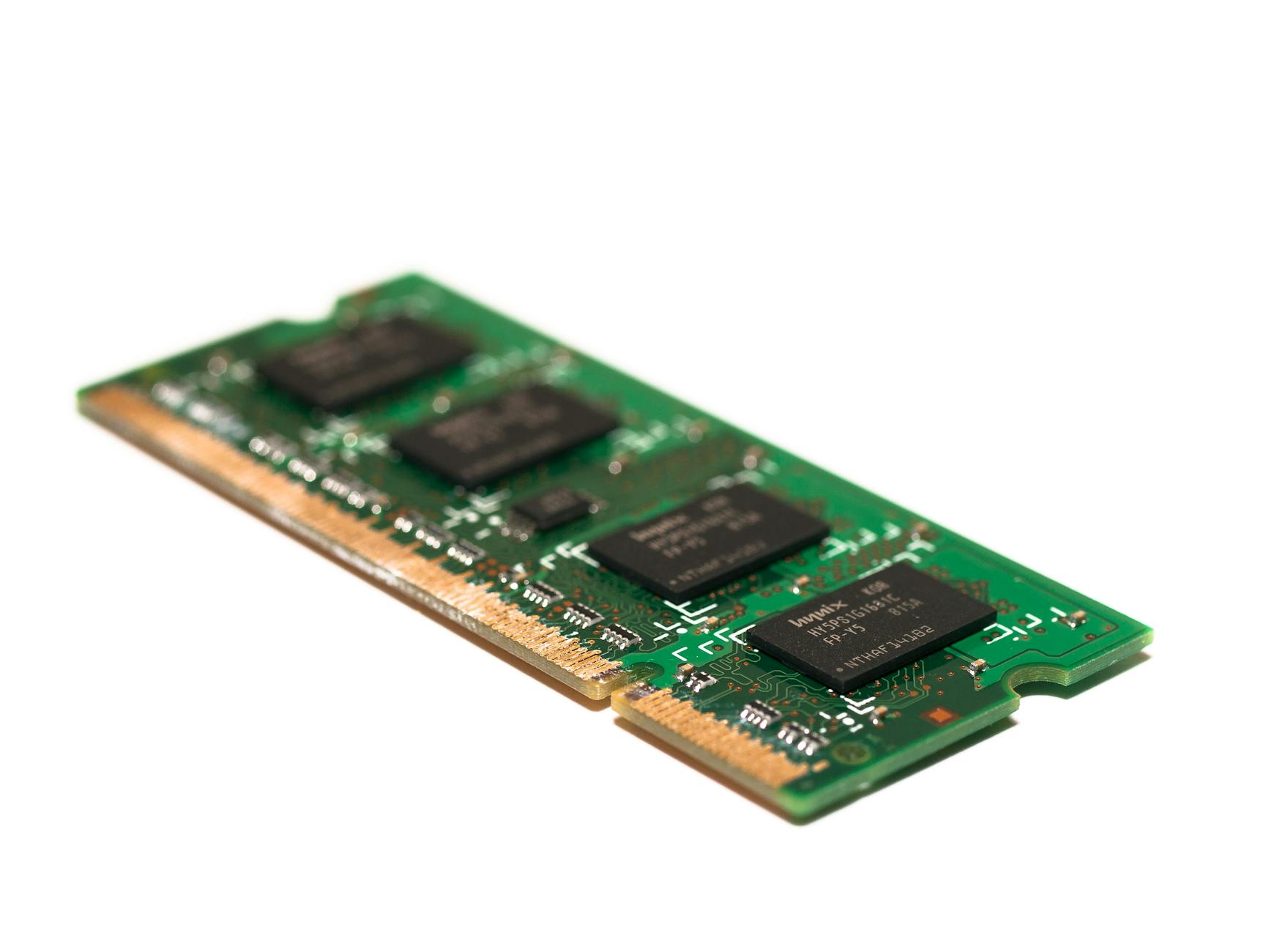
There is an invisible component buried inside every phone, laptop and game console you own, and in 2026 it has quietly become the most disruptive force in consumer tech. It is not a flashy new chipset or a foldable screen. It is memory — the humble RAM and storage chips that let your devices think and remember. A historic RAM shortage has sent memory prices nearly doubling in a matter of months, and the fallout is now landing on price tags from Delhi to Tokyo. Your next gadget is going to cost more, and the reason has almost nothing to do with the gadget itself.

What the RAM shortage actually is
DRAM, the fast working memory inside virtually every electronic device, has become one of the most fiercely contested resources on the planet. Analysts tracking the market say DRAM prices jumped roughly 95% in the first quarter of 2026 alone, with another steep climb expected through the middle of the year. Some specific memory types reportedly spiked by around three-quarters of their value in a single month. To put that in perspective, memory chips are normally a slow-moving, cyclical commodity — prices drift up and down by single digits. A near-doubling in a few months is the kind of move that rewrites the economics of an entire industry.
The squeeze is not limited to RAM. NAND flash, the storage that holds your apps, photos and files, is caught in the same vortex. Market researchers at Gartner have warned that combined DRAM and solid-state drive prices could surge well over 100% by the end of 2026. When both the memory and the storage in a device get more expensive at the same time, manufacturers have nowhere to hide.
Blame the AI boom, not the gadget makers
The culprit is the artificial intelligence gold rush. Building and running large AI models requires staggering quantities of high-performance memory, and the world's biggest technology companies — the operators behind massive data centres — are buying it up faster than chipmakers can produce it. These hyperscalers can outbid almost anyone, and they are doing exactly that, scooping up memory wafers on long-term contracts and leaving phone and laptop brands fighting over what remains.
The result is a textbook supply-and-demand collision. Memory factories take years and billions of dollars to build, so supply cannot simply ramp up to meet the sudden hunger from AI. Meanwhile, demand is exploding not just in data centres but on devices themselves: as small AI models increasingly run directly on phones and laptops, even mid-range gadgets now want 12GB, 16GB or more of RAM. The industry is being told to add more memory at the precise moment it has become punishingly expensive to do so. That is the trap at the heart of the 2026 squeeze.
How much more you will pay
The price increases are no longer theoretical. Research firms estimate the memory crunch will push average PC prices up by roughly 17% and smartphone prices up by around 13% compared with 2025 levels. Laptops from major brands have already climbed between 15% and 30% over the year, and several leading PC makers have openly warned customers that contracts are being reset and tougher pricing lies ahead.
The pain extends to gaming, too. In a striking move, Nintendo confirmed a global price increase for its Switch 2 console in May 2026, explicitly pointing to soaring memory chip costs in its own filings. In the United States the console is set to rise from about $450 to roughly $500 later in the year, with parallel increases in Japan and Europe. Rivals are bracing as well — there are reports that Sony may push its next PlayStation further down the calendar, and Xbox hardware has already seen price hikes. When a company as disciplined on pricing as Nintendo raises the cost of a flagship console mid-life, it is a signal that the whole sector is under genuine strain.
Why India feels this more sharply
For Indian buyers, the RAM shortage is not an abstract global headline — it is reshaping what you can actually afford. Average selling prices for smartphones in India climbed more than 10% year-on-year in the first quarter of 2026, reaching a record high of around US$302. A weakening rupee is layering extra cost on top of the global memory inflation, a double squeeze that makes every imported component pricier.
The most brutal damage has fallen on the budget end of the market, which is the beating heart of India's phone economy. Memory has historically made up something like 15-20% of the bill of materials for a low-cost phone; with prices nearly doubling, that share has ballooned toward half the cost of building an entry-level handset. The math simply stops working. Shipments in the entry-level segment reportedly collapsed by close to 60% year-on-year, and that slice of the market shrank from nearly a fifth of all phones to under a tenth. Domestic brands that built their businesses on affordable, high-volume devices are watching their margins evaporate, and some are quietly pulling models from the sub-₹10,000 shelves because they can no longer be made profitably.
The quiet upmarket shove
One of the more fascinating side effects is how the shortage is changing buyer behaviour, often against people's wishes. As the cheapest phones become scarce or unviable, buyers who would normally spend the least are being nudged into the next bracket up — not because they suddenly want a fancier phone, but because the basic options have thinned out. The ₹8,000-₹16,000 band has grown its share of the market noticeably, absorbing customers pushed up from below.
This is a meaningful shift for a country where the first smartphone is still a major purchase for millions of families. The on-ramp to the digital economy is getting more expensive at the cheapest rung, which has real consequences for first-time internet users, students and gig workers who depend on an affordable device. Expect more shoppers to hold on to their current phones for an extra year, and a likely surge in demand for refurbished and second-hand handsets as people look for ways around the new pricing reality.
What comes next
The uncomfortable truth is that this is unlikely to resolve quickly. Memory manufacturing capacity cannot be conjured overnight, and AI demand shows no sign of cooling, so several forecasters expect the tightness to persist into 2027. Worldwide shipments of both PCs and smartphones are projected to fall this year, an unusual contraction driven almost entirely by affordability rather than a lack of interest in new devices.
There are a few things worth watching. Chipmakers are pouring investment into new memory fabs, and any easing of AI buildout intensity could loosen the market. For shoppers, the practical advice is pragmatic: if you have been eyeing a device with generous RAM and storage, the value equation may not get better soon, and waiting could mean paying more rather than less. Buying a configuration with a bit more memory than you think you need has also become a smarter hedge, because upgrading later will be costly. Above all, this episode is a reminder of a hidden dependency in modern life — the gadgets we treat as cheap and disposable rest on a fragile, globally contested supply of tiny memory chips, and when the AI giants come knocking, everyone else pays at the checkout.
Source: business-standard.com