Photo: Krishnendu Biswas / Pexels
How Many Times Can You Reuse Cooking Oil? The 25% Rule
Most Indian kitchens treat the leftover oil after frying pakoras or pooris as too precious to throw away. It gets strained through a tea sieve, poured back into the tin, and used again next week. That instinct is thrifty, but past a point it stops being smart and starts being a quiet health risk. The question worth asking isn't whether you can reuse cooking oil — it's how many times, and how to tell when a batch has crossed the line.
The answer hinges on a number most home cooks have never heard of: Total Polar Compounds, and the 25% ceiling India's food regulator has drawn around it.
What actually happens when oil is reheated
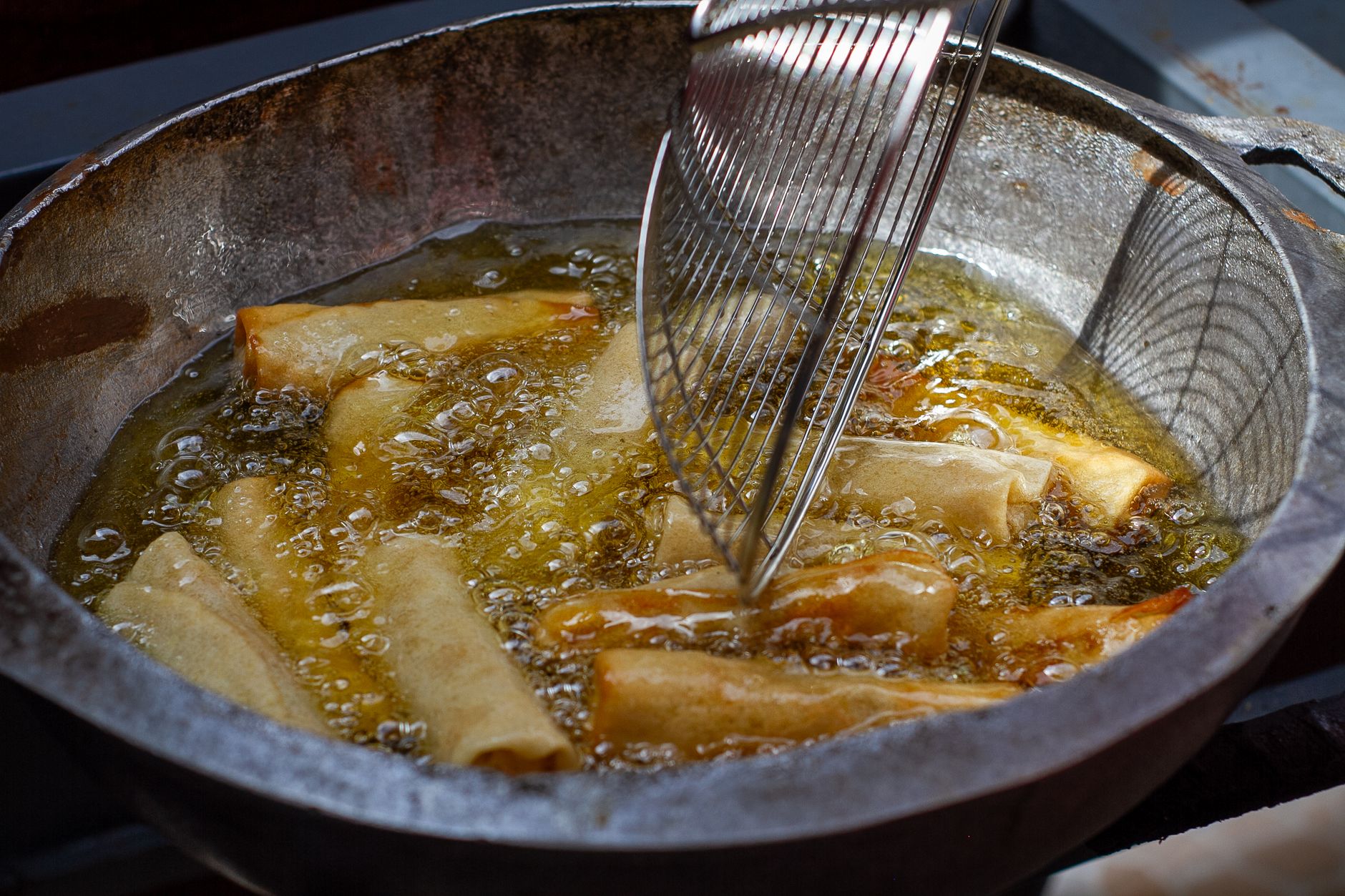
Every time oil hits a hot kadhai, three things go to work on it: heat, oxygen and the moisture from whatever you're frying. Together they break the oil's fat molecules apart and stitch them into new compounds — free fatty acids, oxidised fats, and a family of substances collectively measured as Total Polar Compounds (TPC).
Fresh oil starts with a very low TPC reading. With each frying cycle, especially at the roaring temperatures used for samosas or chips, that number climbs. The oil darkens, thickens and begins to smoke at a lower temperature than it did when new. Crucially, this is a one-way street. You can filter out the burnt crumbs, but you cannot filter out the chemistry. Once those compounds form, they stay.
This matters because repeatedly fried oil is linked to inflammation, higher bad cholesterol, and over the long term raises the risk of heart disease, liver stress and certain cancers. It also produces trans fats and aldehydes, the kind of thing you don't want as a regular guest at the dinner table.

The 25% rule, in plain terms
The Food Safety and Standards Authority of India (FSSAI) has fixed a hard limit: once an oil's Total Polar Compounds cross 25%, it is unfit for human consumption and must be discarded. Since 1 July 2018, food businesses have been required to monitor the oil they fry in and bin it once it breaches that mark.
Big kitchens have it easier here. Establishments using more than 50 litres of oil a day are expected to track quality and hand spent oil to licensed collectors. They can buy a small handheld TPC meter that gives a reading in seconds. At home you won't have one, which is exactly why you need to learn to read the oil with your own eyes and nose.
Think of 25% as the legal cliff edge. Your home oil should be retired well before it gets anywhere near it.
How to tell your oil is done
No gadget required. A used-oil batch is telling you it's finished when you notice:
- Colour: it has turned from golden to a deep, murky brown that doesn't clear even after straining.
- Texture: it feels thick, viscous or slightly sticky, and coats the spoon more than fresh oil would.
- Foam: a layer of bubbles forms on the surface during frying and refuses to settle down.
- Smoke: it starts smoking sooner than it used to, a sign the smoke point has dropped.
- Smell: a rancid, paint-like or faintly fishy odour, rather than a clean fried-food aroma.
If you tick even two of these, stop reusing that batch. The oil isn't going to improve, and the food you fry in it will carry the taste and the toxins.
So, how many reuses is actually safe?
There is no single magic number, because it depends on heat, the food, and how clean you keep the oil. But a sensible home rule of thumb:
- High-heat deep frying (pooris, chips, fritters, chicken): reuse once, twice at most. This is the harshest treatment and degrades oil fastest.
- Moderate shallow frying (tikkis, dosas, sabzi tadka): two to three reuses is reasonable if the oil still looks and smells right.
- Frying starchy or battered foods ages oil faster than frying papad or dry items, because crumbs char and accelerate breakdown.
Three practices stretch an oil's life without cutting corners. Strain it through a fine sieve or muslin as soon as it cools, so no food debris sits in it. Store it in a clean, airtight container away from light and heat — not on the windowsill. And never fry above the temperature you actually need; smoking oil is already on its way out.
One habit to drop entirely: topping up old oil with a splash of fresh. It feels economical, but all you're doing is dragging good oil into a degraded batch and speeding up the whole pot's decline.
Different oils, different stamina
Not all oils take the heat equally. Oils with a higher smoke point and more stable fat structure — groundnut (mungphali), rice bran, mustard and refined sunflower — hold up better to repeated frying than delicate ones like extra-virgin olive oil or flaxseed oil, which are best kept off the deep-fry duty altogether.
That said, a high smoke point only buys you time; it doesn't make an oil immortal. Even the hardiest oil will eventually cross the TPC line if you keep frying in it. The smoke point tells you how hot you can go before visible breakdown; it says nothing about the invisible chemistry already underway.
Where used oil should go
When a batch is finished, resist the urge to pour it down the sink. Cooled cooking oil congeals in pipes, clogs drains and creates the fatbergs that choke urban sewage lines. The greener route is RUCO — Repurpose Used Cooking Oil, the FSSAI-backed programme launched in 2018 that collects spent oil and converts it into biodiesel.
For a household, the practical version is simple: let the oil cool fully, funnel it into a sealed plastic bottle, and pass it to a kabadiwala, a society collection drive or a RUCO aggregator point rather than the drain or the dustbin. Restaurants near you are already required to route their used oil this way; your bottle can ride along the same chain.
Reusing oil sensibly is good kitchen economics and there's no need to feel guilty about it. The trick is knowing where thrift ends and the 25% line begins — and trusting your eyes and nose to retire a batch before it ever gets close.