Photo: Nanmua Dadi / Pexels
How Many Times Can You Safely Reuse Cooking Oil?
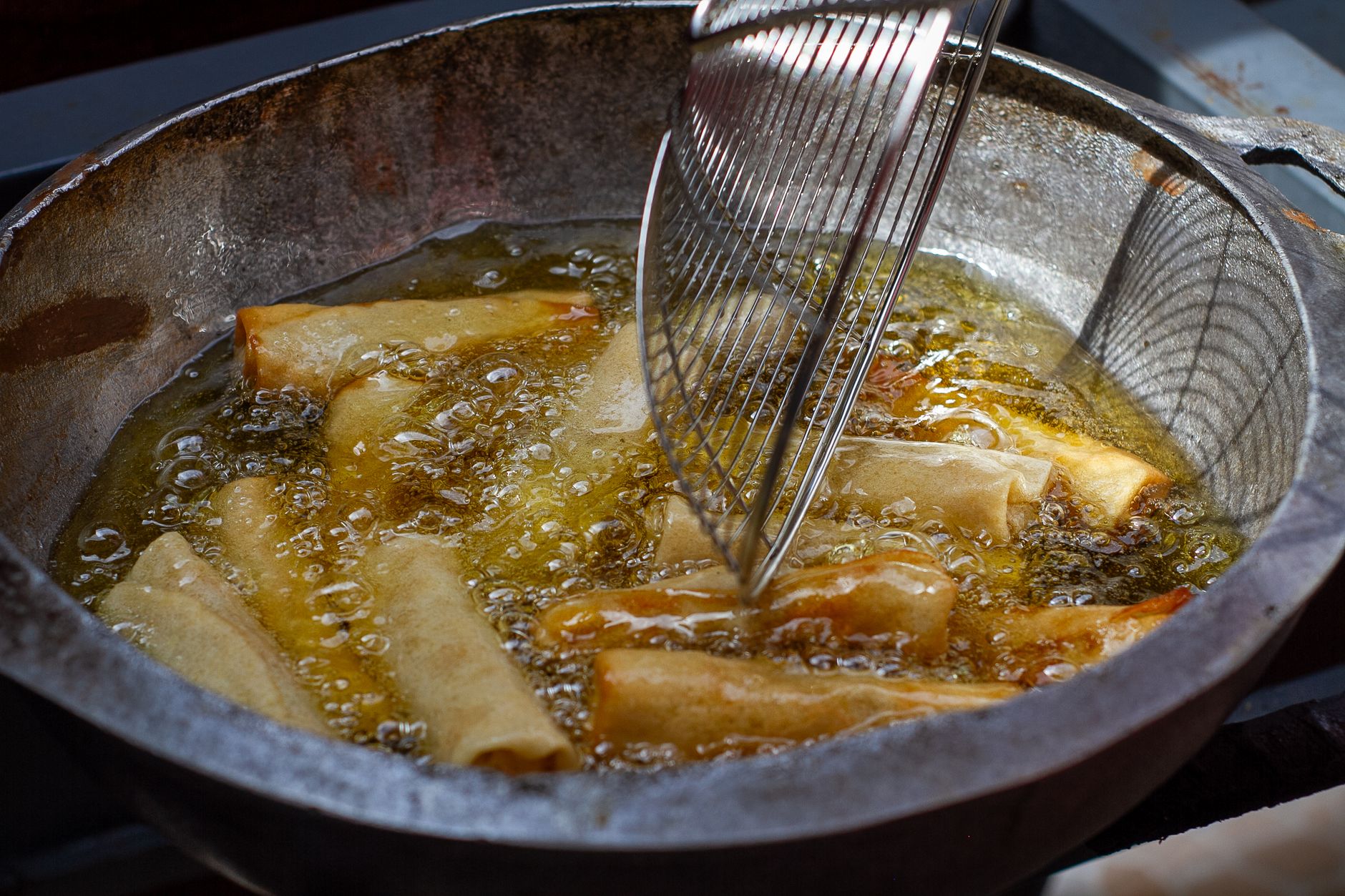
That same kadai of oil from last night's pakoras is sitting on your counter, a little darker than it was, and the question is the one every Indian kitchen asks: fry in it again, or pour it out? Most households reuse cooking oil far more times than they should, partly out of thrift and partly because nobody ever told them where the line is. There is a line, and the safest answer for home frying is two to three uses, no more.
Reusing oil is not automatically dangerous. The problem is what heat does to it over time, and the fact that the danger is invisible until the oil is already well past saving. Once you know what to watch for, you can squeeze the value out of a batch without quietly feeding your family something that works against their heart.

What actually happens when you reheat oil
Every time oil hits frying temperature it breaks down a little. Water from the food, oxygen from the air and the heat itself trigger reactions that create new compounds — free fatty acids, oxidised fragments and, with enough repeats, trans fats. Scientists group the harmful by-products under one umbrella measure called Total Polar Compounds (TPC), and the more you fry in the same oil, the higher that number climbs.
These compounds are not just a taste problem. Diets heavy in repeatedly heated oil are associated with high blood pressure, hardened arteries and liver stress, and the effect compounds over years of daily cooking. The oil that fried your evening snack looks the same in the pan; chemically it is a different, harsher substance each time it goes back on the flame.
The 25% rule the law uses
India's food regulator, the FSSAI, has drawn a clear chemical boundary. Cooking oil must not be used once its Total Polar Compounds cross 25%. Beyond that threshold the oil is treated as unsafe for human consumption, full stop.
That rule is aimed mainly at restaurants, halwais and snack units — anyone frying at scale. Businesses using more than 50 litres of oil a day are expected to monitor oil quality and surrender spent oil rather than keep stretching it. You can't run a lab test on your kitchen oil, but the 25% limit is useful as a mindset: there is a hard point past which oil stops being food and starts being waste, and at home that point arrives faster than people assume because we rarely filter and store it carefully.
Six signs the oil needs to go
Without a meter, your senses are the test. Throw the oil out the moment you notice any of these:
- It has turned dark — deep brown or murky instead of golden and clear.
- It foams or bubbles strangely at the surface when heated, beyond the normal sizzle.
- It smokes early, before it is properly hot. A dropping smoke point is a reliable warning that the oil has degraded.
- It smells off — rancid, bitter or sharp rather than neutral.
- It has gone thick or sticky, leaving a gummy varnish-like film on the kadai and your hands.
- Bits of old food are floating in it, which burn and accelerate the breakdown of the whole batch.
Any one of these is enough. You do not need to wait for all six.
How to get more life out of a batch — safely
If the oil still passes the eye-and-nose test, a few habits will keep it usable for its two or three rounds without speeding up the damage:
- Fry hot, not scorching. Keep the flame moderate. Overheating past the smoke point wrecks oil in a single session.
- Strain it while still warm. Pour the cooled oil through a fine sieve or muslin to remove crumbs and batter, which otherwise sit there charring.
- Store it right. Keep strained oil in a clean, airtight steel or dark glass container, away from sunlight and the stove's heat. Light and air are what oxidise it between uses.
- Match the oil to the job. Oil used for fish, eggs or strongly spiced batter picks up flavour and residue — reuse it only for similar foods, or not at all.
- Never top up old oil with fresh. Mixing new oil into a degraded batch is a common shortcut, and it backfires: the old compounds drag down the fresh oil and you end up with a larger pot of inferior fat.
Light stir-frying or tempering is gentler on oil than deep frying, so oil from a single shallow-fry may still be fine for a tadka the next day. Deep-frying oil that has done its two or three rounds has earned retirement.
Where the old oil should end up
The instinct to pour leftover oil down the kitchen sink is the worst possible exit. It congeals in the pipes, builds blockages and ends up fouling drains and water bodies. The right move is to cool it, seal it in a bottle and put it in the bin — or better, route it into India's recycling channel.
The FSSAI runs a programme called RUCO — Repurpose Used Cooking Oil — that collects spent frying oil and converts it into biodiesel. Large kitchens are the main feedstock, handing over oil that has crossed the safe limit instead of selling it on or re-frying it. The same idea works as a principle for households: used oil has a second life as fuel, not as another round of dinner.
The thrift trap worth breaking
Reusing oil endlessly feels economical, and that is exactly why the habit sticks. But the saving is illusory once you weigh it against blood-pressure medication, cholesterol management and the long quiet cost to your arteries. A bottle of oil is cheap. The damage from frying in oil that should have been thrown out three batches ago is not.
The rule to carry into the kitchen is simple. Two to three uses, watch the colour and the smell, strain and store between rounds, and never revive a dead batch with a splash of fresh oil. When in doubt, pour it out — your next pan of pakoras is worth a clean start.