Why 'I Built a Rocket' Game Clips Keep Going Viral
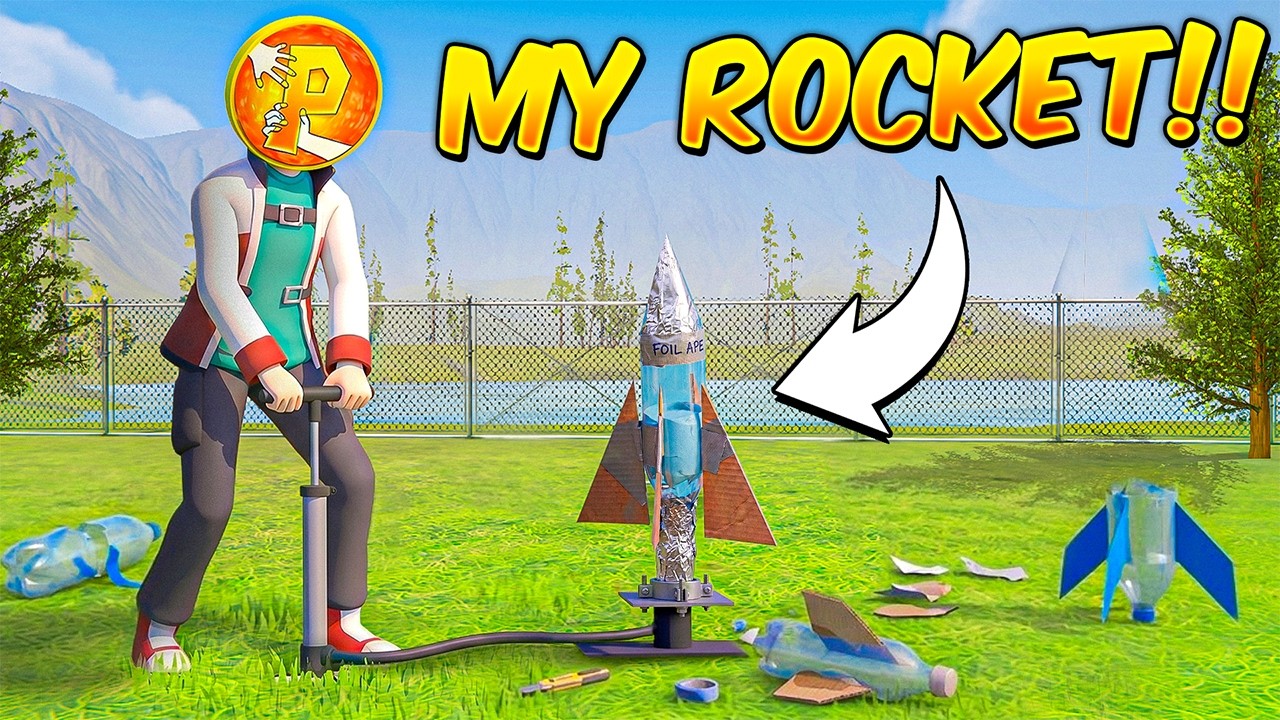
A clip titled "I Crafted My Own ROCKET In This Game!" is climbing fast on YouTube, and it taps into one of the most reliable formulas in gaming content: hand someone a box of virtual parts, ask them to defy gravity, and let the cameras roll. The video shows a creator assembling a spacecraft piece by piece inside a physics sandbox game, then firing it skyward to see whether their engineering holds up. It is a small premise with an outsized pull, and the rise of rocket-building games on the platform explains why.
We are reporting on the phenomenon rather than the single upload here, because the specific clip is one entry in a much larger wave. Across the platform, videos in which players design, test and launch homemade rockets reliably outperform straightforward playthroughs. The reasons are part psychology, part game design, and part the economics of how attention works online.
What the clip actually shows
Strip away the thumbnail hype and these videos follow a recognisable arc. The creator starts with an empty workshop, bolts together fuel tanks, engines, fins and a crew capsule, and narrates the choices along the way. Then comes the launch attempt. Sometimes the craft wobbles off the pad and tips over. Sometimes it shreds itself apart mid-air. Occasionally it reaches space and the room erupts.
That structure matters. Viewers are not tuning in for a finished product; they are watching trial and error unfold in real time. The suspense of an untested machine is the entire draw. A creator who succeeds on the first try, ironically, often makes for a duller video than one who blows up three rockets before getting it right.
The games behind the trend
A handful of titles have turned amateur rocketry into a genre of its own. Each offers a slightly different balance of realism and chaos.
- Kerbal Space Program is the cornerstone. Players run a space agency of small green aliens and must master real concepts like delta-v, staging and orbital insertion. It is demanding enough that genuine aerospace fans treat it as a sandbox classroom.
- Trailmakers leans into accessibility, letting players snap together vehicles and rockets quickly and share them online.
- Scrap Mechanic and Space Engineers reward elaborate, contraption-heavy builds where the joy is in the ridiculousness.
- Stormworks and various Minecraft mods round out the field, proving the appetite stretches across audiences and budgets.
What unites them is a simulated physics engine that does not cut the player any slack. Forget to balance your thrust, skimp on fuel, or mount the engines crookedly, and the game punishes you instantly and visibly. That honesty is what makes the content feel earned.
Why failure is the secret ingredient
There is a counterintuitive truth at the heart of this genre: the explosions are the point. A clean, successful launch is satisfying once. A spectacular failure is endlessly rewatchable, shareable and meme-able.
Game designers understand this. The physics in these titles is tuned so that disasters are dramatic rather than dull, with parts tumbling, fuel igniting and the whole assembly coming apart in slow, almost balletic chaos. Creators lean into it, often keeping their worst attempts in the final edit because those are the moments audiences clip and reshare.
This mirrors something real engineers know well. The early decades of actual spaceflight were littered with rockets that exploded on the pad. Watching a virtual version of that process compresses years of frustration into a few minutes of entertainment, with none of the cost and all of the catharsis.
The Indian angle
For Indian gaming creators, build-and-launch content carries a particular appeal. The category is language-light — a rocket exploding needs no translation — which lets a creator in Pune or Kochi reach viewers in Brazil or Germany without a subtitle. That global addressability is rare and valuable in a creator economy where most regional content stays boxed inside its home audience.
It also lands at a moment when space is unusually present in the Indian imagination. The success of ISRO missions in recent years, the steady drumbeat of private launch startups, and the general fascination with rockets among young viewers all feed appetite for this kind of play. A teenager who cannot build an actual launch vehicle can absolutely engineer one in a game and post the result.
There is a practical creator-economy logic too. These videos are cheap to produce, require only a capable PC, and generate the dramatic, thumbnail-friendly moments that the recommendation algorithm rewards. For a creator weighing what to film next, a rocket that might explode is a safer bet than almost anything else.
A stealth science lesson
The quietly remarkable thing about the more realistic titles is how much actual physics they smuggle in. To get a rocket to orbit in Kerbal Space Program, a player has to internalise that you do not simply point up and burn. You build velocity sideways, you shed weight by dropping spent stages, and you respect that fuel is heavy and finite.
These are the same trade-offs real mission planners wrestle with. Teachers and science communicators have repeatedly pointed to such games as genuinely useful for explaining orbital mechanics, precisely because they let students fail safely and learn from the wreckage. A viewer who watches enough rocket-crafting videos absorbs intuitions about thrust, mass and gravity almost by accident.
That dual identity — entertainment on the surface, education underneath — is a big part of why the genre has staying power rather than burning out as a passing fad.
What viewers are saying
Public reaction to these clips tends to cluster around a few themes. Comment sections fill with viewers sharing their own disastrous designs, debating better engine placements, and demanding that the creator attempt something more ambitious next time. The competitive, problem-solving energy keeps audiences returning for sequels in a way that one-off stunt videos rarely manage.
The flip side is fatigue. Because the format is so reliable, the platform is crowded with imitations, and viewers can tell the difference between a creator who genuinely engineers a solution and one who is performing a scripted set of explosions for the thumbnail. The clips that break out usually do so on the strength of personality, editing and a sense that something is actually at stake.
Where this goes next
Expect the genre to keep growing, and to keep raising its ceiling. As physics engines get more capable and as multiplayer building becomes smoother, the natural next step is collaborative and competitive rocketry — teams racing to orbit, or head-to-head builds judged by who flies highest before everything comes apart.
The broader lesson for creators is simpler. Audiences are drawn to creation under constraint: give a person limited parts and a clear, hard goal, and the struggle to meet it is inherently watchable. A rocket is the perfect vehicle for that, literally and figuratively. The destination is dramatic, the failure is funny, and the moment it finally works feels like a genuine achievement.
That is why a clip about crafting a rocket in a game is doing numbers, and why the next one almost certainly will too.