Photo: Anastasia Shuraeva / Pexels
2026 Saree Trends in India: 7 Looks and How to Style Them
If you thought the saree was a fixed, six-yard certainty, 2026 is here to argue. The biggest saree trends in India this year are less about new prints and more about a shift in attitude: the drape is being engineered for speed, the blouse has quietly become the main character, and a generation raised on reels wants a nine-yard garment that survives a dance floor. This guide breaks down the seven looks actually worth your money — with real price bands, who each one suits, and the trade-offs nobody mentions at the store counter.

The 2026 shift: convenience meets craft
The defining tension of 2026 is convenience versus craft. On one side, pre-stitched and pant sarees have gone fully mainstream — the kind you step into and zip up in under a minute. On the other, there is a loud revival of slow, handwoven textiles as buyers tire of disposable synthetics.
What is genuinely new is that these two impulses are merging. Designers are now pre-stitching handloom fabrics, so you get the ten-second drape without the polyester compromise. The result is a market where a beginner and a connoisseur can both find their entry point.
Keep three filters in mind as you read: occasion (daytime vs evening, casual vs wedding), climate (most of India is hot most of the year), and reusability (will you wear it more than twice?). The smartest 2026 buy scores well on all three.

Trend 1: The pre-stitched and pant saree
This is the headline act. A pre-stitched saree comes with pleats already sewn, often attached to a skirt or trousers, so draping is near-foolproof. The pant saree — worn over tailored trousers instead of a petticoat — is the office-to-cocktail favourite for its clean, modern silhouette.
- Best for: beginners, working professionals, destination weddings, anyone who hates fussing with pins.
- Price band: roughly Rs 2,500-15,000 depending on fabric and embellishment.
- Pros: wear it in seconds, no draping skill needed, stays put while you move.
- Cons: a fixed drape can't be re-styled; sizing is less forgiving, so measurements matter; purists may sniff.
Style tip: pair a pant saree with a structured blouse and pointed heels for a sharp, elongated look. Skip the heavy traditional jewellery — a single statement earring keeps it contemporary.
Trend 2: Organza, tissue and the 'liquid shine' fabrics
Lightweight, semi-sheer organza continues its multi-year reign, joined by tissue and metallic-finish weaves that catch light beautifully in evening photos. These fabrics photograph far better than they sound — translucent, airy and surprisingly forgiving on a hot day.
The 2026 update is subtler colour. Instead of loud neons, expect powdery pastels, 'old-money' muted tones like sage, oyster and dusty rose, and tone-on-tone embroidery. A tissue saree with a thin zari border reads expensive without screaming.
- Best for: sangeets, festive lunches, cocktail evenings.
- Price band: organza Rs 2,000-8,000; good tissue silk can climb past Rs 20,000.
- Cons: organza creases and snags easily, needs careful storage, and is see-through — your petticoat and blouse choices are doing real work here.
Trend 3: The blouse becomes the hero
If you remember one thing, make it this: in 2026 the blouse is the star, not the supporting act. Buyers are spending more on the blouse than the saree itself, treating it as a separate fashion piece. Expect corset blouses, shirt-collared and waistcoat styles, deep cut-out backs, sheer full sleeves and the so-called 'concept blouse' built around a single bold idea.
This is also the budget hack of the year. A plain, inexpensive saree plus an interesting blouse can outclass a pricier traditional set.
- Corset blouse — structured, flattering, dresses up a simple drape.
- Shirt or collared blouse — office-friendly with a cotton saree.
- Sheer-sleeve blouse — soft glamour for evenings.
- Halter or backless — reception and cocktail showstopper.
The catch: a well-fitted statement blouse needs tailoring, and good tailoring takes time. Budget two to three weeks before an event, not two days.
Trend 4: Handloom revival and the sustainability push
Pushing back against fast fashion, handloom sarees are having a genuine moment — driven by GI-tagged weaves, conscious buyers and a wave of online weaver-direct brands. Think chanderi, mul-mul cotton, linen, Maheshwari, Bhagalpuri tussar and Sambalpuri ikat.
These are the practical heroes of an Indian summer: breathable, light and endlessly re-wearable. They also carry a story, which matters to shoppers who increasingly ask where a garment was made.
- Best for: work, daytime functions, festive casuals, repeat wear.
- Price band: roughly Rs 1,500-12,000, with fine handwoven pieces higher.
- Pros: comfortable, durable, ethical, ages well.
- Cons: pure cotton crushes and needs ironing; genuine handloom costs more than mill-made lookalikes, and fakes are common — buy from sellers who name the weave and cluster.
Trend 5: Banarasi and silk, still the wedding gold standard
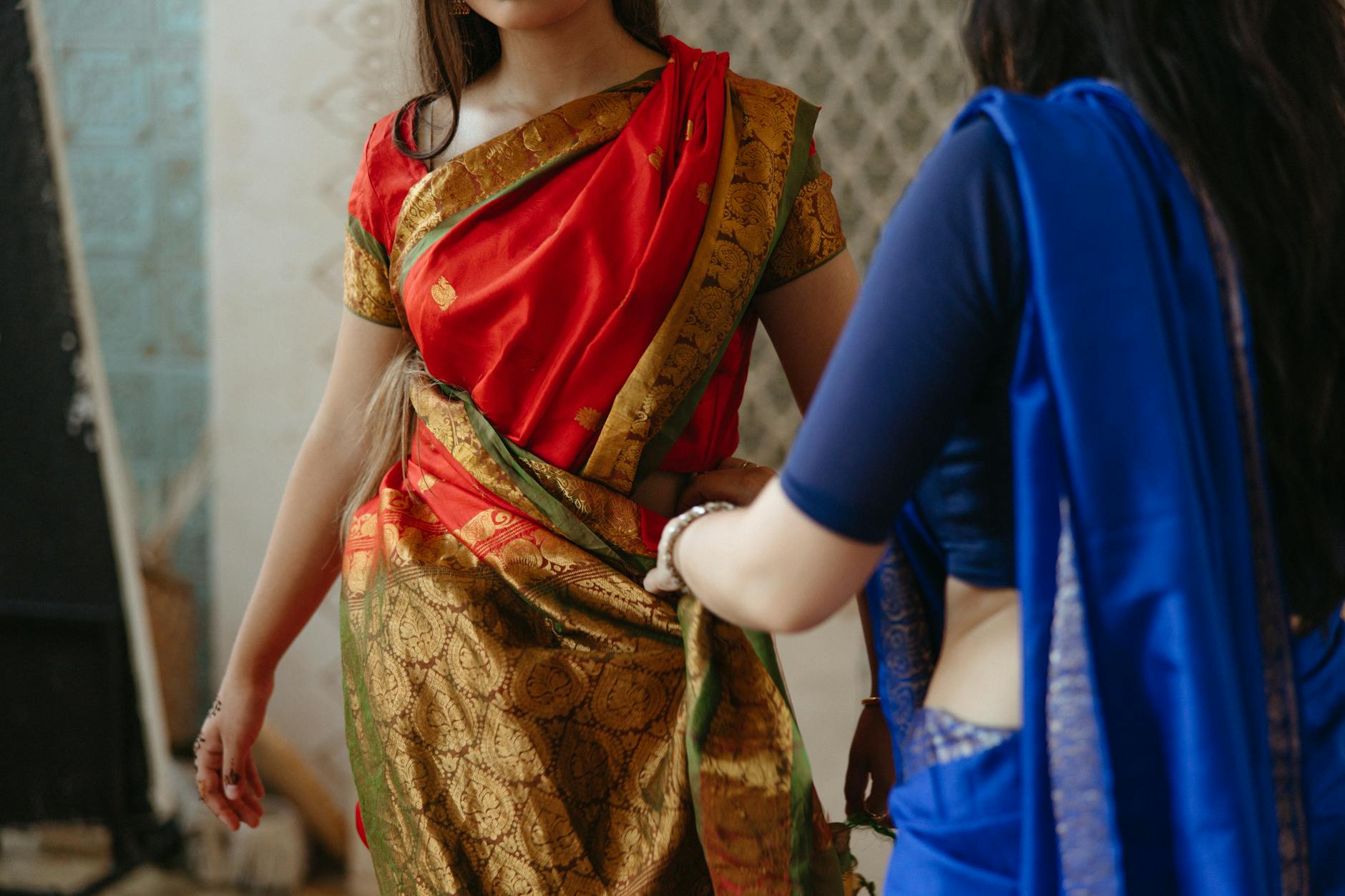
No trend has dethroned the classics for big occasions. Banarasi silk remains the wedding and festive benchmark, alongside Kanjeevaram, Paithani and Patola. What is changing is styling, not the textile — younger brides and guests are pairing heirloom silks with modern blouses, contemporary jewellery and relaxed drapes to lighten the look.
- Best for: weddings, receptions, major religious functions, family heirlooms.
- Price band: authentic Banarasi typically starts near Rs 15,000 and rises steeply with pure-zari and handwoven work; top Kanjeevarams run into lakhs.
- Pros: timeless, holds resale and sentimental value, genuinely lasts decades.
- Cons: heavy and warm, demands a real budget, and the market is full of power-loom imitations sold as the real thing.
Style tip: let a rich silk do the talking. One bold jewellery piece, neat hair and a sleek blouse beats piling on every accessory you own.
Trend 6 and 7: Ruffles, belts and the new accessories
Two smaller but loud movements round out the year. First, ruffle and pre-draped fusion sarees — frilled hems, cape pallus and gown-saree hybrids — keep their grip on younger, experiment-friendly wardrobes. Second, the saree belt has gone from styling trick to staple: a metallic or embroidered waist belt cinches the drape, holds the pallu and adds instant structure.
Other accessories defining 2026 looks:
- Statement belts to define the waist and secure the pallu.
- Oxidised and contemporary jewellery replacing matchy gold sets on casual drapes.
- Embellished or potli bags as the finishing punctuation.
A word of caution on fusion: ruffles and capes date faster than classic drapes, so treat them as fun, lower-cost buys rather than long-term investments.
How to shop smart in 2026
Build a small, versatile saree wardrobe rather than chasing every trend. A practical starter mix: one breathable handloom for daytime, one organza or tissue for festive evenings, one pre-stitched piece for quick events, and — if your year includes a wedding — one heirloom silk.
Then pour your creativity into blouses and accessories, the cheapest way to make the same saree look new. Watch out for two common traps: synthetic fabrics passed off as silk, and power-loom weaves sold at handloom prices — always ask about the fibre and the origin.
The through-line of 2026 is reassuring. The saree is not being replaced; it is being made easier to wear, lighter to carry and more personal to style — which is exactly why it keeps winning.