Photo: Deneen L Treble / Pexels
Tarun Bali Funeral: OPP Officer Killed Near Hearst Honoured
A young constable with two and a half years on the job will be carried into a Mississauga arena on Thursday morning, draped in the symbols of a service he had only just begun. Const. Tarun Bali of the Ontario Provincial Police was 29 when he was killed in the line of duty near Hearst, a remote town in northern Ontario, on June 9. His funeral, set for 10:30 a.m. Thursday at the Mississauga Sports and Entertainment Centre, is expected to draw uniformed officers from across Canada and beyond.
The line that has stuck with mourners, repeated in tributes since his death, is the promise that he will "forever be a hero." It is the kind of phrase that sounds like cliché until you sit with the facts of how he died: trying to stop a fleeing driver, on a routine afternoon, hundreds of kilometres from the Brampton neighbourhood where he grew up.

What happened near Hearst
The events unfolded around 12:30 p.m. on June 9. Officers from the OPP's James Bay Detachment were attempting to stop a vehicle in the Hearst area. According to police, the driver had fled from a hospital where he was being assessed under Ontario's Mental Health Act.
Bali was struck during the attempt to halt the vehicle. He was seriously injured and pronounced dead at the scene. The detail that has cut through is how ordinary the call began. There was no warning, no standoff that built for hours. An officer stepped into harm's way to keep the public safe, and did not come home.
Hearst sits deep in the boreal forest of northeastern Ontario, a francophone town of a few thousand people closer to James Bay than to any major city. It is the kind of posting where policing means long distances, thin backup and a community where everyone knows the cruiser by sight. That remoteness is part of why the death landed so heavily, both locally and in the wider OPP family.
Who Tarun Bali was
Bali was originally from Brampton, part of the Greater Toronto Area's large and tightly knit South Asian community. He had roughly two and a half years of service, having been posted with the Dufferin OPP Detachment before being deployed to the James Bay Detachment in the north.
Those who served alongside him have described a constable who, in the words used by colleagues, put himself in harm's way to keep others safe. Indian and diaspora outlets have noted his Indian heritage, and his death has resonated within that community as much as within policing. His body was brought to the Thornhill area ahead of the service, allowing family and the community a chance to gather before the formal farewell.
It is worth resisting the urge to flatten a real person into a symbol. Bali was young, early in a career, the sort of officer who still had decades of work ahead. The grief is sharper precisely because so little of his story had been written.
A police funeral, and what the ritual means
A full police funeral is a piece of theatre with a serious purpose. It tells the family that their loss is shared, and it tells every officer still on shift that they will not be forgotten if the worst happens. Thursday's service will follow a form that has become familiar across North America and the Commonwealth.
Expect these elements:
- A funeral procession, or cortège, escorted by motorcycle officers and marked vehicles, often stretching for kilometres.
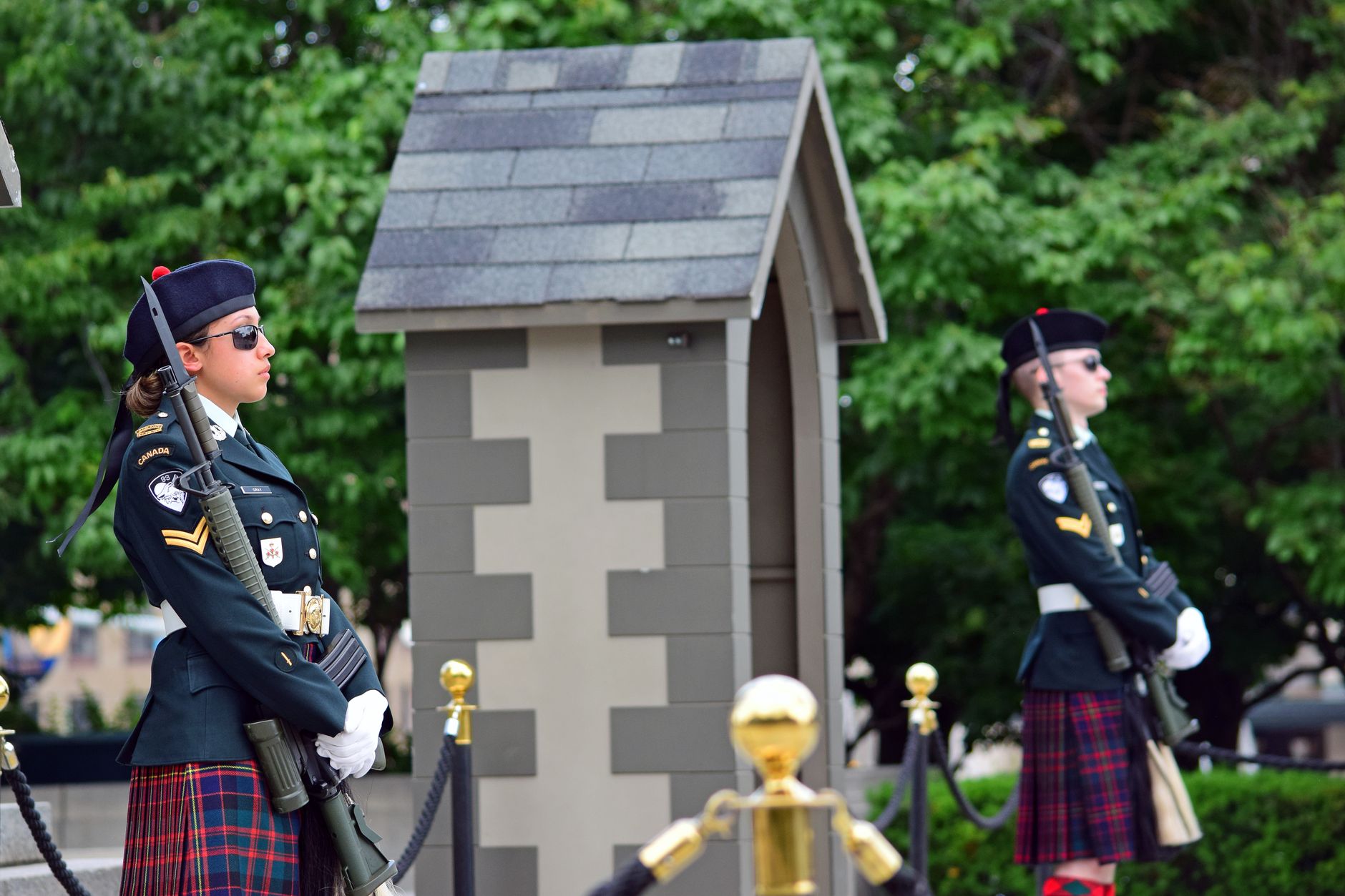
- An honour guard and the slow march of uniformed officers, frequently in the thousands, drawn from forces across the country.
- The folding and presentation of a flag, the playing of a lament, and a formal last radio call — a dispatcher calling the fallen officer's badge number one final time, met with silence.
The Mississauga Sports and Entertainment Centre, on Rose Cherry Place, was chosen because few other venues can hold the crowd a line-of-duty funeral attracts. The visitation and service itself are reserved for family, invited guests, members of the OPP, allied police and emergency services, the military and officials. It is not open to the general public.
That does not mean the public is shut out. Organisers have set up a designated location to watch the funeral cortège escort pass in person, and the service will be carried by livestream so that anyone, anywhere, can pay respects. For a young officer who served a remote town and grew up in a busy suburb, both audiences matter.
The case against the accused
Police have charged an 18-year-old Hearst man, Justin Veronneau, in connection with Bali's death. The most serious charge is first-degree murder. He also faces counts that police have listed as assaulting an officer, two counts of fleeing police, resisting arrest, dangerous operation of a motor vehicle, and dangerous operation causing death.
A crucial caveat applies. These are charges, not findings. Nothing has been proven in court, and the accused is entitled to the presumption of innocence as the case moves through the justice system. Reporting around the incident indicates the accused had fled from a hospital where he was being assessed under the Mental Health Act, a thread that, if it holds up, may put questions about mental-health crisis response at the centre of any eventual proceedings.
First-degree murder is the most serious homicide charge in Canadian law and, in cases involving the killing of a police officer acting in the course of duty, the law treats the offence with particular gravity. How that intersects with mental-health questions will be for the courts, not the headlines, to work out.
Why this resonates beyond Ontario
Line-of-duty deaths are mercifully rare in Canada compared with some countries, which is part of why each one reverberates so widely. When an officer is killed, forces that compete for resources and recruits close ranks for a day. Departments from other provinces, and sometimes from the United States, send delegations. The symbolism is deliberate: the badge is bigger than any one service.
For readers outside Canada, the scene on Thursday will look recognisable. The slow march, the bagpipes, the sea of dark uniforms and white gloves are a shared language across the US, the UK and Australia. What is local is the man at the centre of it: a constable from Brampton, posted to the edge of the boreal north, who has now become a name his colleagues will recite at memorials for years.
There is also a quieter conversation that tends to follow these deaths. Policing in remote regions carries particular risks — long response times, limited backup, vast distances. So does the overlap between policing and mental-health emergencies, a recurring flashpoint in debates about how societies respond to people in crisis. Those questions will outlast the funeral.
What comes next
The immediate calendar is short and solemn. The visitation and funeral service take place Thursday, with the procession and public viewing point set out by organisers. After that, the legal process begins in earnest, and it is likely to be slow. A first-degree murder case can take many months to reach trial, with bail hearings, disclosure and pre-trial motions long before any verdict.
For Bali's family, the public ritual is only the first marker in a much longer grief. For the OPP and the communities Bali served, Thursday is a chance to say what funerals are built to say: that the loss is real, that it is shared, and that the people who run toward danger are owed something by the rest of us. A young officer's career ended on a roadside near Hearst. The promise being made over his casket is that the ending will not be the only thing remembered.