Why 'Teri Yaadon Ki Chadar Odhe' Is Topping India's YouTube Music Trends
A quiet, aching Hindi ballad titled "Teri Yaadon Ki Chadar Odhe" has climbed into India's YouTube music trends, and the reason has less to do with a movie star and more to do with how the country now consumes music. There is no big-banner film attached, no item number, no multi-crore set piece — just a melody, a few lines of heartbreak poetry, and an algorithm that rewards exactly this. The track is part of a wave of non-film Hindi singles that have quietly become the dominant force on Indian YouTube, often out-trending songs from major theatrical releases.
The phrase itself is built to linger. Loosely translated, it means being "wrapped in the blanket of your memories" — the image of someone lying awake, trying to sleep through a separation while the absent person keeps returning in the dark. The accompanying tagline, Dil Ne Tera Naam Liya ("the heart took your name"), doubles down on the same mood. It is a formula India has loved for decades, repackaged for a vertical screen.
What the video actually is
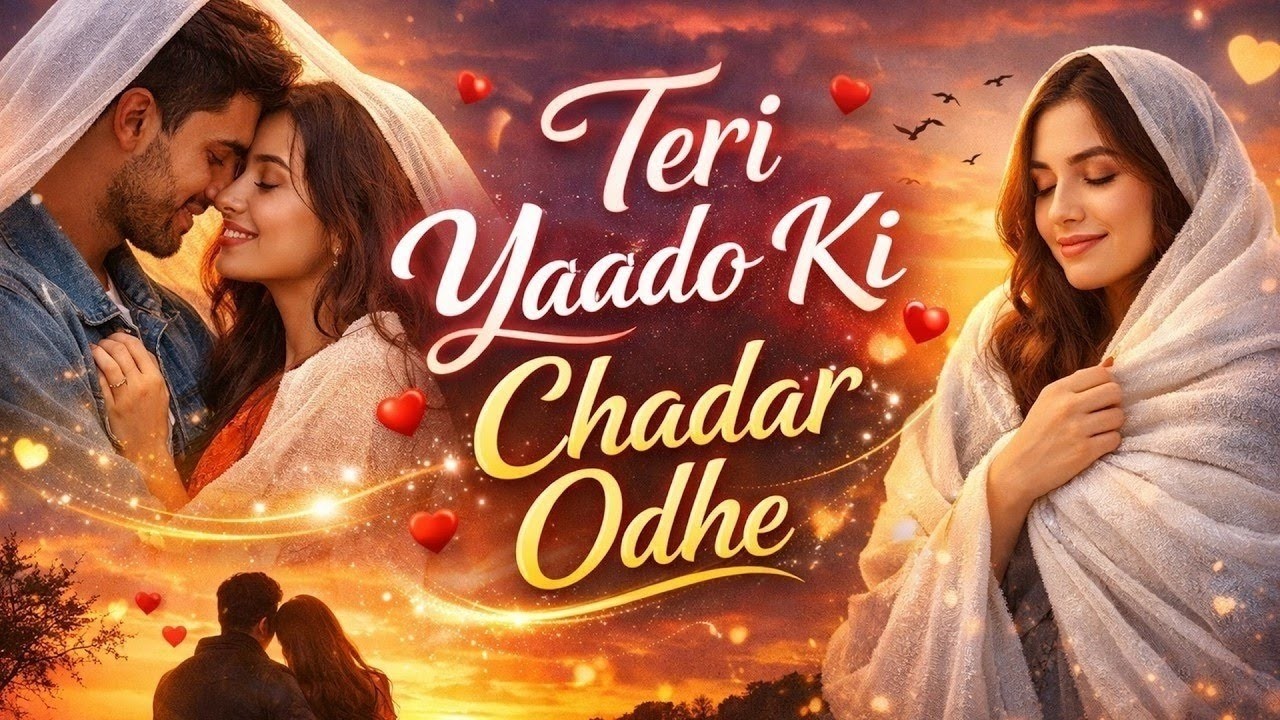
Strip away the hashtags and "Teri Yaadon Ki Chadar Odhe" is a single-track music video: a slow-tempo romantic number designed around longing and loss rather than celebration. Visually, songs in this lane tend to follow a familiar grammar — soft lighting, rain or winter motifs, a couple whose story is told in flashback, and a present-day protagonist alone with the memory. The chadar (blanket) and yaadon (memories) imagery in the title signals all of this before a single note plays.
What matters is the category, not the cast. This is a standalone label release, the kind that India's music industry now churns out as its primary product. Where the 2000s and 2010s tied almost every hit to a film, the 2020s have flipped that: the song is the product, and it lives or dies on streaming platforms, not at the box office.
Why it is blowing up
The surge is not an accident. Several forces line up behind a track like this:
- Heartbreak is the most replayed emotion online. Listeners loop sad songs far more than happy ones, save them to private playlists, and dedicate them to people. Each of those behaviours is a strong signal to recommendation systems.
- The hook is built for short-form. A single emotional line can be clipped into a 20-second Reel or YouTube Short, set against a breakup montage. Thousands of such clips act as free, decentralised promotion that pushes traffic back to the full video.
- The title does the SEO work. Long, descriptive, emotion-loaded titles in Hinglish are highly searchable, and they tell the algorithm precisely what mood to recommend the track for.
- Low risk, high frequency. Labels release these singles constantly and cheaply. Most fade, but the format means that when one catches, it catches fast — and the whole catalogue benefits.
The bigger story: India's non-film music boom
The real headline behind one viral ballad is structural. For most of Bollywood's history, the film song was the engine of the Indian music business — soundtracks sold the film, and the film sold the soundtrack. That bond has loosened dramatically.
Today, independent and non-film singles account for a large and growing share of new music consumption in India. Labels have learned that they no longer need a movie to manufacture a hit; they need a singer, a strong hook, a shoot, and a release calendar tuned to streaming. The economics are seductive: a single costs a fraction of a film soundtrack, releases in weeks rather than years, and can be A/B tested against audience taste in real time.
This shift has also reopened space for Punjabi pop, indie artists and regional voices who once had to wait for a film break. A heartbreak ballad uploaded by a label can now reach tens of millions without a single theatrical tie-in — something almost unthinkable fifteen years ago.
How a song like this makes money
Virality is not vanity; it is revenue. A trending non-film track earns across several streams at once:
- YouTube ad revenue, split between the platform and the rights holder, scaling directly with views.
- Audio-streaming royalties from services such as Spotify, JioSaavn, Gaana-style platforms and Apple Music, paid per stream.
- Short-form licensing, as the song gets used in countless Reels and Shorts, each generating micro-payments through content-ID systems.
- Sync and event use, when tracks are licensed for weddings, ads or other videos.
Crucially, these are evergreen assets. A sad love song does not expire the way a topical or festival track might; it keeps surfacing in "breakup" and "sad Hindi songs" playlists for years, quietly compounding earnings long after the initial spike. That durability is why labels treat the heartbreak ballad as a reliable workhorse rather than a gamble.
The public reaction — and the criticism
Audience response to tracks like "Teri Yaadon Ki Chadar Odhe" tends to split along a now-familiar line. For many listeners, the appeal is exactly the point: a clean melody, relatable pain, and a voice to feel sad to. Comment sections fill with dedications, personal stories and tagged names — the social glue that keeps the song circulating.
Critics, meanwhile, argue that the format has grown formulaic. The recurring charge is that too many of these singles share the same tempo, the same heartbreak template, and interchangeable visuals, prioritising mood over melody and craft. There is also a broader debate about whether the streaming-and-Shorts model rewards a catchy eight seconds over a fully realised song.
Both things can be true at once. The format is repetitive because it works, and it works because it taps a genuine, durable appetite for melodic Hindi heartbreak — a tradition that runs straight back through decades of film music into the present feed.
What happens next
If the pattern of recent viral singles holds, expect a predictable sequence: a flood of Reels and Shorts using the hook, lyric videos and "slowed + reverb" edits, cover versions, and possibly a remix or an extended cut to ride the wave. Live performance clips and a surge of playlist additions usually follow, stretching the song's life well beyond the first trending week.
For the wider industry, the lesson is the one it has already internalised: the single, not the soundtrack, is now the unit of Indian pop. Films will keep producing chartbusters, but the steady drumbeat of YouTube's music trends increasingly belongs to standalone releases like this one — small, cheap, emotionally precise, and engineered for a country that listens with its thumb on the replay button.
Whether "Teri Yaadon Ki Chadar Odhe" becomes a months-long evergreen or a one-week spike, its rise is a clean snapshot of where Indian music is heading: away from the marquee and into the feed, one blanket of memories at a time.